Winner, 2014 Lambda Literary Award in LGBT StudiesSince the 1970s, a key goal of lesbian and gay activists has been protection against street violence, especially in gay neighborhoods.
This collection of essays challenges long-entrenched ideas about the history, nature, and significance of the informal neighborhoods that house the vast majority of Latin America's urban poor.
Beginning in the late 1970s, activists from the favelas of Rio de Janeiro challenged the conditions-such as limited access to security, sanitation, public education, and formal employment-that separated favela residents from Rio's other citizens.
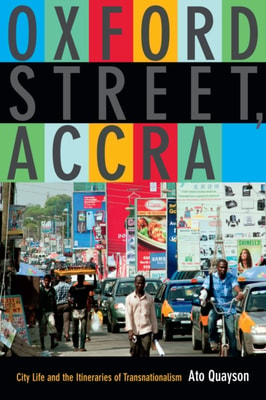
In Oxford Street, Accra, Ato Quayson analyzes the dynamics of Ghana's capital city through a focus on Oxford Street, part of Accra's most vibrant and globalized commercial district.
On the Las Vegas Strip, blockbuster casinos burst out of the desert, billboards promise "e;hot babes,"e; actual hot babes proffer complimentary drinks, and a million happy slot machines ring day and night.
For the addicted, pregnant, and poor women living in daily-rent hotels in San Francisco's Mission district, life is marked by battles against drug cravings, housing debt, and potential violence.
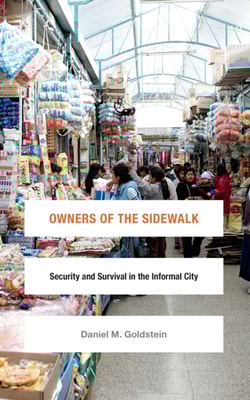
Many of Bolivia's poorest and most vulnerable citizens work as vendors in the Cancha mega-market in the city of Cochabamba, where they must navigate systems of informality and illegality in order to survive.
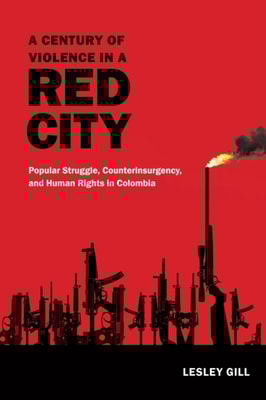
In A Century of Violence in a Red City Lesley Gill provides insights into broad trends of global capitalist development, class disenfranchisement and dispossession, and the decline of progressive politics.
In Hydraulic City Nikhil Anand explores the politics of Mumbai's water infrastructure to demonstrate how citizenship emerges through the continuous efforts to control, maintain, and manage the city's water.
In Street Archives and City Life Emily Callaci maps a new terrain of political and cultural production in mid- to late twentieth-century Tanzanian urban landscapes.
In A City on a Lake Matthew Vitz tracks the environmental and political history of Mexico City and explains its transformation from a forested, water-rich environment into a smog-infested megacity plagued by environmental problems and social inequality.
In Migrants and City-Making Ayse Caglar and Nina Glick Schiller trace the participation of migrants in the unequal networks of power that connect their lives to regional, national, and global institutions.
Do, Die, or Get Along weaves together voices of twenty-six people who have intimate connections to two neighboring towns in the southwestern Virginia coal country.
Traces the communication strategies of various constituencies in a Chicago neighborhood, offering insights into the challenges that beset diverse urban populations and demonstrating persuasively rhetoric's power to illuminate and resolve charged conflicts Candice Rai's Democracy's Lot is an incisive exploration of the limitations and possibilities of democratic discourse for resolving conflicts in urban communities.
The early returns from Census 2000 data show that the United States continued to undergo dynamic changes in the 1990s, with cities and suburbs providing the locus of most of the volatility.
Some of today's best urban leaders don't work for the governmentthey can be found in nonprofit organizations that serve the working class and poor populations.
A Brookings Institution Press and Harvard University Joint Center for Housing Studies publicationRental housing is increasingly recognized as a vital housing option in the United States.
For the past three decades, the federal government has targeted the poorest areas of American cities with a succession of antipoverty initiatives, yet these urban neighborhoods continue to decline.
Results from Census 2000 have confirmed that American cities and metropolitan areas lie at the heart of the nation's most pronounced demographic and economic changes.
As urbanization of the world's population grows at an ever-increasing pace, the need to understand the effects of globalization on cities is at the forefront of urban studies.
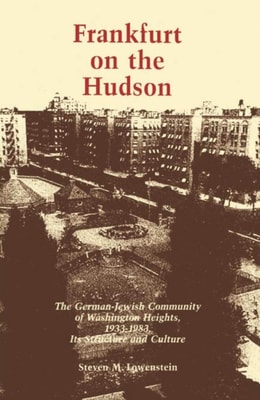
Using organizational bulletins, surveys, interviews, and personal observations and anecdotes, Lowenstein paints a picture of a unique lifestyle now in the process of merging into American Jewry and disappearing.
Lining the streets inside the city's gates, clustered in its center, and thinly scattered among its back quarters were Augsburg's taverns and drinking rooms.
Three weeks after Lyndon Johnson signed the Civil Rights Act of 1964, a New York City police officer shot and killed a fifteen-year-old black youth, inciting the first of almost a decade of black and Latino riots throughout the United States.
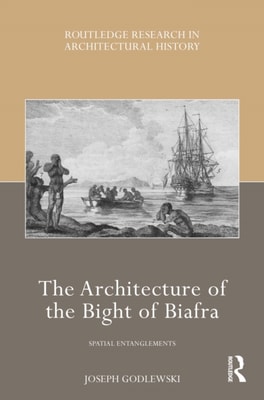
The Architecture of the Bight of Biafra challenges linear assumptions about agency, progress, and domination in colonial and postcolonial cities, adding an important sub Saharan case study to existing scholarship on globalization and modernity.
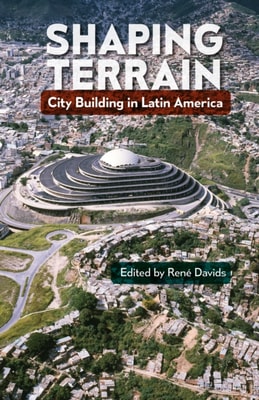
Shaping Terrain shows how the physical landscape and local ecology have influenced human settlement and built form in Latin America since pre-Columbian times.
Six-year-old Manuel Diaz and his mother first arrived at Miami's airport in 1961 with little more than a dime for a phone call to their relatives in the Little Havana neighborhood.
Selected by Choice magazine as an Outstanding Academic TitleIt has been called one of the nation's most livable regions, ranked among the best managed cities in America, hailed as a top spot to work, and favored as a great place to do business, enjoy the arts, pursue outdoor recreation, and make one's home.
No longer represented only by Hollywood and the commercial fashion industry, Los Angeles in recent years has received international media attention as one of the world's new art centers.
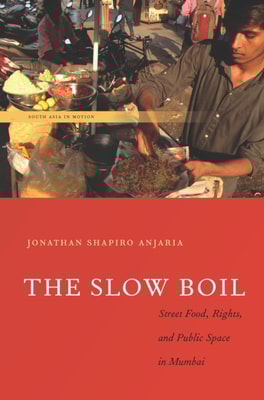
Street food vendors are both a symbol and a scourge of Mumbai: cheap roadside snacks are enjoyed by all, but the people who make them dance on a razor's edge of legality.