With fresh and provocative insights into the everyday reality of politics in post-Soviet Central Asia, this volume moves beyond commonplaces about strong and weak states to ask critical questions about how democracy, authority, and justice are understood in this important region.
Forests Are Gold examines the management of Vietnam's forests in the tumultuous twentieth centuryfrom French colonialism to the recent transition to market-oriented economicsas the country united, prospered, and transformed people and landscapes.
A uniquely collaborative analysis of human adaptation to the Polynesian islands, told through oral histories, biophysical evidence, and historical records Humans began to settle the area we know as Polynesia between 3,000 and 800 years ago, bringing with them material culture, including plants and animals, and ideas about societal organization, and then adapting to the specific biophysical features of the islands they discovered.
In Rio de Janeiro's favelas, traffickers assert power through conspicuous displays of wealth and force, brandishing high-powered guns, gold jewelry, and piles of cash and narcotics.
In a twenty-first-century global economy, in which multinational companies coordinate and collaborate withpartners and clientele around the world, it is usually English that is the parlance of business, research, technology, and finance.
Orderly Anarchy delivers a provocative and innovative reexamination of sociopolitical evolution among Native American groups in California, a region known for its wealth of prehistoric languages, populations, and cultural adaptations.
Corporations are among the most powerful institutions of our time, but they are also responsible for a wide range of harmful social and environmental impacts.
Thank You, Anarchy is an up-close, inside account of Occupy Wall Street's first year in New York City, written by one of the first reporters to cover the phenomenon.
Originally published in 1843, Fanny Calderon de la Barca, gives her spirited account of living in Mexico-from her travels with her husband through Mexico as the Spanish diplomat to the daily struggles with finding good help-Fanny gives the reader an enlivened picture of the life and times of a country still struggling with independence.
In this ethnographic examination of Mexican-American and white girls coming of age in California's Central Valley, Julie Bettie turns class theory on its head, asking what cultural gestures are involved in the performance of class, and how class subjectivity is constructed in relationship to color, ethnicity, gender, and sexuality.
The Wherewithal of Life engages with current developments in the anthropology of ethics and migration studies to explore in empirical depth and detail the life experiences of three young men - a Ugandan migrant in Copenhagen, a Burkina Faso migrant in Amsterdam, and a Mexican migrant in Boston - in ways that significantly broaden our understanding of the existential situations and ethical dilemmas of those migrating from the global south.
They Leave Their Kidneys in the Fieldstakes the reader on an ethnographic tour of the melon and corn harvesting fields of California's Central Valley to understand why farmworkers suffer heatstroke and chronic illness at rates higher than workers in any other industry.
Body Counts: The Vietnam War and Militarized Refuge(es) examines how the Vietnam War has continued to serve as a stage for the shoring up of American imperialist adventure and for the (re)production of American and Vietnamese American identities.
Based on years of careful ethnographic fieldwork in Hanoi, Haunting Images offers a frank and compassionate account of the moral quandaries that accompany innovations in biomedical technology.
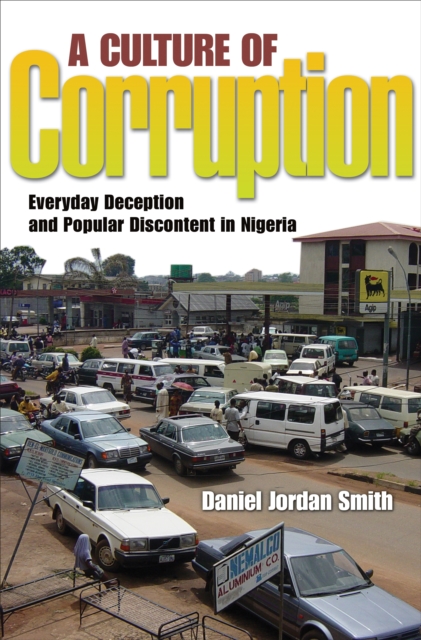
An up-close account of how Nigerians' self-reliance in the absence of reliable government services enables official dysfunction to strengthen state powerWhen Nigerians say that every household is its own local government, what they mean is that the politicians and state institutions of Africa's richest, most populous country cannot be trusted to ensure even the most basic infrastructure needs of their people.
Global Africa is a striking, original volume that disrupts the dominant narratives that continue to frame our discussion of Africa, complicating conventional views of the region as a place of violence, despair, and victimhood.
In The Devil behind the Mirror, Steven Gregory provides a compelling and intimate account of the impact that transnational processes associated with globalization are having on the lives and livelihoods of people in the Dominican Republic.
In this groundbreaking ethnography, Ruben Andersson, a gifted anthropologist and journalist, travels along the clandestine migration trail from Senegal and Mali to the Spanish North African enclaves of Ceuta and Melilla.
In this pioneering history of transportation and communication in the modern Middle East, On Barak argues that contrary to accepted wisdom technological modernity in Egypt did not drive a sense of time focused on standardization only.
Carolyn Nordstrom explores the pathways of global crime in this stunning work of anthropology that has the power to change the way we think about the world.
A history of how Chinese officials used statistics to define a new society in the early years of the People's Republic of China In 1949, at the end of a long period of wars, one of the biggest challenges facing leaders of the new People's Republic of China was how much they did not know.
Utilizing narratives of seven different people-soldier, rebel, student, trader, evangelist, father, and politician-I Did it To Save My Life provides fresh insight into how ordinary Sierra Leoneans survived the war that devastated their country for a decade.
In this viscerally intense, ethnographically based work, Claudia Seymour relates the heart-wrenching stories of young people in the Democratic Republic of Congoyoung people who live on the front lines of conflict, in neighborhoods and villages destroyed by war, and on the streets in conditions of poverty and destitution.
Living Color is the first book to investigate the social history of skin color from prehistory to the present, showing how our body's most visible trait influences our social interactions in profound and complex ways.
This third volume of Princeton Readings in Religions demonstrates that the "e;three religions"e; of China--Confucianism, Daoism, and Buddhism (with a fourth, folk religion, sometimes added)--are not mutually exclusive: they overlap and interact with each other in a rich variety of ways.
Known for their striking full-body tattoos and severed fingertips, Japan's gangsters comprise a criminal class eighty thousand strong--more than four times the size of the American mafia.
The United States is among the most affluent nations in the world and has its largest economy; nevertheless, it has more poverty than most countries with similar standards of living.