This book assesses the underpinning role 'references to identity' played and continue to play as the powerful mobilising force in domestic politics across the East European region stretching from Estonia to Bulgaria.
This book assesses the underpinning role 'references to identity' played and continue to play as the powerful mobilising force in domestic politics across the East European region stretching from Estonia to Bulgaria.
Drawing from an interdisciplinary body of research and data, Women of Piracy employs a criminological lens to explore how women have been involved in, and impacted by, maritime piracy operations from the 16th century to present day piracy off the coast of Somalia.
An archaeological study of African American foodways in nineteenth-century AnnapolisInEating in the Side Room, Mark Warner uses the archaeological data of food remains recovered from excavations in Annapolis, Maryland, and the Chesapeake to show how African Americans established identity in the face of pervasive racism and marginalization.
Reconstructing the past of intentional communities from across the United StatesUtopian and intentional communities have dotted the American landscape since the colonial era, yet only in recent decades have archaeologists begun analyzing the material culture left behind by these groups.
Wayne Suttles has devoted much of his professional life to research on the cultures of the Native peoples of the Pacific Northwest, especially the Coast Salish of the Georgia Strait-Puget Sound Basin.
In this seminal take on well-being and fitness, celebrity health coach and functional medicine expert Vijay Thakkar presents his trademarked four-step formula for weight loss.
This book documents the emergence of doulas as care professionals in Italy, considers their training, practices, and representation, and analyses their role in national and international context.
First published in 1972, The Forsaken Lover draws upon Chris Searle's experience as an English teacher in a secondary school in Tobago to focus upon the deep problems of identity encountered by black people having to use the white man's language.
Biophilic Connections and Environmental Encounters in the Urban Age takes a multi-disciplinary approach, drawing on the authors' wide range of experience, to provide a greater understanding of the different dimensions of environmental engagement.
Biophilic Connections and Environmental Encounters in the Urban Age takes a multi-disciplinary approach, drawing on the authors' wide range of experience, to provide a greater understanding of the different dimensions of environmental engagement.
Nonrational Logic in Contemporary Society explores modern examples of beliefs that defy logic but nevertheless are enthusiastically embraced by legions of contemporary people living in technologically advanced societies.
Nonrational Logic in Contemporary Society explores modern examples of beliefs that defy logic but nevertheless are enthusiastically embraced by legions of contemporary people living in technologically advanced societies.
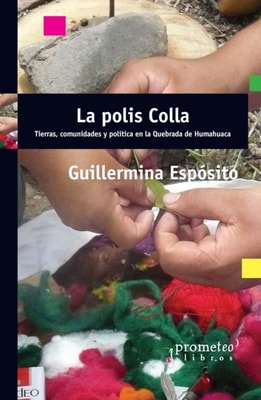
Este libro se propone explicar las condiciones que posibilitaron la organización de comunidades indígenas collas en las tierras altas de Jujuy desde fines del siglo XX, integrando de modo complejo perspectivas antropológicas, históricas y políticas.
This book examines the academic study of the African and Native American contact, African cultural change in Native America, as well as the existence of African Americans with Native American ancestry and Native Americans with African ancestry in the Western Hemisphere.
This book examines the academic study of the African and Native American contact, African cultural change in Native America, as well as the existence of African Americans with Native American ancestry and Native Americans with African ancestry in the Western Hemisphere.
The groundbreaking classic detailing Margaret Mead's first field work at age 23,establishing Meads core insights into childhood and culture that challenged and changed our view of life.
The World Today (1974) examines the world of the late twentieth century and its roots - the disintegration of the old world is analysed in the expansion and subsequent decline of nineteenth-century imperialism, and the attempts by the League of Nations and United Nations to bring about a new order on international cooperation.
Race, Power and Social Segmentation in Colonial Society (1987) studies Guyanese society after slavery and specifically examines the area of social classes and ethnic groups.
The Ruins of Time (1975) examines the conquest of the Maya by the Spanish, the discoveries and adventures of the first travellers among them, the dramatic journeys of Victorian archaeologists and explorers and also contemporary attempts to unravel Maya hieroglyphs.
Where the Waves Fall (1984) centres the stories of the Pacific Islanders and how they were affected by European explorers and colonisers in this unique account of human settlement and cultural interchange in the Pacific islands.
Vasco da Gama and His Successors (1970) looks at a range of Portuguese explorers of the fifteenth and sixteenth centuries, the most important being Vasco da Gama, whose first voyage to India ushered in a period of European conquest and empire, and established direct and permanent contact between Europe and the Far East.
Where the Waves Fall (1984) centres the stories of the Pacific Islanders and how they were affected by European explorers and colonisers in this unique account of human settlement and cultural interchange in the Pacific islands.
The Twilight of European Colonialism (1961) is a comprehensive appraisal of modern colonialism, as well as providing historical background, of the governments of British, French, Belgian and Portuguese colonies.
Vasco da Gama and His Successors (1970) looks at a range of Portuguese explorers of the fifteenth and sixteenth centuries, the most important being Vasco da Gama, whose first voyage to India ushered in a period of European conquest and empire, and established direct and permanent contact between Europe and the Far East.
The Turning Point in Africa (1982) is a significant study of British colonial policy towards tropical Africa during a critical decade, from the complacent trusteeship of the inter-war years to the strategy of decolonization inaugurated after the Second World War.
Race, Power and Social Segmentation in Colonial Society (1987) studies Guyanese society after slavery and specifically examines the area of social classes and ethnic groups.
The Yoruba-Speaking Peoples of the Slave Coast of West Africa (1894) is an important work of in-depth research into one of the principal indigenous communities of West Africa.