This monograph outlines an integrative framework that conceptualizes the role of relations of control in human reproduction and long-term population dynamics.
Winner of the 2020 British Sociological Association Philip Abrams PrizeProviding a theory of moral practice for a contemporary sociological audience, Owen Abbott shows that morality is a relational practice achieved by people in their everyday lives.
This book introduces demographic applications which employ current demographic concepts and theories and cutting-edge methods and findings, all of which have and will continue to have an impact in the broad area of social demography.
This book focuses on the strict orthodox Jewish (Haredi) community, which comprises many sects whose communal identity plays a central role in everyday life and spatial organization.
This book provides a demographic profile of the Syrian diaspora into Europe and identifies the issue of forced migration as a separate and increasingly salient topic within the more general field of migration research.
This edited collection provides a comprehensive overview of the major changes and transformations in Ukrainian society, from its independence in 1991, through to 2018.
This handbook provides a global study of the classification of mixed race and ethnicity at the state level, bringing together a diverse range of country case studies from around the world.
This book investigates the most effective behavior change communication (BCC) strategies to reach socio-economically vulnerable mothers to promote early initiation of breastfeeding after birth in rural Niger.
This edited collection explores the links between human capital (both in the form of health and in the form of education), demographic change, and economic growth.
This book studies the East Asian world-system and its dynastic cycles as they were influenced by climate and demographic change, diseases, the expansion of trade, and the rise of science and technology.
This book is a comprehensive analysis of the structure, determinants and consequences of changes in sub-Saharan African families, thereby representing an Afrocentric description of the emerging trends.
This book provides a comparison of the measurement in time and monetary units of unpaid domestic work in Colombia, Costa Rica, Uruguay, and the Hispanic ethnicity in the United States.
The 2nd edition of the Handbook of Population covers the major topics of the discipline of demography, including current substantive, methodological and theoretical issues of interest, as well as new and emerging topics in the field.
This perceptive volume presents conceptual, theoretical, and empirical approaches to social policy analysis comparing China and Nordic countries in their treatment of the elderly.
This book examines consumer behavior using the "e;life course"e; paradigm, a multidisciplinary framework for studying people's lives, structural contexts, and social change.
This book presents a method for creating a working model of society, using data systems and simulation techniques, that can be used for testing propositions of scientific and policy nature.
The transition to twenty-first century post-industrial capitalism from the 'welfare' industrial capitalism of the twentieth century, has affected the ways in which class is lived in terms of relational inequality and the factors that structure identity.
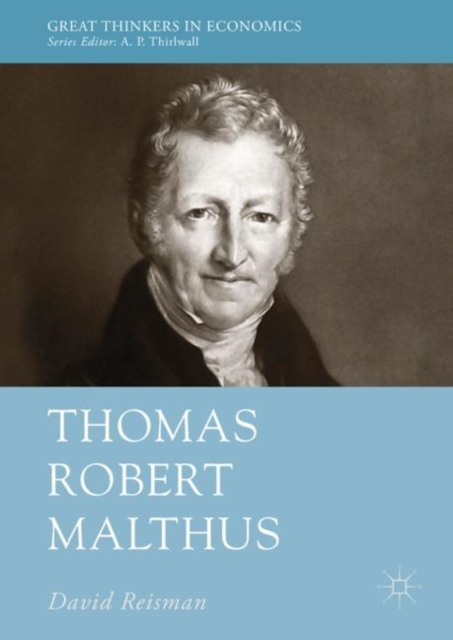
Thomas Robert Malthus (1766-1834) was a leading figure in the British classical school of economics, best-known for extending the insights of Adam Smith at a time of revolutionary improvements in agriculture and industry.
This book presents new insights into the consequences of the impending growth in and impact of the older segment of Latino aging adults across distinctive regions of the Americas.
Unlike most Asian and Latin American countries, sub-Saharan Africa has seen both an increase in population growth rates and a weakening of traditional patterns of child-spacing since the 1960s.