This book reviews the elder care literature pertaining to the Arab world and proposes steps that can be taken to improve the health and quality of life of older people in this region.
In recent years states across the world have boosted their legal and institutional capacity to deport noncitizens residing on their territory, including failed asylum seekers, "e;illegal"e; migrants, and convicted criminals.
Although the majority of China's population is of the Han nationality (which accounts for more than 90% of China's population), the non-Han ethnic groups have a population of more than 100 million.
Models help us understand the dynamics of real-world processes by using the computer to mimic the actual forces that are known or assumed to result in a system's behavior.
Drawing on oral history interviews and archival materials, Summer of Rage examines the causes and consequences of urban unrest that occurred in Newark and Detroit during the summer of 1967.
"One Story of Academia: Race Lines and the Rhetoric of Distinction through the Academie francaise" explores how the word race was historically linked to kings and feudal lords as a sign of elite social distinction, and how the Academie francaise has embodied that type of distinction in France since its establishment in 1635.
Conservation biology -- using concepts from traditional resource management and modern population biology to preserve biological diversity -- has emerged as one of the most important areas of ecology In order to really understand the problems of decreasing diversity and the solutions to maintaining it, the attention of ecologists must be focused on larger spatial and temporal scales than they are used to.
Demographic ageing is a reality - within 25 years half the population of Western Europe will be over 50, one quarter over 65, and the Less Developed Countries will contain one billion elderly people.
Inspired by recent developments in social theory and based on extensive archival research, this book provides the first systematic analysis of the developing knowledge capacities of the state in Victorian Canada.
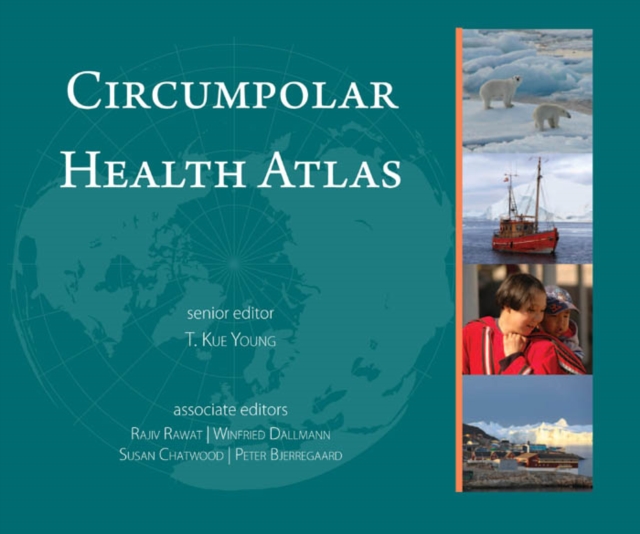
When many of us picture the areas surrounding the North Pole, we imagine barren landscapes, wintry conditions, and sparse human and animal populations.
Mobile Chinese Entrepreneurs draws extensively on the narratives of sixteen small-to-medium business owners, born on the mainland, who have immigrated to Hong Kong and returned to their ancestral hometowns in China to establish their enterprises.
Between longer life expectancies and declining birth rates, Europe's elder population is growing into a sizable minority with considerable impact on nations, health systems, and economies-in other words, global implications as well as local and regional ones.
This book arose from the need to develop accessible research-based case study material which addresses contemporary issues and problems in the rapidly evolving field of human ecology.
The final book from a towering pioneer in the study of poverty and inequality-a critically important examination of poverty around the worldIn this, his final book, economist Anthony Atkinson, one of the world's great social scientists and a pioneer in the study of poverty and inequality, offers an inspiring analysis of a central question: What is poverty and how much of it is there around the globe?