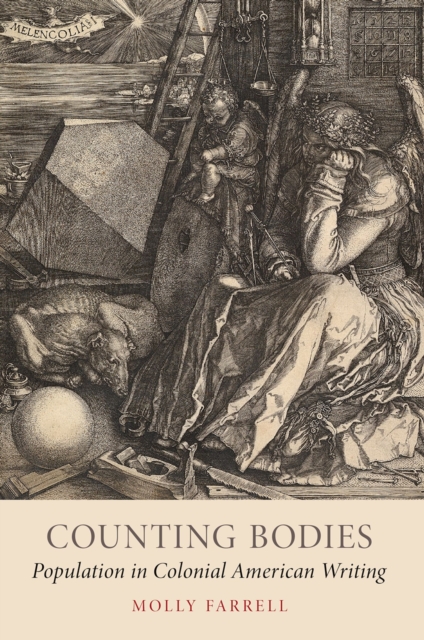
Thomas Robert Malthus (1766-1834) was an English cleric whose ideas, as expounded in his most famous work the Essay on the Principle of Population, caused a storm of controversy.
Developed countries, especially in Europe, face a number of issue related to migration: social and economic disruptions caused by the declining demand for unskilled labour and resulting unemployment, a shortage of skilled labour in many professions, increasing international competition for highly qualified human capital, radical demographic changes, and the forthcoming expansion of the European Union, which will trigger further immigration into major European countries and create new market opportunities in Central and Eastern Europe.
In this synthetic, interdisciplinary work, Neil Brenner develops a new interpretation of the transformation of statehood under contemporary globalizing capitalism.
Over the past two decades, the epidemic of HIV/AIDS has challenged the public health community to fundamentally rethink the framework for preventing infectious diseases.
Expelling the Germans focuses on how Britain perceived the mass movement of German populations from Poland and Czechoslovakia at the end of the Second World War.
The voices in this book belong to parliamentarians, city councillors, doctors and engineers, a few professors, lawyers and social workers, owners of small businesses, translators, and community activists.
The Human Sciences address problems in nature and society that often require coordinated approaches of several scientific disciplines and scholarly research, embracing the social and biological sciences, and history.
This handbook presents a collection of high-quality, authoritative scientific contributions on cross-border migration, written by a carefully selected group of recognized migration experts from around the globe.
The Oxford Handbook of Population Ethics presents up-to-date theoretical analyses of various problems associated with the moral standing of future people and animals in current decision-making.
The Oxford Handbook of Population Ethics presents up-to-date theoretical analyses of various problems associated with the moral standing of future people and animals in current decision-making.
Government sponsored breeding programs, medals of motherhood, forced abortions, and surgical sterilization on park benches--all of these policies have come out of government efforts to nationalize sex and harness procreation as a tool of the state.
Government sponsored breeding programs, medals of motherhood, forced abortions, and surgical sterilization on park benches--all of these policies have come out of government efforts to nationalize sex and harness procreation as a tool of the state.
In this study of exile, Sean Akerman chronicles the ways in which narrative approaches provide opportunities to understand and represent the lives of those who have been displaced after violence.
In this study of exile, Sean Akerman chronicles the ways in which narrative approaches provide opportunities to understand and represent the lives of those who have been displaced after violence.
Since the onset of the mortgage lending crisis and the subsequent Great Recession, there has been ongoing debate about the economic benefits of homeownership.
Since the onset of the mortgage lending crisis and the subsequent Great Recession, there has been ongoing debate about the economic benefits of homeownership.
NGOs headquartered in the North have been, for some time, prominent actors in attempts to address the poverty, lack of political representation, and labor exploitation that disproportionally affect women from the global South.
NGOs headquartered in the North have been, for some time, prominent actors in attempts to address the poverty, lack of political representation, and labor exploitation that disproportionally affect women from the global South.
When it comes to government's role in personal matters such as family planning, most bristle at any interference from the State on how to exercise their reproductive rights.
Human population growth has been a topic of speculation and spirited debate since the English economist Thomas Malthus predicted that population will increase faster than the food supply, with catastrophic results.