Exploring the issues of class through in-depth studies of housing, sport, art, music and politics in Britain, Class and Everyday Life persuasively demonstrates the pervasive influence of class on everyday life and the need to centre a radical understanding of class within emancipatory political movements.
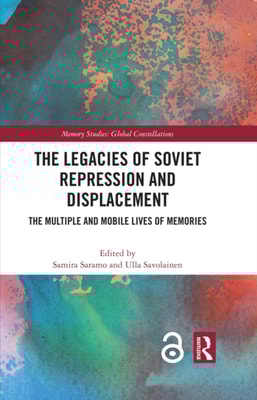
This book explores the ways in which memories of Stalin-era repression and displacement manifest across times and places through diverse forms of materialization.
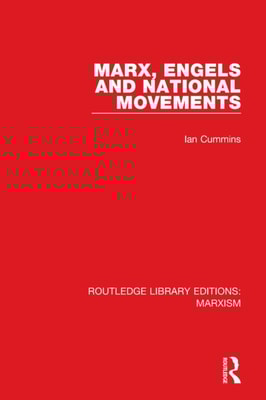
While their attempts to understand the workings of capitalism led them to the conclusion that the advanced societies of Western Europe were those most likely to be the setting for a successful socialist revolution, Marx and Engels by no means ignored developments outside this region.
COVID Societies presents a compelling and accessible overview of key sociocultural theories that can help us make sense of the diverse, dynamic and complex elements of the COVID crisis.
In recent decades, the historical social sciences have moved away from deterministic perspectives and increasingly embraced the interpretive analysis of historical process and social and political change.
Wahrheit, Lüge & Vernunft - Über die Macht der ManipulationWir alle sind Fakten und Emotionen ausgesetzt und nicht immer sind die Grenze zwischen Wahrheit und Täuschung klartrennbar.
First published in 1984, Human Nature and Biocultural Evolution aims to delineate a theory of human nature, viewed as an interrelated set of genetically programmed behavioral predispositions, and a theory of biocultural evolution.
This book investigates the hostile environment and politics of visceral and racial denigration which have characterised responses to refugees and migrants within the UK and Europe in recent years.
A wide-ranging cultural history centered around the concepts of real estate, the family home, and the American dream, and how they evolved over the years, Home Ownership in America: A Socio-Cultural History of Housing in the United States traces narratives around home ownership from the 1920s to today.
Foundations of Social Theory: A Critical Introduction accessibly introduces students to classical and contemporary social theory, exploring the foundational theories which shape the discipline while also engaging critically with their contribution and presenting the more progressive and contemporary theorists in dialogue with canonical figures.
As America experiences the growing pains associated with the rapid social changes in the economy, technology, and culture, various groups must develop coping mechanisms to help them deal with the anxiety that is brought on by such changes.
Focusing on two concepts that were central to modernism and continue to be important, albeit in different ways, this book explores the nature of the simple and the complex, and the relationship that exists between them.
This comprehensive volume highlights and centers untold histories of education at the Museum of Modern Art (MoMA) from 1937 to 2020, using the critical voices of artists, scholars, designers, and educators.
Critics contend that identity economics overemphasizes social identities as drivers of economic activity, potentially obscuring other elements including personal preferences, incentives, and market pressures.
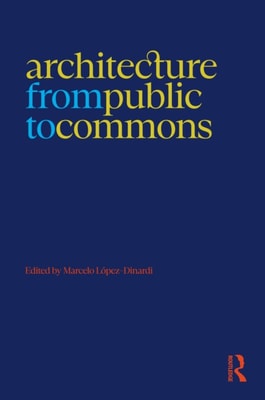
This book provides an urgent framework and collective reflection on understanding ways to reconsider and recast architecture within ideas and politics of the commons and practices of commoning.
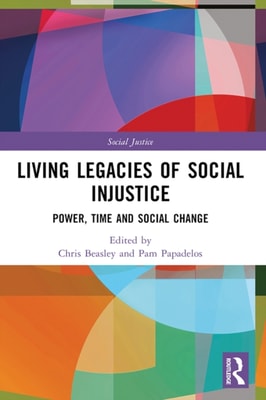
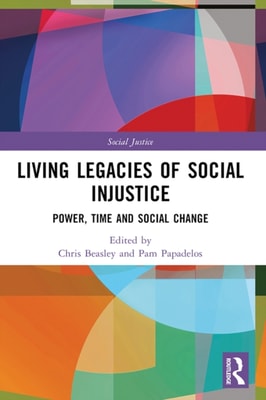
Through a wide range of international and interdisciplinary case studies, this book develops the notion of legacy, and in particular, 'living legacy'- that is, it explores power relations in the context of time as a means to considering and challenging social injustice.
Through a wide range of international and interdisciplinary case studies, this book develops the notion of legacy, and in particular, 'living legacy'- that is, it explores power relations in the context of time as a means to considering and challenging social injustice.
Dieser praktische Ratgeber vermittelt grundlegendes Wissen für Menschen, die sich auf verschiedene Krisensituationen vorbereiten möchten - vom Überleben in der Wildnis bis zur nachhaltigen Selbstversorgung im Alltag.
The writings of Karl Marx (1818-1883) have left an indelible mark not only on the understanding of economics and political thought but on the lives of millions of people who lived in regimes that claimed (wrongly) his influence.
First published in 1984, Human Nature and Biocultural Evolution aims to delineate a theory of human nature, viewed as an interrelated set of genetically programmed behavioral predispositions, and a theory of biocultural evolution.
This book situates sociological research as a vital tool for understanding, and responding to, the multispecies entanglements that cause, inform and arise from states of crisis involving the environment, climate and zoonotic disease transmission.
This fourth volume of The Class Structure of Capitalist Societies finishes the series by exploring how class infuses people's past and present efforts to juggle family, work and leisure.
Inequalities of opportunity affect a person's life expectancy and access to basic services and human rights through discrimination, abuse, and lack of access to justice.
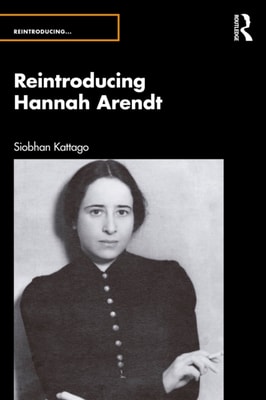
Reintroducing Hannah Arendt connects Arendt's philosophical and political thought to social theory and the social sciences in the 21st century, as individuals experience profound social, political, and technological change.
Reintroducing Hannah Arendt connects Arendt's philosophical and political thought to social theory and the social sciences in the 21st century, as individuals experience profound social, political, and technological change.
Murder in Motion examines the fictional category of the thriller - a genre founded on the effects and objects of suspense - through the lens of city dwelling.
Providing a fresh approach to thinking about the big questions around political economy, culture, and power, this book offers a synthetic view of political economic and cultural explanations of how institutions, organizations, and groups operate, cohere, and influence each other, as well as how power works within and across these networks.
Murder in Motion examines the fictional category of the thriller - a genre founded on the effects and objects of suspense - through the lens of city dwelling.
Providing a fresh approach to thinking about the big questions around political economy, culture, and power, this book offers a synthetic view of political economic and cultural explanations of how institutions, organizations, and groups operate, cohere, and influence each other, as well as how power works within and across these networks.