Providing a foundational look at corporate advocacy from the perspective of strategic communications, this book develops strategies for authentic and meaningful ways companies can engage in advocating for social issues in order to have the strongest and most positive impact on society and their business.
England in Transition (1931) examines life and work in eighteenth-century England, a time of massive upheaval as the Industrial Revolution changed every aspect of the country's economic and social conditions.
Intervention in the Mixed Economy (1974) examines the problem of state intervention in mixed economies by analysing some of the most important aspects of British industrial policy of the early 1970s.
An Economic History of the British Building Industry 1815-1979 (1982) looks at the crucial role the building industry plays in the national economy, not only as a major direct contributor to GNP, but also its effect on a variety of areas from institutional finance to the DIY market.
Applied Measures for Promoting Technological Growth (1973) provides a comprehensive treatment of the whole range of developmental problems facing the technologically backward society, and suggests clear-cut approaches to the solution of these difficulties.
An Introduction to Urban Renewal (1982) critically reviews policies focusing on the renewal of decaying inner urban areas and examines future prospects within a historical perspective.
An Economic History of the British Building Industry 1815-1979 (1982) looks at the crucial role the building industry plays in the national economy, not only as a major direct contributor to GNP, but also its effect on a variety of areas from institutional finance to the DIY market.
The Coming of the Welfare State (1967) explains the climate of opinion which created the old harsh Poor Law and how it changed so that welfare began to be part of the discussion around poverty.
Public Opinion, Ideology and State Welfare (1985) provides a comprehensive explanation of the patterns of ideas about the welfare state held by both academics and by the general public.
The Price Level (1935) looks at the mechanisms used by the government to control the trade balance and price level during the nineteenth century, and sets out the reasons why these measures were no longer suitable in the twentieth century.
Planning and Economic Growth (1965) is an analysis of the problem of unemployment in an over-populated, under-developed economy, and of the relation of investment to employment.
Government Policy and Industrial Change (1989) seeks to take stock of the recent changes in policy issues in the UK and USA - de-industrialisation, internationalisation, technological change - and investigates in particular four areas at the cutting edge of policy change.
The Political Economy of Tolerable Survival (1981) deals with economic issues such as inflation and unemployment in their social and political context and attempts both to isolate and suggest solutions to the problems which confront society.
This fully revised third edition provides a comprehensive exploration of performance management in the public sector, incorporating nearly 200 new references from the latest decade of performance management research.
Readings in Business Cycles and National Income (1953) is a collection of original texts on economics, recessions and employment, looking at the ways that business cycles can affect a nation's economy, spending power and employment rates.
This volume seeks to make the case for Pierre Bourdieu's relational sociology as a powerful, comprehensive and integrated paradigm for studying everything political.
This volume is the first extended investigation of the classicism of Jose Rizal (1861-1896), the de facto national hero of the Philippines, and explores how Greco-Roman antiquity was harnessed by Rizal and other Philippine artists and thinkers at the end of the Spanish colonial period.
The Coming of the Welfare State (1967) explains the climate of opinion which created the old harsh Poor Law and how it changed so that welfare began to be part of the discussion around poverty.
British Economic Performance 1880-1980 (1985) consists of a collection of documents illustrating the development of the British economy in the twentieth century.
Foreign Investment in Eastern Europe (1992) examines the political and social implications of economic activity in the countries of Eastern Europe and the role and prospects of foreign investment.
The Allocation of Resources (1978) examines the main problems associated with resource allocation, such as those arising from economies of scale, externalities, short- and long-run market adjustments, and government intervention in various sectors of the economy.
This book uses the case of football fandom in Hong Kong to shine new light on the globalization of sport and culture, and on the intersection of culture and society in a postcolonial territory.
Marketing in a Competitive Economy (1965) is a scientific study of marketing in the Western world, taking as a starting point a competitive economy and freedom for consumers.
Readings in Business Cycles and National Income (1953) is a collection of original texts on economics, recessions and employment, looking at the ways that business cycles can affect a nation's economy, spending power and employment rates.
Gender, Sexuality, and Traditional Aphrodisiacs: Kayan Mata and Intimate Relationships in Nigeria explores how Nigerian women use traditional aphrodisiacs, known as kayan mata, to navigate intimacy, power, and survival in a rapidly evolving society.
Cost Planning and Building Economics (1973) looks at the technique of planning costs before and during construction, of particular use to students preparing career in chartered surveying and associated building economics.
This book is about how we might think about vulnerability-what it is and how it operates-by looking at cases where different kinds of vulnerabilities clash.
Cost Planning and Building Economics (1973) looks at the technique of planning costs before and during construction, of particular use to students preparing career in chartered surveying and associated building economics.
Crisis in the East European Economy (1982) is a collection of essays, written by leading specialists in centrally planned economies, examining developments in late-stage Soviet-style economies in East European countries.
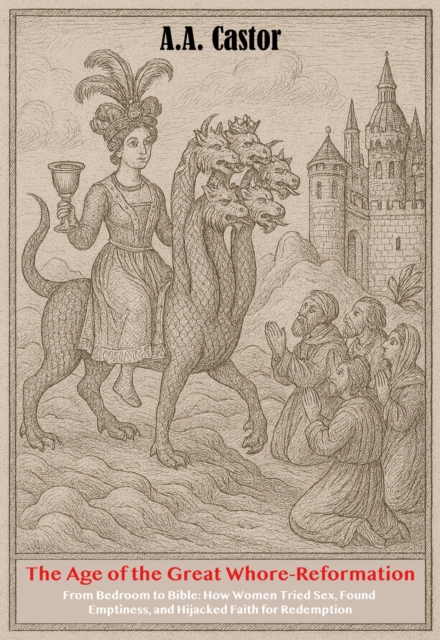
The Industrial Crisis (1933) examines the causes and effects of the Stock Market Crash of 1929, looking at the political causes and ramifications as well as the economic ones.

This book presents a detailed exploration of the Bridging the Transition framework, an approach designed to guide practitioners, researchers, policymakers, and advocates on strategies for preventing and ending homelessness.

This book identifies the growing importance of the sharing economy and its practical applications in such areas of the economy as tourism, transportation, and micromobility.

This book explores the journey of entrepreneurship, from idea to reality, and outlines the different stages associated with starting an innovative business.
Examining modern art vandalism across Europe and North America from 1970 to 2020, this book offers the first comprehensive sociological analysis of this phenomenon.
Investment Economics (1969) examines the process of investment decision-making in firms, looking at the theory of investment and the details of investment theory in business practice.
British Economic Performance 1880-1980 (1985) consists of a collection of documents illustrating the development of the British economy in the twentieth century.
Providing a comprehensive and contemporary understanding of the phenomenon of cuckooing, this volume is a timely insight into this longstanding practice whereby individuals or groups take over a person's home and use the property to facilitate exploitation.