This book examines how media shapes the public's perception of migration, exploring the framing strategies that dominate coverage and policy debates across Europe, with Italy as a focal case.
Here is the first social history devoted to the common soldier in the Russian army during the first half of the 19th-century--an examination of soldiers as a social class and the army as a social institution.
A distinguished Japanese scholar counterbalances the current preoccupation among sociologists with childhood socialization by exploring the changes in values and attitudes among adults in Japan before and after World War II.
Launching a new series, Monographs in Behavior and Ecology, this work is an intensive study of five species of New World monkeys--all omnivores with a diet of fruit and small prey.
Welcome to Death Incorporated — the only organization with a 100% membership rate, a 0% resignation policy, and a perfect delivery record since the beginning of recorded time.
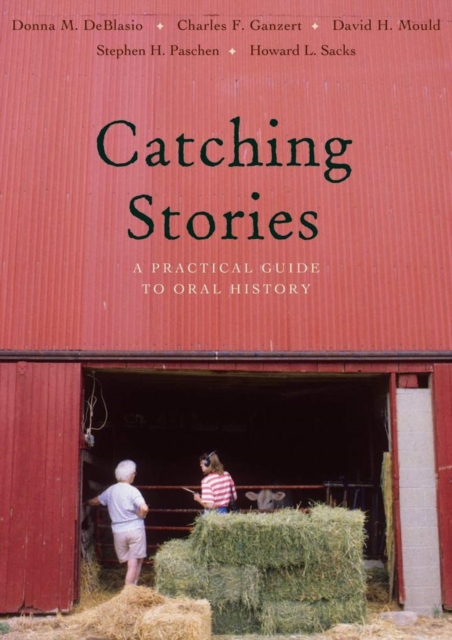
In neighborhoods, schools, community centers, and workplaces, people are using oral history to capture and collect the kinds of stories that the history books and the media tend to overlook: stories of personal struggle and hope, of war and peace, of family and friends, of beliefs, traditions, and values-the stories of our lives.
This handbook introduces the concept of transformational wisdom as the missing component to build a more sustainable future and address the world’s most pressing challenges.
Connected to a divided island, British Cypriots have participated in the reproduction of conflict and partition but have also been active agents of peacebuilding and reconciliation.
Connected to a divided island, British Cypriots have participated in the reproduction of conflict and partition but have also been active agents of peacebuilding and reconciliation.
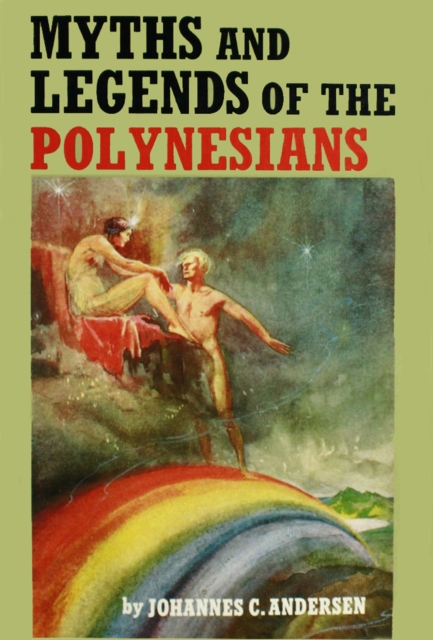
The receding of the ice in the last Pleistocene Ice Age, the resulting dessication, and the emigration of peoples into river valleys and other places where control of water required new forms of civilization are here seen as the chief causes of the origin of the seven primary societies-Egyptian, Mesopotamian, Indian, Cretan, Chinese, Middle American, and Andean.
This sequel to the first volume of Ritual Kinship (Princeton, 1980) completes a comprehensive account of one of the most pervasive and significant of Latin American institutions.
This study of a northern Spanish community shows how the residents of Santa MarAa del Monte have acted together at critical times to ensure the survival of their traditional forms of social organization.
Using the assumptions of rationality and self-interest common to economic analysis, Professors Frohlich, Oppenheimer, and Young develop a profit-making theory of political behavior as it pertains to the supply of collective goods-defense, law and order, clean air, highways.
Focusing on the evolution of one border kibbutz from 1938 to the present, Paula Rayman explores the dynamics between internal community organization and external national and international forces.
A wide range of expert opinion on current demographic problems is presented in this book, based on the proceedings of the 1949 meeting of the Population Association of America.
The prevailing view of the state of Philippine society is bleak: the Philippines, it is alleged, is suffering from unsatisfactory economic growth, mounting corruption, increasing lawlessness, and declining morale.
Switzerland today is faced with a profound dilemma-its village life is dying, a casualty of the collision between communal norms and the need for national survival in an industrial, urbanizing world.
Based on the day-to-day record of an American sociologist imprisoned for three years in a Japanese concentration camp in the seaport town of Bacolod, Negros Island, Philippines, this book deals with the relations between people in a situation of stress.
Lebanon, with large Christian communities, is a relatively modern country compared with others in the Moslem fertile crescent, and an interesting microcosm for studying fertility changes in this area.
This study opposes the prevailing view that Indian villages have little social solidarity and points out the relationship between village solidarity and the potentially centrifugal factors of caste, conflict, and power.
The author examines classic American community studies written during the past fifty years, such as Robert Park on Chicago, the Lynds on Muncie (Middletown), Lloyd Warner on Newburyport, to formulate a theory of American community development.
Professor Main's conviction is that an understanding of political history in Colonial America depends on a knowledge of the country's underlying social structure.
In this study of one group of the new nobility, Jonathan Dewald argues that the origin, attitudes, and behavior of the noblesse de robe were in fundamental ways similar to those of the old nobility.
The book traces growing state intervention in the rural areas of Tunisia and Libya in the middle 1800s and the diverging development of the two countries during the period of European rule.
In 1870 the Welsh ironmaster John James Hughes left his successful career in England and settled in the barren and underpopulated Donbass region of the Ukrainian steppe to found the town of Iuzovka and build a large steel plant and coal mine.