In this follow-up to the celebrated Hoi Toide on the Outer Banks, Jeffrey Reaser, Walt Wolfram, and Candy Gaskill have produced the most comprehensive linguistic look at Ocracoke yet.
In this follow-up to the celebrated Hoi Toide on the Outer Banks, Jeffrey Reaser, Walt Wolfram, and Candy Gaskill have produced the most comprehensive linguistic look at Ocracoke yet.
Decades after independence for most African states, the struggle for decolonization is still incomplete, as demonstrated by the fact that Africa remains associated in many Western minds with chaos, illness, and disorder.
Scholarship on the musical traditions of Indonesia has long focused on practices from Java and Bali, including famed gamelan traditions, at the expense of the wide diversity of other musical forms within the archipelago.
Witness in Our Time traces the recent history of social documentary photography in the words of twenty-nine of the genre''s best photographers, editors, and curators, showing how the profession remains vital, innovative, and committed to social change.
Over 30 years ago, the United Nations developed the Convention on the Rights of the Child (UNCRC), heralding the importance of protecting children from a range of human rights violations.
One of the nations fastest growing metropolitan areas, Wake County, North Carolina, added more than a quarter million new residents during the first decade of this century, an increase of almost 45 percent.
Scholars have charged population growth with lowering aggregate income per capita, depleting natural resources, reducing the quality of the environment, and causing more unequal distribution of income.
This book analyzes in vivid detail the German debate about the importance and meaning of work as it changed under the impact of industrialization, with special emphasis on the period between the two world wars.
China in Comparative Perspective provides an overview of China based on empirical observation by field workers, as well as on historical documents, Chinese literary and philosophical texts and core theoretical frameworks in the social sciences.
Studienarbeit aus dem Jahr 2021 im Fachbereich Kulturwissenschaften - Empirische Kulturwissenschaften, Note: 1,0, Universität Kassel (Uni Kims), Veranstaltung: Empirische Forschungsmethoden, Sprache: Deutsch, Abstract: In der vorliegenden Hausarbeit soll auf Basis eines fiktiven Fallbeispiels, in dem die Genehmigungsbehörde eine Vollerhebung untersagt, ein geeignetes Stichprobenverfahren ausgewählt und durchgeführt werden.
In the first comprehensive exploration of the history and practice of folk medicine in the Appalachian region, Anthony Cavender melds folklore, medical anthropology, and Appalachian history and draws extensively on oral histories and archival sources from the nineteenth century to the present.
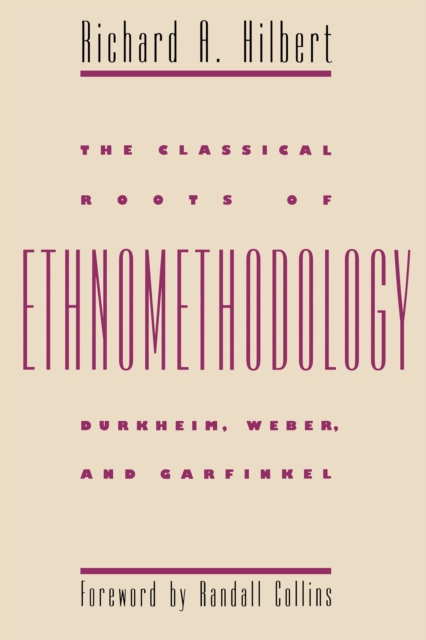
Hilbert demonstrates the historical connection between the nineteenth-century theory of Emile Durkheim and Max Weber, in which sociology had its origins, and the ethnomethodological approach articulated in the 1960s by Harold Garfinkel.
In this book, Judy Kutulas complicates the common view that the 1970s were a time of counterrevolution against the radical activities and attitudes of the previous decade.
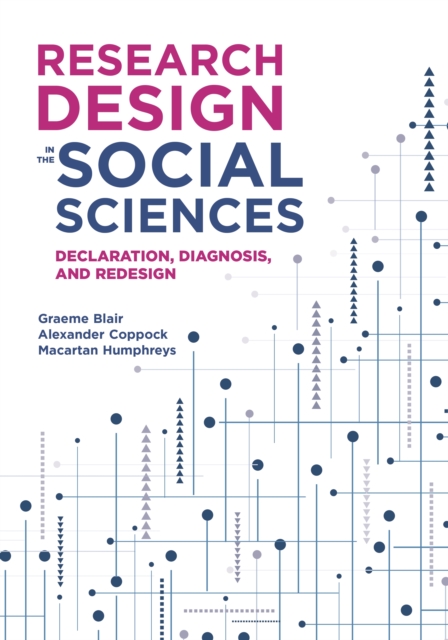
A state-of-the-art approach to evaluating research design for students and scholars across the social sciencesAssessing the properties of research designs before implementing them can be tricky for even the most seasoned researchers.
This collection of essays covers most of the important topics in the field of family history, assesses the state of the art, and stresses the themes that will continue to generate interest in the future.
This collection of papers and discussions from the Conference on Fertility of the National Committee on Maternal Health, held in February 1946, presents the most recent advances in the field of fertility.
The basic concern of the author is to find the reason for the persistent leftist character of French working-class politics in a period of rapid industrialization and improving living standards.
A major source of political instability in Southeast Asia has been ethnic diversity and the lack of congruence between ethnic distributions and national boundaries.
A major source of political instability in Southeast Asia has been ethnic diversity and the lack of congruence between ethnic distributions and national boundaries.
Here, a sociologist, two anthropologists, a psychologist, and a demographer attempt to resolve the criticisms and conflicts of opinion that center on kinship structure and the family unit.
A richly transdisciplinary account of some fundamental characteristics of human societies and behaviorIn this book, acclaimed economist Herbert Gintis ranges widely across many fields-including economics, psychology, anthropology, sociology, moral philosophy, and biology-to provide a rigorous transdisciplinary explanation of some fundamental characteristics of human societies and social behavior.
Maps and borders notwithstanding, some places are best described as "e;gaps"e;--places with repeatedly contested boundaries that are wedged in between other places that have clear boundaries.
Here is the full report of the 1970 National Fertility Study, a national sample survey for which thousands of women were interviewed who had been married at some time and were of reproductive age when they were interviewed.
The attempted modernization of Central Asia by the central Soviet government in the 1920's was a dramatic confrontation between radical, determined, authoritarian communists and a cluster of traditional Moslem societies based on kinship, custom, and religion.
This book treats aspects of the social and demographic history of Portugal in the last century, giving particular attention to the transition from a situation of very high fertility to the moderate pattern prevailing in recent times.
This is the second in a series of monographs on the historic decline of European fertility to be issued by the Office of Population Research at Princeton University.