Re-Evaluating Women's Page Journalism in the Post-World War II Era tells the stories of significant women's page journalists who contributed to the women's liberation movement and the journalism community.
In twentieth-century Germany, Karl-Friedrich Bonhoeffer rose to prominence as a brilliant physical chemist, even as several of his relatives-Dietrich Bonhoeffer among them-became involved in the resistance to Hitler, leading to their executions.
This book provides a narrative history of the BBC Radio Variety Department exploring, along chronological lines, the workings of, tensions within and the impact of BBC policies on the programme-making department which generated the organisation's largest audiences.
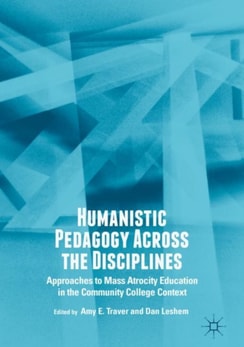
This volume presents insights from five years of intensive Holocaust, genocide, and mass atrocity education at Queensborough Community College (QCC) of the City University of New York (CUNY), USA, to offer four approaches-Arts-Based, Textual, Outcomes-Based, and Social Justice-to designing innovative, integrative, and differentiated pedagogies for today's college students.
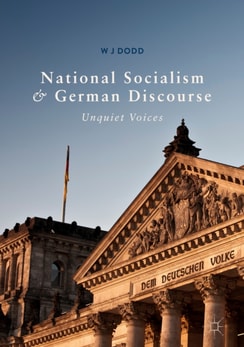
In this discourse history, W J Dodd analyses the 'unquiet voices' of opponents whose contemporary critiques of Nazism, from positions of territorial and inner exile, focused on the 'language of Nazism'.
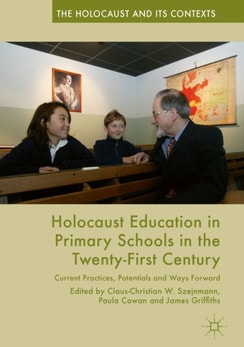
This collection is the first of its kind, bringing together Holocaust educational researchers as well as school and museum educators from across the globe, to discuss the potentials of Holocaust education in relation to primary school children.
This book offers a comprehensive critique of the Kantian principle that 'objects conform to our cognition' from the perspective of a Copernican world-view which stands diametrically opposed to Kant's because founded on the principle that our cognition conforms to objects.
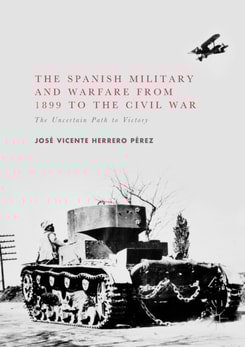
This book explores the attitudes of the Spanish army officer corps towards the evolution of warfare during the early decades of the twentieth century, and their influence on the armies of the Spanish Civil War.
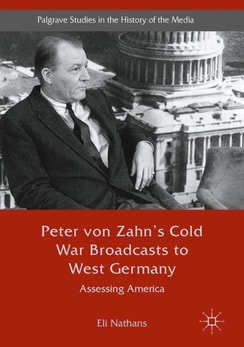
This book examines the pioneering radio broadcasts and television documentaries about the United States made in the 1950s by the influential West German journalist Peter von Zahn.
Wie ein Damoklesschwert schwebte während des Ost-West-Konflikts die Möglichkeit einer offenen militärischen Auseinandersetzung mit den Streitkräften des Warschauer Pakts über dem "Frontstaat" Bundesrepublik Deutschland.
Philosophy typically ignores biographical, historical, and cultural aspects of theoriss' lives in an attempt to take a supposedly abstract and objective view of their work.
Since culture, the media and the arts deal with the perception and the processing of catastrophe, what kind of social knowledge does this process produce and how does it contribute to the sustainable development of societies?
Since culture, the media and the arts deal with the perception and the processing of catastrophe, what kind of social knowledge does this process produce and how does it contribute to the sustainable development of societies?
Philosophy typically ignores biographical, historical, and cultural aspects of theoriss' lives in an attempt to take a supposedly abstract and objective view of their work.
This book is a contribution to the emerging field of research-based performance, which seeks to gain a wider audience for issues that are crucial to our understanding of history and to informing our future actions.
This book offers a complete narrative of the development of Nordicism, from its roots in the National Romantic movement of the late eighteenth century, through to its most notorious manifestation in Nazi Germany, and finally to the fragmented forms that still remain in contemporary society.
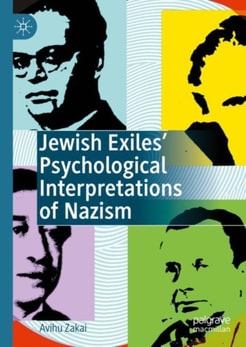
This book examines works of four German-Jewish scholars who, in their places of exile, sought to probe the pathology of the Nazi mind: Wilhelm Reich's The Mass Psychology of Fascism (1933), Erich Fromm's Escape from Freedom (1941), Siegfried Kracauer's From Caligari to Hitler: A Psychological History of the German Film (1947), and Erich Neumann's Depth Psychology and a New Ethic (1949).
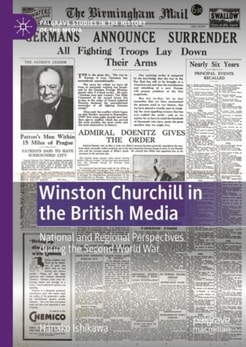
The book explores how Churchill was portrayed in the UK press during the Second World War, comparing his depictions in Scottish, Welsh, Northern Irish, and provincial English newspapers.
This book offers a unique approach to memory studies by focusing on local memory work conducted across the divide of the fall of Communism, whereas other histories have consistently used 1989 as a watershed moment.