In the first major study of the Royal Canadian Navy's contribution to foreign policy, Nicholas Tracy takes a comprehensive look at the paradox that Canada faces in participating in a system of collective defence as a means of avoiding subordination to other countries.
"e;Readers should not forget what is as hard to appreciate today in the case of slave trading as it was over a hundred years ago when Gomer Williams wrote his book - that both were legitimate endeavours in the eyes of domestic and emerging international law, and, more important, neither was viewed as in any way immoral: before the late eighteenth century, slave trading and privateering were seen as indistinguishable from trading in Baltic timber or Canadian furs.
A collection of incisive essays emerging from the second Fleet Historical Conference in Halifax, Nova Scotia, A Nation's Navy documents for the first time the evolution of a distinctive Canadian naval identity.
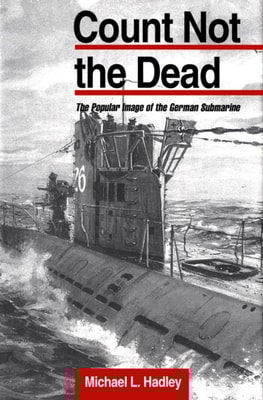
Basing his study on some two-hundred-and-fifty German novels, memoirs, fictionalized histories, and films (including Das Boot), Michael Hadley examines the popular image of the German submarine and weighs the values, purposes, and perceptions of German writers and film makers.
Pritchard's chief concern is to explain why Bourbon France, the richest and most poewerful state in Europe in the middle of the eighteenth century, failed to exercise its power at sea.
Michael Hadley and Roger Sarty shed new light on Canadian and German history -- and on Canada's naval defences in particular -- by exploring the naval operations and politics of both nations between 1880 and 1918.
Now in paperback, revised and updated, the stirring and authoritative account of one of World War II's most highly decorated submarinesFind 'Em, Chase 'Em, Sink 'Em is the first book to recount the tragic and mysterious loss of the World War II submarine USS Gudgeon.
On the morning of April 10, 1963, the world's most advanced submarine was on a test dive off the New England coast when she sent a message to a support ship a thousand feet above her on the surface: experiencing minor problem .
This book critically analyzes US political-military strategy by arguing that freedom of the seas discourse is fundamentally unfit for an era of maritime great power competition.
The Hazard Mesh, first published in 1946, is the work of a 28-year-old naval officer who disobeyed wartime regulations by keeping a diary 'in the field' during the Normandy D-Day landings and subsequent Liberation de la France.
The true story of how Britain's maritime power helped gain this country unparalleled dominance of the world's economy, Admirals celebrates the rare talents of the men who shaped the most successful fighting force in world history.
This book is the latest contribution to a unique series in a common format documenting in great detail the warships of the major naval powers during the age of sail.
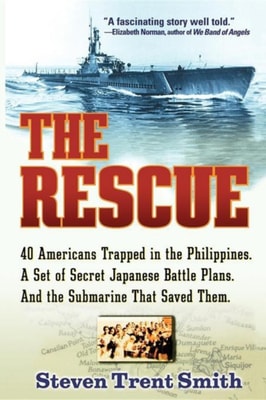
Advance Praise for The Rescue "e;Steven Trent Smith grapples boldly with several big subjects: the Japanese occupation of the Philippines; the capture of Japan's 'Z Plan' (the decisive-battle strategy for destroying the U.
Explores the contrasting fates of Admiral John Duncan Bulkeley and General Douglas MacArthur, revealing the often-overlooked sacrifices of Bulkeley's PT boat crew during a heroic yet controversial rescue from the Philippines in World War II.
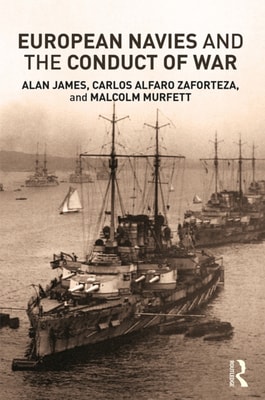
European Navies and the Conduct of War considers the different contexts within which European navies operated over a period of 500 years culminating in World War Two, the greatest war ever fought at sea.
European Navies and the Conduct of War considers the different contexts within which European navies operated over a period of 500 years culminating in World War Two, the greatest war ever fought at sea.
This book offers a detailed investigation of naval diplomacy, past and present, and challenges the widely accepted Anglo-American school of sea power thought.