Kill Chain is the essential history of drone warfare, a development in military technology that, as Andrew Cockburn demonstrates, has its origins in long-buried secret programmes dating to US military interventions in Vietnam and Yugoslavia.
Drone Warfare is the first comprehensive analysis of one of the fastest growing-and most secretive-fronts in global conflict: the rise of robot warfare.
After his first meeting with General Alexander in August 1942, Lieutenant-General Sir Brian Horrocks wrote that: By repute he was Winston Churchills fire brigade chief par excellence: the man who was always dispatched to retrieve the most desperate situations.
With the Japanese seemingly unbeatable after their conquest of Malaya, Singapore, Thailand and much of Burma, Orde Wingates plans to conduct long range deep penetration operations behind Japanese lines in Burma were audacious to say the least.
This book is a riveting account told in ten big chapters of the young RAF crews who flew Lancasters in RAF Bomber Command from 1942 to the end of the war in Europe in April 1945.
Roy Nesbit brings to bear all the insight gained from his flying experience and his skill as a aviation historian as he investigates the wartime disappearances he describes in this haunting book.
A Soviet bomber pilot who flew more than 300 missions behind enemy lines offers a rare firsthand account of life on the Eastern Front in this WWII memoir.
General Dare Wilson saw action in France 1940 (Dunkirk), Italy and North West Europe (where he won his MC) with the Northumberland Fusiliers and later the Recce Regiment.
In his own words, the victor of El Alamein tells his life story in a book that's "e;an absolutejoy to read and may be described as a tour-de-force"e; (Belfast News Letter).
The political machinations, the strategies, and the hour-by-hour accounts of the war that locked Elizabeth I and Philip II in a battle for naval supremacy.
The pilot's son delivers "e;a fascinating read and an invaluable insight in to the workings of pre- and wartime test flying under the Third Reich"e; (Military Aircraft Monthly).
Fighter Operations in Europe and North Africa 1939-1945 tells the story of Allied and German fighter pilots in Europe, over the Mediterranean and in North Africa during the Second World War.
This is the previously untold story of the remarkable relationship between a young British diplomat and Emperor Haile Selassie of Ethiopia from the latter's Coronation in 1930 until his murder in 1975.
From the earliest days of the Second World War, Hitlers U-Boats were unleashed with the mission of sinking as much Allied merchant tonnage as possible.
This is a biographical dictionary of the two flag officers and captains of 27 battleships, four frigates and two minor combatant vessels that were present under Nelson's command at the historic battle of Trafalgar, 21 October 1805.
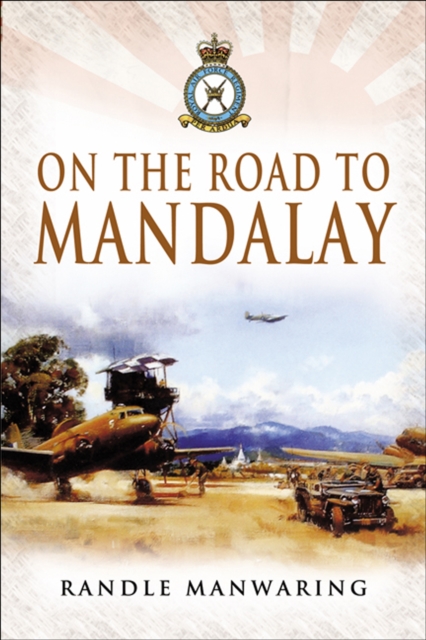
"e;The fascinating book features the life story of Dr Randle Manwaring,focusing particularly on his Regiment's fight to capture Burma towards the end of WW2As one of the founding Officers of the RAF Regiment, the author helped train and set up the Regiment from its inception in 1942.