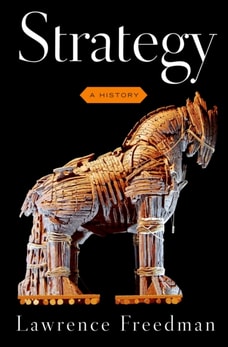
Selected as a Financial Times Best Book of 2013In Strategy: A History, Sir Lawrence Freedman, one of the world's leading authorities on war and international politics, captures the vast history of strategic thinking, in a consistently engaging and insightful account of how strategy came to pervade every aspect of our lives.
Selected as a Financial Times Best Book of 2013In Strategy: A History, Sir Lawrence Freedman, one of the world's leading authorities on war and international politics, captures the vast history of strategic thinking, in a consistently engaging and insightful account of how strategy came to pervade every aspect of our lives.
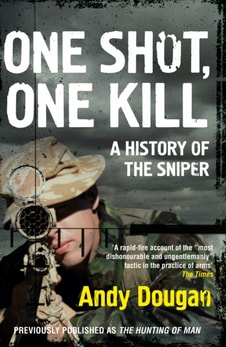
Previously published as The Hunting of ManOne shot, one kill: a cultural and military history of the sniper since 1643, when the first shot was fired by a sniper during the battle for Litchfield in the English Civil War, to the present day, when the sniper has become the embodiment of contemporary military strategy and technology.
The National Research Council's Army Research Laboratory Technical Assessment Board (ARLTAB) provides biennial assessments of the scientific and technical quality of the research, development, and analysis programs at the Army Research Laboratory, focusing on ballistics sciences, human sciences, information sciences, materials sciences, and mechanical sciences.
The National Research Council's Army Research Laboratory Technical Assessment Board provides biennial assessments of the scientific and technical quality of the research, development, and analysis programs at the Army Research Laboratory, focusing on ballistics sciences, human sciences, information sciences, materials sciences, and mechanical sciences.
The charge of the Army Research Laboratory Technical Assessment Board (ARLTAB) is to provide biennial assessments of the scientific and technical quality of the research, development, and analysis programs at the Army Research Laboratory (ARL).
How a strategist's ideas were catastrophically ignored in 1914-but shaped Britain's success in the Second World War and beyond Leading historian Andrew Lambert shows how, as a lawyer, civilian, and Liberal, Julian Corbett (1854-1922) brought a new level of logic, advocacy, and intellectual precision to the development of strategy.
This handbook offers a collection of cutting-edge essays on all aspects of strategic culture by a mix of international scholars, consultants, military officers, and policymakers.
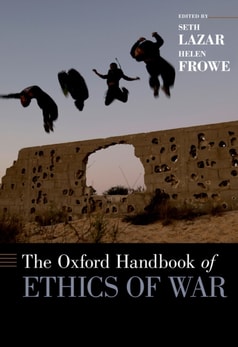
Though scholars of political science and moral philosophy have long analyzed the justifications for and against waging war as well as the ethics of warfare itself, the problem of ending wars has received less attention.
A major new history of war that challenges our understanding of military dominance and how it is achieved This expansive book surveys the history of warfare from ancient Mesopotamia to the Gulf War in search of a deeper understanding of the origins of Western warfare and the reasons for its eminence today.
Proving Grounds brings together a wide range of scholars across disciplines and geographical borders to deepen our understanding of the environmental impact that the U.
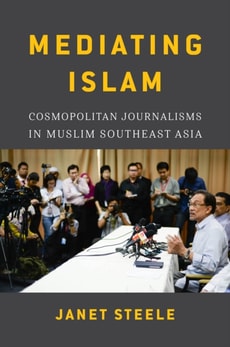
Broadening an overly narrow definition of Islamic journalism, Janet Steele examines day-to-day reporting practices of Muslim professionals, from conservative scripturalists to pluralist cosmopolitans, at five exemplary news organizations in Malaysia and Indonesia.
This book improves our understanding of battlefield coalitions, providing novel theoretical and empirical insight into their nature and capabilities, as well as the military and political consequences of their combat operations.
This book examines the complex interactions amongst states and security apparatuses in the contemporary global order, and the prospect of peace with the emergence of cyberwarfare.
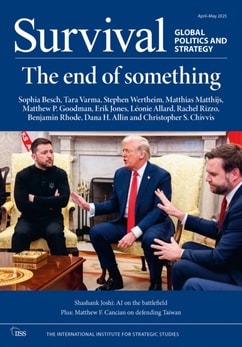
Survival, the IISS's bimonthly journal, challenges conventional wisdom and brings fresh, often controversial, perspectives on strategic issues of the moment.
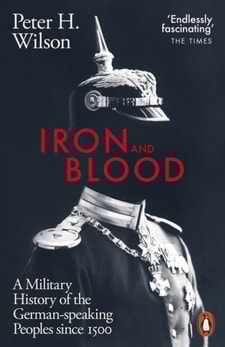
*WINNER OF THE DUKE OF WELLINGTON MEDAL FOR MILITARY HISTORY**A DAILY TELEGRAPH BOOK OF THE YEAR 2022*'No one interested in the history of Europe can afford not to read this stupendous book' Simon Heffer, Daily TelegraphIron and Blood is a startlingly ambitious and absorbing book, encompassing five centuries of political, military, technological and economic change to tell the story of the German-speaking lands, from the Rhine to the Balkan frontier, from Switzerland to the North Sea.
This book offers a comprehensive examination of historical Norwegian and allied airborne maritime surveillance operations in the North Atlantic, after World War II until the present.
In Sex Trafficking, Scandal, and the Transformation of Journalism, Gretchen Soderlund offers a new way to understand sensationalism in both newspapers and reform movements.
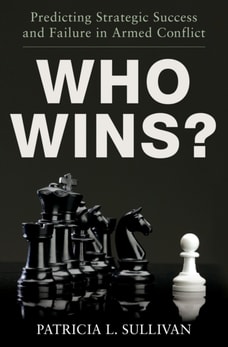
Despite their immense war-fighting capacity, the five most powerful states in the international system have failed to attain their primary political objective in almost 40% of their military operations against weak state and non-state targets since 1945.
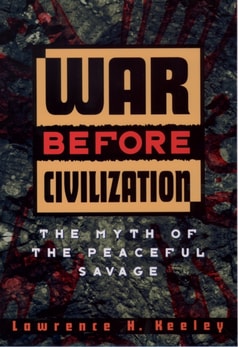
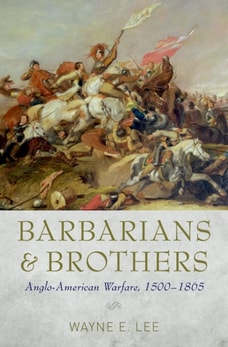
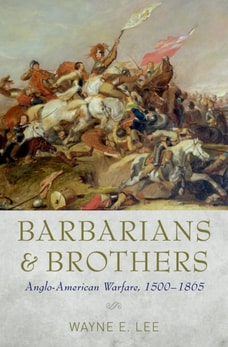
The most important conflicts in the founding of the English colonies and the American republic were fought against enemies either totally outside of their society or within it: barbarians or brothers.
The most important conflicts in the founding of the English colonies and the American republic were fought against enemies either totally outside of their society or within it: barbarians or brothers.
Long acknowledged as a classic text on strategy, Sun Tzu's The Art of War has been admired by leaders as diverse as Mao Zedong and General Norman Schwartzkopf.
Long acknowledged as a classic text on strategy, Sun Tzu's The Art of War has been admired by leaders as diverse as Mao Zedong and General Norman Schwartzkopf.
Just War theory - as it was developed by the Catholic theologians of medieval Europe and the jurists of the Renaissance - is a framework for the moral and legal evaluation of armed conflicts.
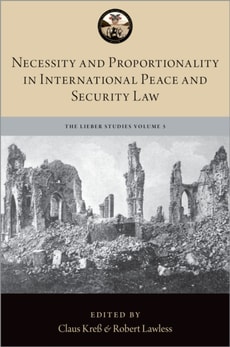
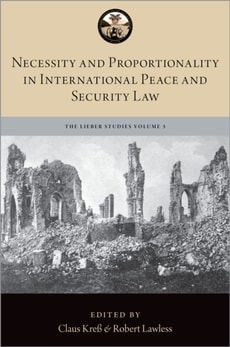
Necessity and proportionality hold a firm place in the international law governing the use of force by states, as well as in the law of armed conflict.
Necessity and proportionality hold a firm place in the international law governing the use of force by states, as well as in the law of armed conflict.
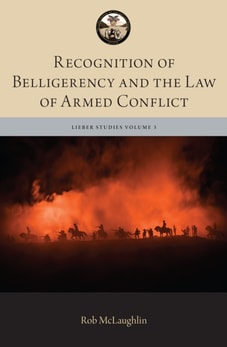
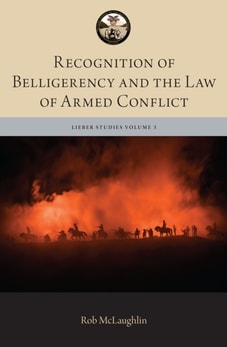
Prior to the progressive development of the law of armed conflict heralded by the 1949 Geneva Conventions - most particularly in relation to the concepts of international and non-international armed conflict-the customary doctrine on recognition of belligerency functioned for almost 200 years as the definitive legal scheme for differentiating internal conflict from "e;civil wars"e;, in which the law of war as applicable between states applied de jure.
Prior to the progressive development of the law of armed conflict heralded by the 1949 Geneva Conventions - most particularly in relation to the concepts of international and non-international armed conflict-the customary doctrine on recognition of belligerency functioned for almost 200 years as the definitive legal scheme for differentiating internal conflict from "e;civil wars"e;, in which the law of war as applicable between states applied de jure.