Ever since Thucydides pondered reasons for the outbreak of the Peloponnesian War, writers, philosophers, and social scientists have tried to identify factors that promote conflict escalation: for example, history (tomorrow's wars are often rooted in yesterday's conflicts), changing balance of power among nations, or domestic political forces.
Ever since Thucydides pondered reasons for the outbreak of the Peloponnesian War, writers, philosophers, and social scientists have tried to identify factors that promote conflict escalation: for example, history (tomorrow's wars are often rooted in yesterday's conflicts), changing balance of power among nations, or domestic political forces.
The increased military employment of remotely operated aerial vehicles, also known as drones, has raised a wide variety of important ethical questions, concerns, and challenges.
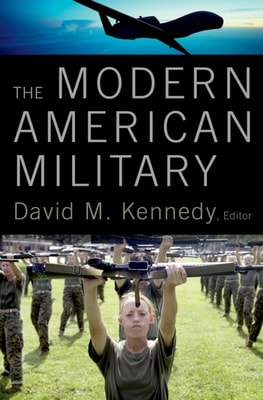
The advent of the all-volunteer force and the evolving nature of modern warfare have transformed our military, changing it in serious if subtle ways that few Americans are aware of.
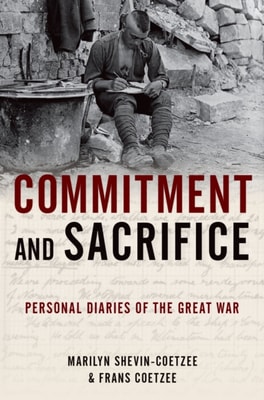
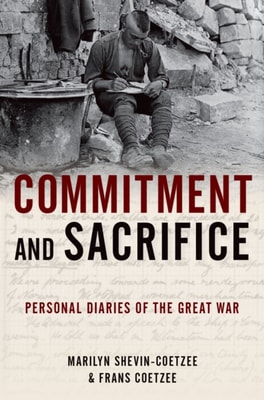
For years, those who attempted to understand the devastation of World War I looked to the collections of diplomatic documents, the stirring speeches, and the partisan memoirs of the leading participants.
For years, those who attempted to understand the devastation of World War I looked to the collections of diplomatic documents, the stirring speeches, and the partisan memoirs of the leading participants.
Military and defense-related procurement has been an important source of technology development across a broad spectrum of industries that account for an important share of United States industrial production.
The epic life story of a schoolteacher and preacher in Missouri, guerrilla fighter in the Civil War, Congressman, freethinking lecturer and author, and anarchist.
The epic life story of a schoolteacher and preacher in Missouri, guerrilla fighter in the Civil War, Congressman, freethinking lecturer and author, and anarchist.
In the past three decades, the United States government has used special operations repeatedly in an effort to achieve key foreign policy objectives, such as in the overthrow of Fidel Castro in Cuba and the rescuing of American hostages in Iran.
For mid-19th-century Americans, the Mexican War was not only a grand exercise in self-identity, legitimizing the young republic's convictions of mission and destiny to a doubting world; it was also the first American conflict to be widely reported in the press and to be waged against an alien foe in a distant and exotic land.
A synthesis of literary critical and historical methods, Porterfield's book combines insightful analysis of Puritan theological writings with detailed examinations of historical records showing the changing patterns of church membership and domestic life.
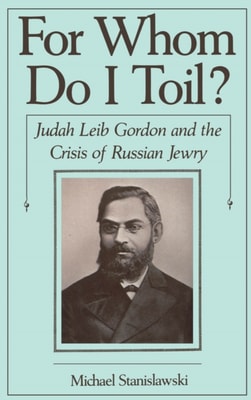
This is the first full-length biography of Judah Leib Gordon (1830-92), the most important Hebrew poet of the 19th century, and one of the pivotal intellectual and cultural figures in Russian Jewry.
It was not until the emergence of the ideologies of Zionism and Socialism at the end of the last century that the Jewish communities of the Diaspora were perceived by historians as having a genuine political life.
This book explores the impact of war and political crisis on the national identity of Jews, both in the multinational Habsburg monarchy and in the new nation-states that replaced it at the end of World War I.
Every day the American government, the United Nations, and other international institutions send people into non-English speaking, war-torn, and often minimally democratic countries struggling to cope with rising crime and disorder under a new regime.
Our world of increasing and varied conflicts is confusing and threatening to citizens of all countries, as they try to understand its causes and consequences.
This interdisciplinary collection of comparative essays by distinguished historians and literary critics looks at aspects of the thought of Jonathan Edwards and Benjamin Franklin and considers the place of these two men in American culture.
Civil wars have caused tremendous human suffering in the last century, and the United Nations is often asked to send peacekeepers to stop ongoing violence.
Civil wars have caused tremendous human suffering in the last century, and the United Nations is often asked to send peacekeepers to stop ongoing violence.
'If you had asked me why I had joined the militia I should have answered: "e;To fight against Fascism,"e; and if you had asked me what I was fighting for, I should have answered: "e;Common decency.
'If you had asked me why I had joined the militia I should have answered: "e;To fight against Fascism,"e; and if you had asked me what I was fighting for, I should have answered: "e;Common decency.