The United States and the Soviet Union could drastically reduce their nuclear arsenals below the levels prescribed by the new Strategic Arms Reduction Treaty (START).
In this volume, the National Research Council examines problems arising throughout government-owned, contractor-operated facilities in the United States engaged in activities to build nuclear weapons.
Unified life-cycle engineering (ULCE), or concurrent engineering, is a design engineering environment in which computer-aided design technology is used to assess and improve the quality of a productnot only during the active design phases but throughout its entire life cycle.
This nontechnical overview of developments in nuclear arms control describes how the United States and the Soviet Union arrived at their present positionsand where they might go from here.
In this study, CISAC tackles the technical dimensions of a longstanding controversy: To what extent could existing and plausibly attainable measures for transparency and monitoring make possible the verification of all nuclear weaponsstrategic and nonstrategic, deployed and nondeployedplus the nuclear-explosive components and materials that are their essential ingredients?
The successor states of the former Soviet Union have enormous stocks of weapons-usable nuclear material and other militarily significant commodities and technologies.
Physics at the beginning of the twenty-first century has reached new levels of accomplishment and impact in a society and nation that are changing rapidly.
This report reviews past NRC studies that have examined various dimensions of computer and network security and vulnerability and brings the results forward into the context of the current environment of security and vulnerability.
The report provides an independent assessment of suitable test protocols that might be useful and reliable for the testing and evaluation of standoff chemical agent detectors.
Information technology (IT) is essential to virtually all of the nation's critical infrastructures making them vulnerable by a terrorist attack on their IT system.
With the publication in 1994 of Atomic, Molecular, and Optical Science: An Investment in the Future (the FAMOS report), the National Research Council launched the series Physics in a New Era, its latest survey of physics.
Drawing upon the considerable existing body of technical material related to the Comprehensive Test Ban Treaty, the National Academy of Sciences reviewed and assessed the key technical issues that arose during the Senate debate over treaty ratification.
In 1993, the United States signed the Chemical Weapons Convention (CWC), an international treaty outlawing the production, stockpiling, and use of chemical weapons.
Nuclear forensics is the analysis of nuclear materials, devices, emissions, and signals to determine the origin and history of those nuclear materials and devices.
During the last decade, national and international scientific organizations have become increasingly engaged in considering how to respond to the biosecurity implications of developments in the life sciences and in assessing trends in science and technology (ST) relevant to biological and chemical weapons nonproliferation.
Drawing upon the considerable existing body of technical material related to the Comprehensive Test Ban Treaty, the National Academy of Sciences reviewed and assessed the key technical issues that arose during the Senate debate over treaty ratification.
With the publication in 1994 of Atomic, Molecular, and Optical Science: An Investment in the Future (the FAMOS report), the National Research Council launched the series Physics in a New Era, its latest survey of physics.
In this study, CISAC tackles the technical dimensions of a longstanding controversy: To what extent could existing and plausibly attainable measures for transparency and monitoring make possible the verification of all nuclear weaponsstrategic and nonstrategic, deployed and nondeployedplus the nuclear-explosive components and materials that are their essential ingredients?
The Department of Defense (DoD) recently adopted evolutionary acquisition, a dynamic strategy for the development and acquisition of its defense systems.
The National Geospatial-Intelligence Agency (NGA) provides geospatial intelligence (GEOINT) to support national security, both as a national intelligence and a combat support agency.
The successor states of the former Soviet Union have enormous stocks of weapons-usable nuclear material and other militarily significant commodities and technologies.
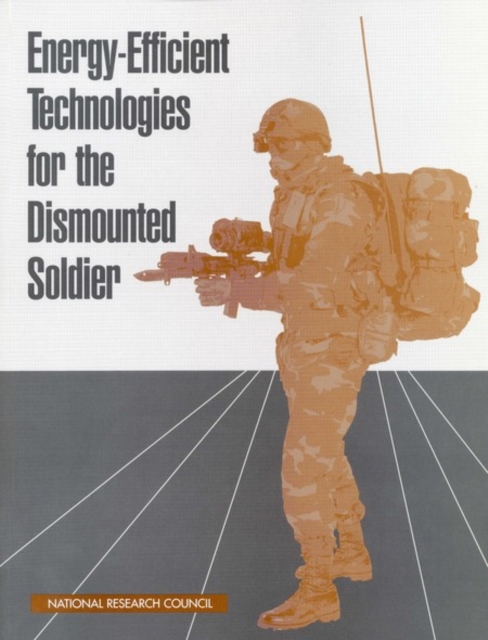
This book documents electric power requirements for the dismounted soldier on future Army battlefields, describes advanced energy concepts, and provides an integrated assessment of technologies likely to affect limitations and needs in the future.
Physics at the beginning of the twenty-first century has reached new levels of accomplishment and impact in a society and nation that are changing rapidly.
This report reviews past NRC studies that have examined various dimensions of computer and network security and vulnerability and brings the results forward into the context of the current environment of security and vulnerability.