This important reference work offers students a comprehensive overview of the Darfur Genocide, with roughly 100 in-depth articles by leading scholars on an array of topics and themes and more than a dozen key primary source documents.
Work played a central role in Nazi ideology and propaganda, and even today there remain some who still emphasize the supposedly positive aspects of the regime s labor policies, ignoring the horrific and inhumane conditions they produced.
Founded in 2000, the German Foundation Remembrance, Responsibility and Future is one of the largest transitional justice initiatives in history: in cooperation with its international partner organizations, it has to date paid over 4 billion euros to nearly 1.
During the First World War, the Jewish population of Central Europe was politically, socially, and experientially diverse, to an extent that resists containment within a simple historical narrative.
The exodus of refugees from Nazi Germany in the 1930s has received far more attention from historians, social scientists, and demographers than many other migrations and persecutions in Europe.
In this first interdisciplinary study of this contentious subject, leading experts in politics, history, and philosophy examine the complex aspects of the terror bombing of German cities during World War II.
The availability of food is an especially significant issue in zones of conflict because conflict nearly always impinges on the production and the distribution of food, and causes increased competition for food, land and resources Controlling the production of and access to food can also be used as a weapon by protagonists in conflict.
Political instability is nearly always accompanied by fuller prisons, and this was particularly true during the long Second World War, when military mobilization, social disorder, wrenching political changes, and shifting national boundaries swelled the ranks of the imprisoned and broadened the carceral reach of the state.
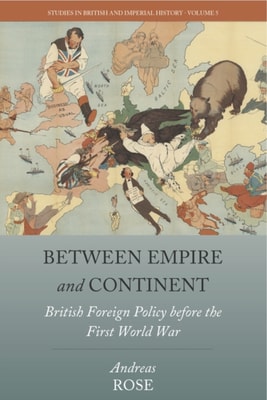
Prior to World War I, Britain was at the center of global relations, utilizing tactics of diplomacy as it broke through the old alliances of European states.
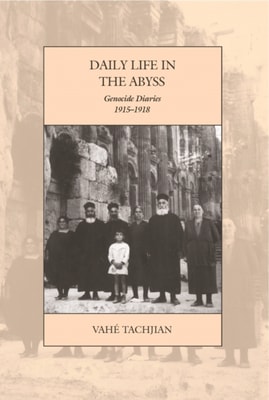
Historical research into the Armenian Genocide has grown tremendously in recent years, but much of it has focused on large-scale questions related to Ottoman policy or the scope of the killing.
Far from the image of an apolitical, clean Wehrmacht that persists in popular memory, German soldiers regularly cooperated with organizations like the SS in the abuse and murder of countless individuals during the Second World War.
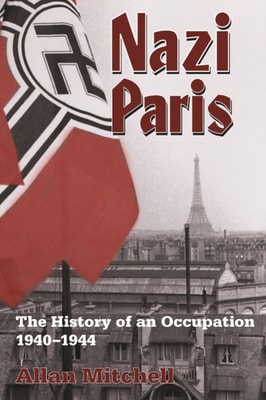
Basing his extensive research into hitherto unexploited archival documentation on both sides of the Rhine, Allan Mitchell has uncovered the inner workings of the German military regime from the Wehrmacht s triumphal entry into Paris in June 1940 to its ignominious withdrawal in August 1944.
Between 1939 and 1945, some 80,000 Finnish children were sent to Sweden, Denmark, and elsewhere, ostensibly to protect them from danger while their nation s soldiers fought superior Soviet and German forces.
Far from the battlefront, hundreds of thousands of workers toiled in Bohemian factories over the course of World War I, and their lives were inescapably shaped by the conflict.
Based on unprecedented access to the Ghanaian military barracks and inspired by the recent resurgence of coups in West Africa, Agyekum assesses why and how the Ghana Armed Forces were transformed from an organization that actively orchestrated coups into an institution that accepts the authority of the democratically elected civilian government.
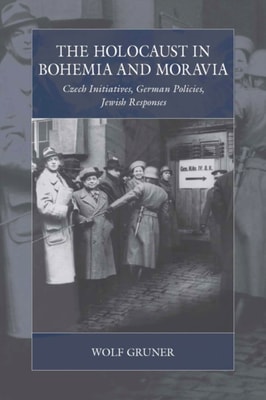
Prior to Hitler s occupation, nearly 120,000 Jews inhabited the areas that would become the Protectorate of Bohemia and Moravia; by 1945, all but a handful had either escaped or been deported and murdered by the Nazis.
The Sonderkommando the special squad of enslaved Jewish laborers who were forced to work in the gas chambers and crematoria of Auschwitz-Birkenau comprise one of the most fascinating and troubling topics within Holocaust history.
Only in recent years has the history of European colonial concentration camps in Africa in which thousands of prisoners died in appalling conditions become widely known beyond a handful of specialists.
The early twentieth-century advent of aerial bombing made successful evacuations essential to any war effort, but ordinary people resented them deeply.
The collapse of the Habsburg Monarchy at the end of World War I ushered in a period of radical change for East-Central European political structures and national identities.
Contemporary historians have transformed our understanding of the German military in World War II, debunking the clean Wehrmacht myth that held most soldiers innocent of wartime atrocities.
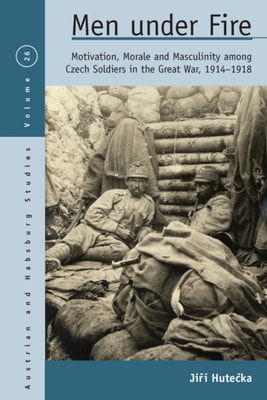
In historical writing on World War I, Czech-speaking soldiers serving in the Austro-Hungarian military are typically studied as Czechs, rarely as soldiers, and never as men.
Modern military history, inspired by social and cultural historical approaches, increasingly puts the national histories of the Second World War to the test.
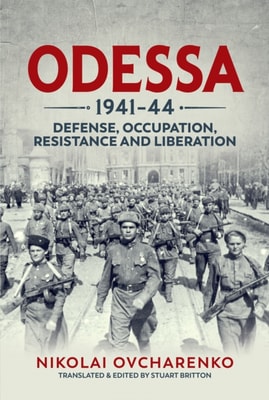
After a brief overview of the origins and development of the city of Odessa on the Black Sea Coast, author Nikolai Ovcharenko turns to its citizens’ ordeal during the Second World War.
Increasingly, therapy practitioners and researchers position themselves within a pluralistic perspective that draws on the value of multiple sources of knowledge.
This volume analyzes the phenomenon of non-military warfare in theory and practice, including its relation to military warfare, and how states can understand and counter this activity.
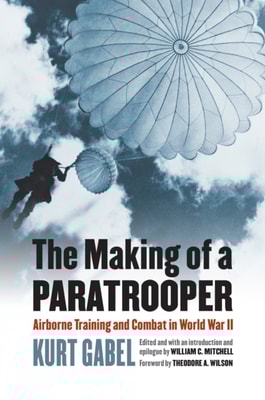
The memoir of paratrooper Kurt Gabela German Jew who emigrated to the US in 1938, joined the 513th Regiment of the 17th Airborne Division, and fought against his former countrymen in the Battle of the Bulge.
Looking to the future in confronting the Islamic StateThe Islamic State (best known in the West as ISIS or ISIL) has been active for less than a decade, but it has already been the subject of numerous histories and academic studies-all focus primarily on the past.
For more than forty years, the United States has maintained a public commitment to nuclear disarmament, and every president from Ronald Reagan to Barack Obama has gradually reduced the size of America's nuclear forces.
In the winter of 1948, a poorly educated jack-of-all-trades moved his ever- increasing family to a small vegetable crops farm on the Darling Downs, in Queensland.
Proving Grounds brings together a wide range of scholars across disciplines and geographical borders to deepen our understanding of the environmental impact that the U.
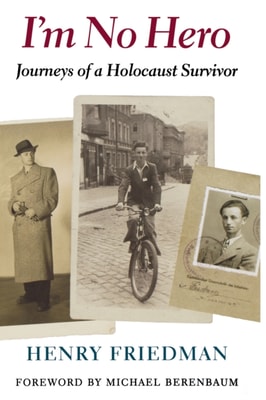
Henry Friedman was robbed of his adolescence by the monstrous evil that annihilated millions of European Jews and changed forever the lives of those who survived.
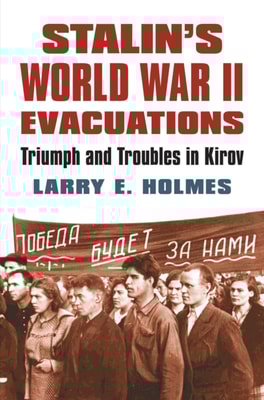
Choice Outstanding Academic TitleIn the face of the German onslaught in World War II, the Soviets succeeded, as Molotov later recalled, in relocating to the rear virtually an entire industrial country.
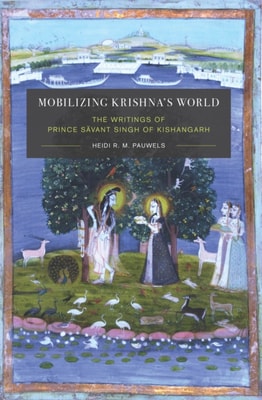
Savant Singh (16941764), the Rajput prince of Kishangarh-Rupnagar, is famous for commissioning beautiful works of miniature painting and composing devotional (bhakti) poetry to Krishna under the nom de plume Nagaridas.