Following the critically acclaimed publication eight years ago of Buccaneer Boys, long-serving Buccaneer navigator Air Commodore Graham Pitchfork has now followed up the great success of the book with more true tales from those who flew the last all-British bomber.
Since the end of World War 2 the primary role of the Royal Navy's Fleet Air Arm has been airborne power projection; the ability rapidly to respond to any trouble spot across the globe and to protect the interests of the United Kingdom and its partner nations.
A brilliant, eye-opening espionage thriller by a former special forces officer 'now at the forefront of spy writing'The thinking person's John le Carr ' Tribune 'Edward Wilson seems poised to inherit the mantle of John le Carr ' Irish Independent'More George Smiley than James Bond, Catesby will delight those readers looking for less blood and more intelligence in their spy thrillers' Publishers WeeklyIt is 1982 and the British prime minister and the Argentine president are both clinging to power.
This is the story of an ordinary young man, unworldly, untried and patriotic, who enlisted at 18 in 1942 and became an infantryman specialising as a machine gunner with the Middlesex Regiment and later with the Cheshire Regiment.
In December 1949, I, as a young man of 18, arrived in a different world - RAF Shaibah, 7 miles or so from Basra in Iraq, to do my (extended) two-year National Service.
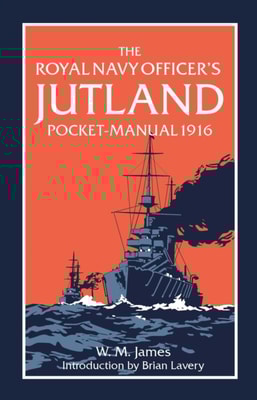
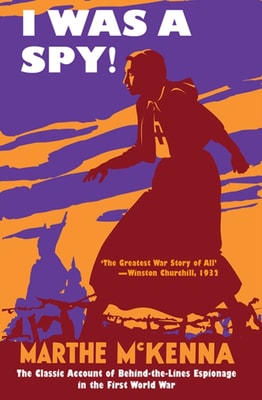
September 1914, and the whole of Europe was at war following the assassination of Archduke Franz Ferdinand and his beloved wife Sophie by Gavrilo Princip in Sarajevo on 28th June 1914.
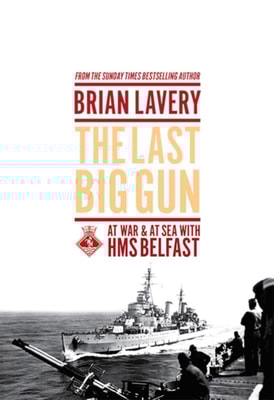
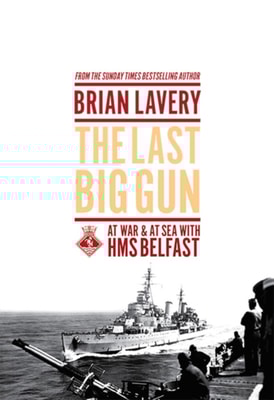
As she lay in dry dock, devastatingly damaged by one of Hitler’s newly deployed magnetic mines after barely two months in service, few could have predicted the illustrious career that lay ahead for the cruiser HMS Belfast.
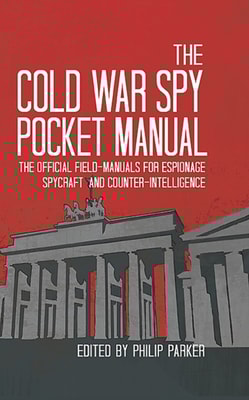
"Some twenty-five years after its conclusion, yet with its echoes resonating once more in contemporary East-West relations, the rigors and detail of many aspects of the Cold War are becoming increasingly of interest.
"Some twenty-five years after its conclusion, yet with its echoes resonating once more in contemporary East-West relations, the rigors and detail of many aspects of the Cold War are becoming increasingly of interest.
As she lay in dry dock, devastatingly damaged by one of Hitler’s newly deployed magnetic mines after barely two months in service, few could have predicted the illustrious career that lay ahead for the cruiser HMS Belfast.
First raised by his maternal grandmother and her four youngest sisters in the harbour city of Le Havre, in the English Channel, a boy, Jean, will discover later in tragic circumstances the love of his mother.
Following the 1952 reorganization of the Portuguese Air Force from the army and naval air arms, Portugal now had an entity dedicated solely to aviation that would bring it into line with its new NATO commitment.
With Ethiopia in disarray following a period of severe internal unrest and the spread of insurgencies in Eritrea and Tigray, Ethiopia and its armed forces should have offered little opposition to well-equipped Somali armed forces which were unleashed to capture Ogaden, in July 1977.
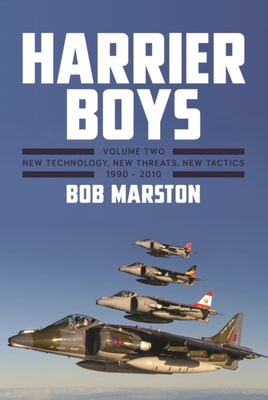
In Harrier Boys, Volume One: Cold War Through the Falklands, 1969-1990, Robert Marston, who flew Harriers for many years, draws together accounts from others who worked with this unique jet through its history.
Originally intended as a trainer, the Anglo-French Sepecat jet, equipped with the very latest in weapon-aiming and navigational equipment, eventually became the backbone of the RAF’s tactical strike-attack and recce forces for a decade from the mid-1970s.
208 Squadron based at RAF Valley in Anglesey will be celebrating its 100th anniversary in October 2016, making it one of the few RAF squadrons to achieve this unique distinction whilst still part of the RAF’s current order of battle.
In the second volume of Harrier Boys, as with the first, the history of this remarkable aircraft in service with UK armed forces is illustrated through personal reminiscences of the people who worked with it.
'Undoubtedly the most powerful and immediate book to emerge from the Balkan horror of ethnic civil war' Antony Beevor, Daily TelegraphIn 1993, Anthony Loyd hitchhiked to the Balkans hoping to become a journalist.
Designed by Sydney Camm as a swept wing, daytime interceptor with excellent maneuverability, the Hunter became the first jet aircraft manufactured by Hawker for the Royal Air Force.
Waffen-SS Armour in Normandy presents the combat history of SS-Panzer Regiment 12 and SS-Panzerjäger Abteilung 12 in the Battle for France from June to the end of August 1944 based on transcriptions of their original unit war diaries from the Military History Archives in Prague.
When Russia declared war on the Ottoman Empire in April 1877, it was the fifth time during the nineteenth century that hostilities had broken out between the two empires.
An Army marches on its stomach, observed Napoleon, a hundred and fifty years later General Rommel remarked that the British should always be attacked before soldiers had had an early morning cup of tea.
Nominated for the NYMAS Arthur Goodzeit Book Award 2013Portugal's three wars in Africa in Angola, Mozambique and Portuguese Guinea (Guiné-Bissau today) lasted almost 13 years - longer than the United States Army fought in Vietnam.
Nominated for the Royal Historical Society Whitfield Book Prize 2013Nominated for the NYMAS Arthur Goodzeit Book Award 2013Nominated for the SAHR Templer Medal 2013This book provides the first comprehensive study of the British Army’s horse services between 1875-1925, including the use of horses in the 1899-1902 Anglo-Boer and the 1914-18 wars.
Military working dogs are silently winning the war against the world's deadliest insurgents; day after day saving soldiers' lives in the most dangerous country on the planet.
In his historical series Hinze provides the only comprehensive account of events on the central and southern portions of the German Eastern Front during the years of German retreat.
As with many other aspects of the British army the outbreak of World War One started a process of change that was to result in a radically different provision of chaplaincy care once the war was over.
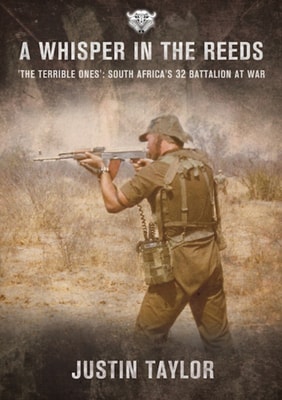
This amazing work relates the experiences of Justin Taylor who served as the Signals Officer for the South African Defense Force's infamous 32 Battalion - the 'Terrible Ones'!