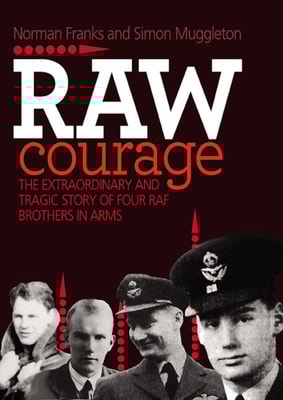
The generation that reached maturity in the inter war years had grown up in the shadow of the heroic age of Polar exploration and the sacrifices of a generation in the Great War.
208 Squadron based at RAF Valley in Anglesey will be celebrating its 100th anniversary in October 2016, making it one of the few RAF squadrons to achieve this unique distinction whilst still part of the RAF’s current order of battle.
Nominated for the Royal Historical Society Whitfield Book Prize 2013Nominated for the NYMAS Arthur Goodzeit Book Award 2013Nominated for the SAHR Templer Medal 2013This book provides the first comprehensive study of the British Army’s horse services between 1875-1925, including the use of horses in the 1899-1902 Anglo-Boer and the 1914-18 wars.
The events in Jet Age Man took place during the early Cold War, an era that will go down as a period when civilization teetered on the edge of the abyss.
This book investigates several controversial issues regarding the role of the Soviet Union and the performance of the Soviet government and Red Army, to which the author provides some provocative answers.
This all-new work chronicles the experiences of Paul French who, upon leaving the British Army's 21 SAS (V), sought adventure and excitement in C Squadron of the Rhodesian SAS.
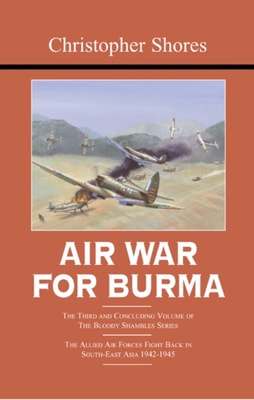
In his monumental work Bloody Shambles, Volume Two, Christopher Shores described in detail the British retreat out of Burma, culminating at the end of May 1942.
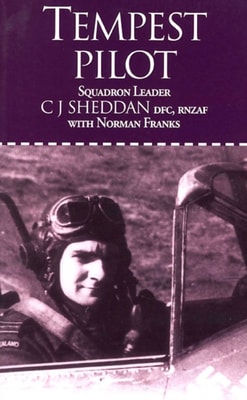
Jimmy Sheddan was one of the many New Zealanders who joined the RNZAF, then left his native land to come to England to fight the enemies of Great Britain and her Empire during World War Two.
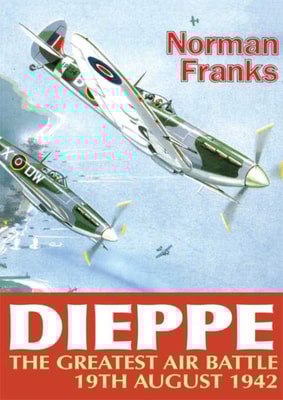
When Canadian troops and British Commandos made their now famous ‘reconnaissance in force’ against the harbor town of Dieppe on 19th August 1942, they were supported and protected by the largest array of Royal Air Force aircraft ever seen in WWII until that time.
Born in London of an English father and Australian mother and educated in Switzerland, Billy Drake was to become one of the most illustrious RAF fighter pilots of World War II, indeed of all time.
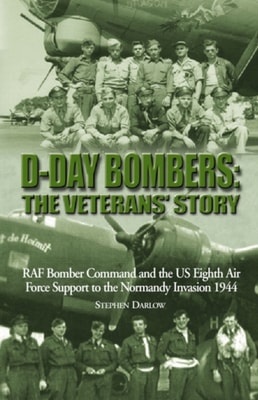
This book is largely an eye-witness account of the heavy bomber contribution to the success of the D-Day landings and therefore to the winning of the war in Europe.
Under Himmler's Command addresses two areas of World War II hitherto neglected - Heinrich Himmler as a military commander, and the German staff officer corps during the last months of the war on the Eastern Front.
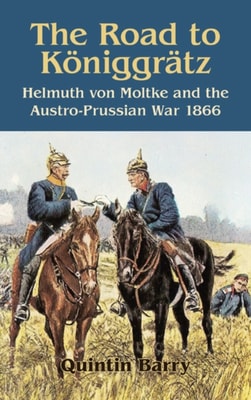
The so-called Seven Weeks' War of 1866 between Prussia and Italy and Austria was notable not only for its effect on future German history but also because it was the last time the armies of the smaller German states fought as independent contingents.
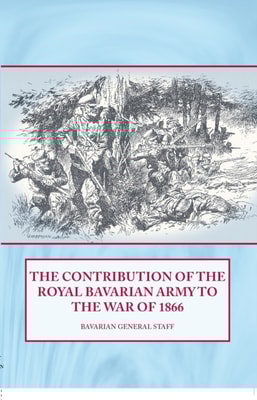
The Bavarian army, which fought the War of 1866, was not greatly distinguished for its performance, but a translation of the Bavarian general staff history of the war is a document, which should be available in English, since it gives an official analysis of the conflict.
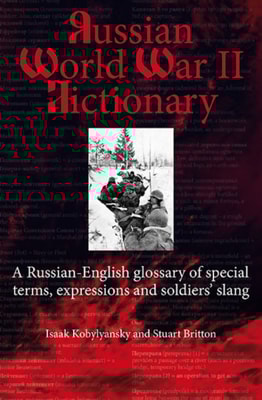
The Great Patriotic War (GPW) of the Soviet people against Nazi Germany, known in the West as the Eastern Front of WWII, continues to attract a number of military historians from different countries around the world.
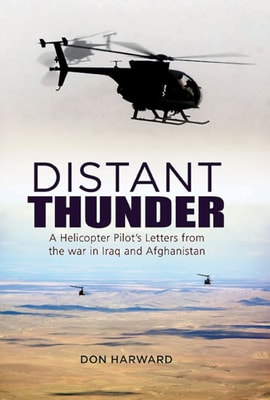
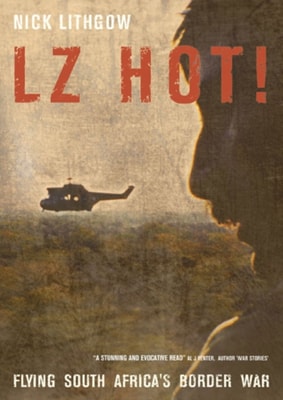
This book captures the experience of the South African Air Force helicopter pilot as never before; from 'rookie' to seasoned combat aviator in one of history's most intense counterinsurgency conflicts - the South African Border War.
This is a translation of the 1867 work by Alexander Hold, Geschichte der Feldzugs in Italien 1866, which describes in detail the campaign of the previous year, fought between the armed forces of the Austrian empire and the kingdom of Italy in the Austrian province of Venetia and the southern Tyrol and on the Adriatic Sea.
The imperial Austrian navy which fought and won the signal victory of Lissa on 20 July 1866, during the so-called Seven Weeks' War of 1866, has in recent years been subjected to more detailed scrutiny than has hitherto been its lot, and it is with an eye to following this trend that we present the following translation of part of the memoirs of one of its officers.
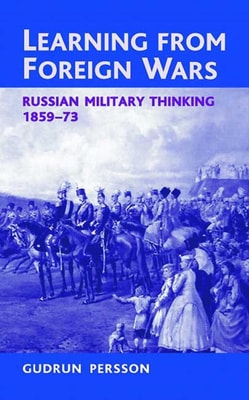
Learning from Foreign Wars examines how the Russian army interpreted, and what lessons it learned from the wars in Europe between 1859 and 1871, and the American Civil War.
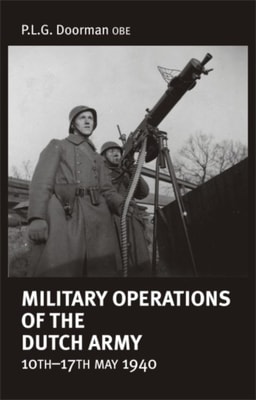
Most studies of the 1940 Western Campaign have tended to focus on a narrow range of topics, principally those relating the German forces or the epic of Dunkirk.
Translated from German, In a Raging Inferno is the first English-language book ever to recount the story of the Hitler Youth and its combat role at the end of World War II.
With the interest shown in "The Royal Corps of Signals: Unit History (1920-2001) and their Antecedents", it was decided to extend the work to include some of the principal Commonwealth Signal Corps, and to provide supplemental data regarding British Signals that has come to light since the original volume was published.
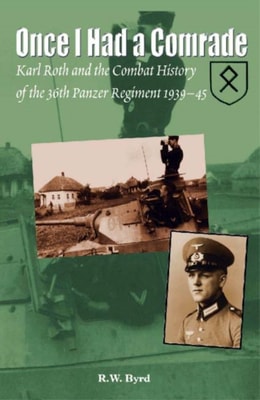
Once I Had a Comrade is the story of the author's German father-in-law, Karl Roth, who grew up during the tumultuous 1930s in the Franconian town of Schweinfurt, located in northern Bavaria, and of his regiment, 36th Panzer Regiment.
Since the publication of The Rifles Are There in 2005, which dealt with the 1st and 2nd Battalions Royal Ulster Rifles in the Second World War, it was felt by many that a follow up volume dealing with the Korean conflict was overdue.
Battle for Cassinga is written as a firsthand account by an ordinary South African paratrooper who was at the 1978 assault on the Angolan headquarters of PLAN, the armed wing of SWAPO.