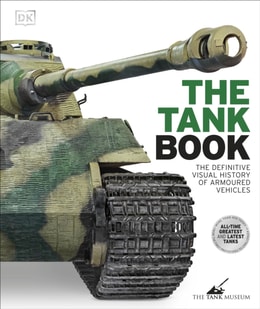
From the birth of the tank to unmanned vehicles and the tanks of the future, The Tank Book offers a truly definitive look at over 400 different tanks, produced in association with The Tank Museum.
'Brilliant, a 5 out of 5 masterpiece' Evening StandardThe renowned historian of the Third Reich takes on the conspiracy theories surrounding Adolf Hitler and the Nazis, in a vital history book for the 'post-truth' ageThe idea that nothing happens by chance in history, that nothing is quite what it seems to be at first sight, that everything that occurs is the result of the secret machinations of malign groups of people manipulating everything from behind the scenes is as old as history itself.
The extraordinary German bestseller on the final days of the Third ReichOne of the least understood stories of the Third Reich is that of the extraordinary wave of suicides, carried out not just by much of the Nazi leadership, but also by thousands of ordinary Germans, during in the war's closing period.
From the former director of GCHQ, learn the methodology used by British intelligence agencies to reach judgements, establish the right level of confidence and act decisively.
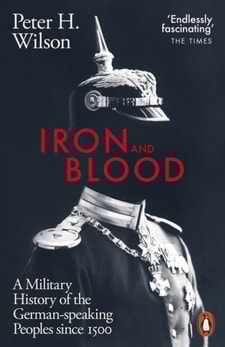
*WINNER OF THE DUKE OF WELLINGTON MEDAL FOR MILITARY HISTORY**A DAILY TELEGRAPH BOOK OF THE YEAR 2022*'No one interested in the history of Europe can afford not to read this stupendous book' Simon Heffer, Daily TelegraphIron and Blood is a startlingly ambitious and absorbing book, encompassing five centuries of political, military, technological and economic change to tell the story of the German-speaking lands, from the Rhine to the Balkan frontier, from Switzerland to the North Sea.
John Lewis Gaddis, the distinguished historian and acclaimed author of The Cold War, has for almost two decades co-taught the grand strategy seminar at Yale University with his colleagues Charles Hill and Paul Kennedy.
'Everything about this story is astounding' Bryan Appleyard, Sunday Times"e;Trinity"e; was the codename for the test explosion of the atomic bomb in New Mexico on 16 July 1945.
WINNER OF THE SOCIETY FOR MILITARY HISTORY'S DISTINGUISHED BOOK AWARD 2021SHORTLISTED FOR THE GILDER LEHRMAN PRIZE FOR MILITARY HISTORY AND THE BRITISH ARMY MILITARY BOOK OF THE YEAR AWARD A BBC HISTORY MAGAZINE BOOK OF THE YEAR 2019, AND FINANCIAL TIMES BOOK OF THE YEAR 2020'A masterpiece.
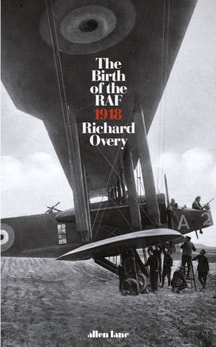
A short, brilliant account of the birth of the RAF for the centenary of its foundingThe dizzying pace of technological change in the early 20th century meant that it took only a little over ten years from the first flight by the Wright Brothers to the clash of fighter planes in the Great War.
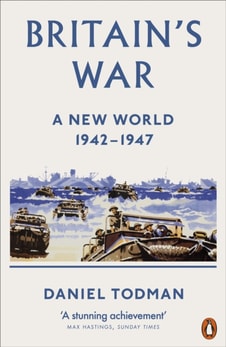
WINNER OF THE TEMPLER MEDAL BOOK PRIZE 2020A SPECTATOR, FINANCIAL TIMES AND DAILY TELEGRAPH BOOK OF THE YEAR 2020'A stunning achievement' Max Hastings, Sunday TimesPart Two of Daniel Todman's epic history of the Second World War opens with one of the greatest disasters in British military history - the fall of Singapore in February 1942.
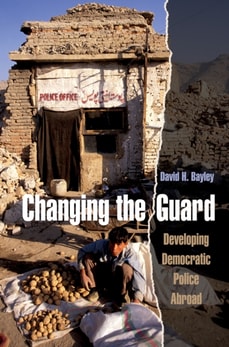
Every day the American government, the United Nations, and other international institutions send people into non-English speaking, war-torn, and often minimally democratic countries struggling to cope with rising crime and disorder under a new regime.
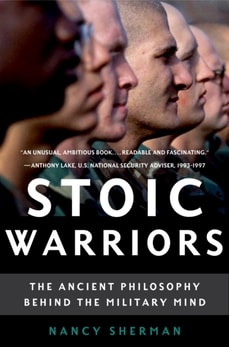
Stoic Warriors explores the relationship between soldiers and Stoic philosophy, exploring what Stoicism actually is, the role it plays in the character of the military (both ancient and modern), and its powerful value as a philosophy of life.
Winner of both the National Book Award for Arts and Letters and the National Book Critics Circle Award for Criticism, Paul Fussell's The Great War and Modern Memory was one of the most original and gripping volumes ever written about the First World War.
Filled with fresh interpretations and information, puncturing old myths and challenging new ones, Battle Cry of Freedom will unquestionably become the standard one-volume history of the Civil War.
Filled with fresh interpretations and information, puncturing old myths and challenging new ones, Battle Cry of Freedom will unquestionably become the standard one-volume history of the Civil War.
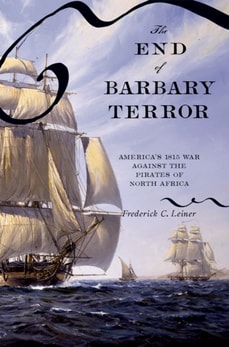
When Barbary pirates captured an obscure Yankee sailing brig off the coast of North Africa in 1812, enslaving eleven American sailors, President James Madison first tried to settle the issue through diplomacy.
To date, the history of military and war has focused predominantly on men as historical agents, disregarding gender and its complex interrelationships with war and the military.
When the Cold War ended, the world let out a collective sigh of relief as the fear of nuclear confrontation between superpowers appeared to vanish overnight.
This book explores the impact of war and political crisis on the national identity of Jews, both in the multinational Habsburg monarchy and in the new nation-states that replaced it at the end of World War I.
Every day the American government, the United Nations, and other international institutions send people into non-English speaking, war-torn, and often minimally democratic countries struggling to cope with rising crime and disorder under a new regime.
THE INTERNATIONAL BESTSELLER'Vivid, honest, inspiring and sometimes shocking, Pippa Latour's memoir shows how right the SOE were to assess her as having '"e;tons of guts"e;' -CLARE MULLEY, author of Agent Zo'***** Extraordinary.
Scattered in archives and historical societies across the United States are hundreds of volumes of manuscript music, copied by hand by eighteenth-century amateurs.
Scattered in archives and historical societies across the United States are hundreds of volumes of manuscript music, copied by hand by eighteenth-century amateurs.
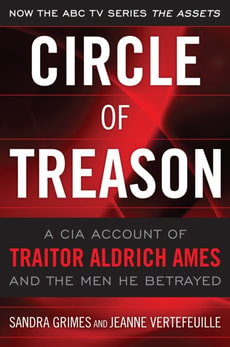
Circle of Treason details the authors personal involvement in the hunt for and eventual identification of a Soviet mole in the CIA during the 1980s and 1990s.
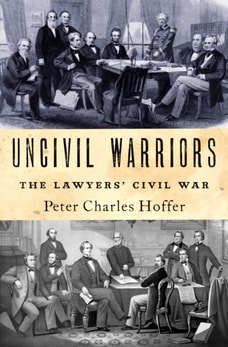
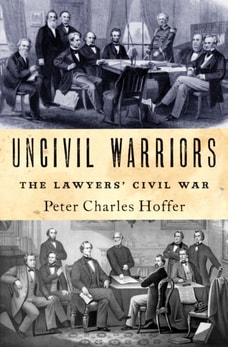
In the Civil War, the United States and the Confederate States of America engaged in combat to defend distinct legal regimes and the social order they embodied and protected.
In the Civil War, the United States and the Confederate States of America engaged in combat to defend distinct legal regimes and the social order they embodied and protected.
In the autumn of 1777, near Saratoga, New York, an inexperienced and improvised American army led by General Horatio Gates faced off against the highly trained British and German forces led by General John Burgoyne.
In the autumn of 1777, near Saratoga, New York, an inexperienced and improvised American army led by General Horatio Gates faced off against the highly trained British and German forces led by General John Burgoyne.