This thoughtful and provocative book provides a concise, up-to-date presentation of how current and projected future phosphorus scarcity will affect legume growth and their symbiotic nitrogen-fixing capabilities.
This two-volume work is an effort to provide a common platform to environmental engineers, microbiologists, chemical scientists, plant physiologists and molecular biologists working with a common aim of sustainable solutions to varied environmental contamination issues.
This two-volume work is an effort to provide a common platform to environmental engineers, microbiologists, chemical scientists, plant physiologists and molecular biologists working with a common aim of sustainable solutions to varied environmental contamination issues.
This book comprehensively describes the major ecosystem services in dryland environments that are provided by typical land use, including forestland, grassland and farmland, using the Loess Plateau, Northwest China as an example.
This book is a state-of-the-art review of the physical, chemical and mineralogical properties of anthropogenic soils, their genesis morphology and classification, geocultural setting, and strategies for reclamation, revitalization, use and management.
This book provides an overview of arid and semi-arid lands conditions, their general characteristics, methods of management, conservation, exploitation and reclamation.
This book presents recent lessons learned in the context of research and development for various dryland ecosystems, focusing on water resources management, land and vegetation cover degradation and remediation, and socioeconomic aspects, as well as integrated approaches to ensuring water and land security in view of the current and predicted climate change.
In this spirit, the ATMSS International Workshop "e;Advances in Laboratory Testing & Modelling of Soils and Shales"e; (Villars-sur-Ollon, Switzerland; 18-20 January 2017) has been organized to promote the exchange of ideas, experience and state of the art among major experts active in the field of experimental testing and modelling of soils and shales.
This text details the plant-assisted remediation method, "e;phytoremediation"e;, which involves the interaction of plant roots and associated rhizospheric microorganisms for the remediation of soil contaminated with high levels of metals, pesticides, solvents, radionuclides, explosives, crude oil, organic compounds and various other contaminants.
This book discusses how to apply the basic principles of pedology to the tropical soils of the Indian subcontinent, with an emphasis on ways to enhance crop productivity.
This edited volume focuses on the characterization, reclamation, bioremediation, and phytoremediation of salt affected soils and waterlogged sodic soils.
This book describes the vast variety of xenobiotics, such as pesticides, antibiotics, antibiotic resistance genes, agrochemicals and other pollutants, their interactions with the soil environment, and the currently available strategies and techniques for soil decontamination and bioremediation.
This book provides in-depth reviews of the effects of nanoparticles on the soil environment, their interactions with plants and also their potential applications as nanofertilizers and pesticides.
This book discusses gritty issues that society faces every day: food and water security, environmental services provided by farmers, almost accidentally, and taken for granted by everyone else, the capability of the land to provide our needs today and for the foreseeable future and pollution of soil, air and water.
This book reports an approach developed to research and apply methods of assessing patterns of processes in the landscape, and suitability of different types of vegetation to mitigate soil erosion and sediment flux.
This book addresses issues arising from discharge of effluents from sugar industry on to surrounding land or into a water body such as physicochemical properties of soil, changes in the micro flora, quantification of soil enzyme activities as influenced by effluents.
The first volume of the International Yearbook of Soil Law and Policy includes an important discussion on the implementation of the Sustainable Development Goals that are the basis for the post-2015 development agenda up to the year 2030; the Yearbook focuses in particular on Goal 15, which includes achieving a "e;land degradation-neutral world.
This text details the plant-assisted remediation method, "e;phytoremediation,"e; which involves the interaction of plant roots and associated rhizospheric microorganisms for the remediation of soil contaminated with high levels of metals, pesticides, solvents, radionuclides, explosives, crude oil, organic compounds and various other contaminants.
This edited book is devoted to environmental risk management in gas industry impacted polar ecosystems of Russia, one of the hottest topics of modern environmental science.
This book details the plant-assisted remediation method, "e;phytoremediation"e;, which involves the interaction of plant roots and associated rhizospheric microorganisms for the remediation of soil contaminated with high levels of metals, pesticides, solvents, radionuclides, explosives, crude oil, organic compounds and various other contaminants.
This book advances a three-step program for mitigation of natural and anthropogenic hazards, addressing mitigation economics and funding possibilities to meet the needs of at risk countries that lack the financial resources to invest in disaster reduction programs.
Soil is the most important natural non-renewable resource developed over a longer period of time due to weathering of rocks and subsequently enrichment of organic matter.
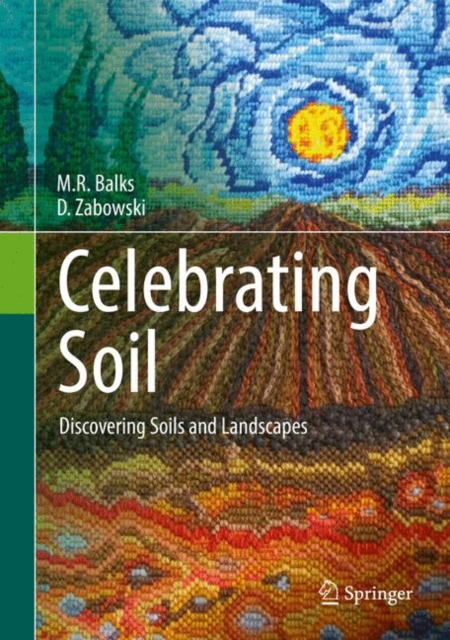
This richly illustrated book celebrates the diversity, importance, and intrinsic beauty of soils around the world and helps the reader to understand the ways that soils are related to the landscapes in which they form.
This book combines new quantitative erosion measurement methods with a geochemical fingerprint and a model-based approach to measure erosion and sediment flux in the Wadi Al-Arab, a Mediterranean to semi-arid catchment in northwest Jordan.
This book summarises the main results of many contributions from researchers worldwide who have used the water infiltration process to characterize soil in the field.
This book is about digital soil morphometrics which is defined as the application of tools and techniques for measuring, mapping and quantifying soil profile properties, and deriving depth functions of soil properties.
This book presents an analysis of land and water resources in Siberia, initially characterizing the landscapes, their ecosystems, crucial processes, human impacts on soil and water quality, and the status quo of available research.
This book provides extensive and comprehensive information to researchers and academicians who are interested in radionuclide contamination, its sources and environmental impact.
This book offers a proven approach for reliable mapping of soil-landscape relationships to derive information for policy, planning and management at scales ranging from local to regional.
The book presents the processes governing the dynamics of landscapes, soils and sediments, water and energy under different climatic regions using studies conducted in varied climatic zones including arid, semi-arid, humid and wet regions.
Achieving a sustainable agriculture requires integrating advances in multiples disciplines, covering both fundamental and applied research in a common objective: enhancing crop health for better productions.