Understanding attenuation processes is important not only for predicting the behavior of contaminants in soil and formulating remediation strategies, but also for mitigating and enhancing the availability of micronutrients in soil for agricultural applications.
Structure and Function in Agroecosystem Design and Management presents an advanced discussion of the need to design agricultural systems that 1) increase reliance on biological interactions in agroecosystems as a means of decreasing dependence on the use of large quantities of agrochemicals and the consumption of fossil fuel energy and 2) continue
Historically, research on the methods and amounts of trace element application to agriculture soils for correcting plant deficiencies has received major attention.
The potential to mitigate greenhouse gas emissions and global climate change is one factor driving agricultural policy development of programs that might pay farmers for practices with a high potential to sequester carbon.
Much attention has been given to above ground biomass and its potential as a carbon sink, but in a mature forest ecosystem 40 to 60 percent of the stored carbon is below ground.
The new edition of a bestseller, Water Flow in Soils bridges the fields of soil physics-where descriptions of water flow tend to be microscopic- and hydrology - where they tend to be macroscopic.
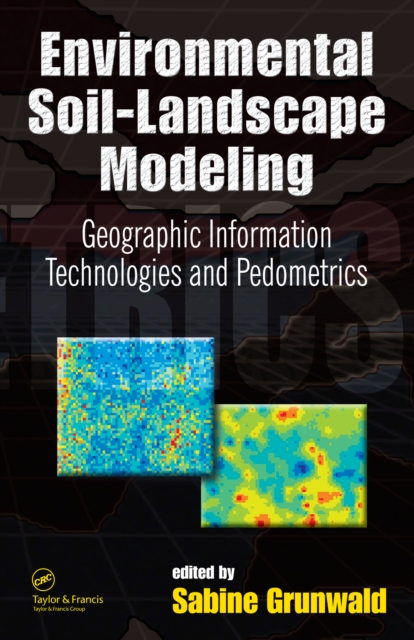
Environmental Soil-Landscape Modeling: Geographic Information Technologies and Pedometrics presents the latest methodological developments in soil-landscape modeling.
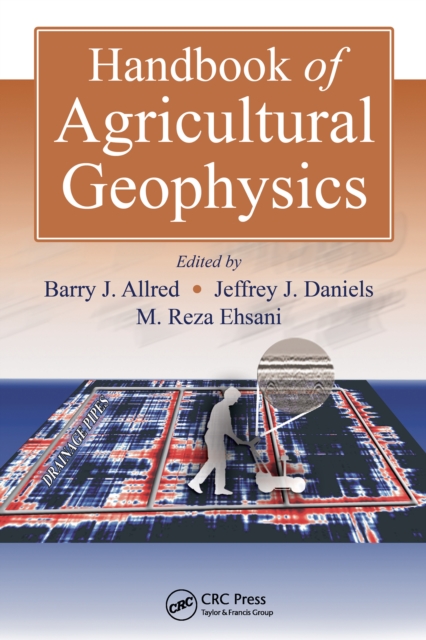
Precision farming, site infrastructure assessment, hydrologic monitoring, and environmental investigations- these are just a few current and potential uses of near-surface geophysical methods in agriculture.
With the help of this guide, you can use obtained test results to evaluate the fertility status of soils and the nutrient element status of plants for crop production purposes.
A part of the continuing effort to provide innovative in situ remediation techniques, Remediation of Firing-Range Impact Berms presents the results of a soil washing and leaching project.
Written to meet the needs of both students and applied researchers, Design of Experiments for Agriculture and the Natural Sciences, Second Edition serves as an introductory guide to experimental design and analysis.
With all of the environmental and social problems confronting our food systems today, it is apparent that none of the strategies we have relied on in the pasthigher-yielding varieties, increased irrigation, inorganic fertilizers, pest damage reductioncan be counted on to come to the rescue.
In the rhizosphere, exudates from plants and microorganisms as well as stable soil organic matter influence processes that can control plant growth, microbial infections, and nutrient uptake.
A multibillion dollar industry that has tripled in the last ten years, turfgrass management plays an important role in landscaping, golf courses, and other sports surfaces.
The overarching goal of South Africa's National Development Plan (NDP) is to eliminate poverty, reduce inequality, lower unemployment and increase the labour participation.
This book addresses the quantitative measurement of climate change vulnerability at the macro and micro-level and identifies household adaptation strategies to cope with the adverse effects of climate change.
Drawing from a decade-long collaboration between Japan and Russia, this important volume presents the first major synthesis of current knowledge on the ecophysiology of the coniferous forests growing on permafrost at high latitudes.
From the first vague idea to use Konrad Hagedorn's 60th birthday as an inspi- tion for taking stock of his vibrant academic contributions, this joint book project has been a great pleasure for us in many ways.
The offered volume intends to review the biological control theme of phytonematodes from several prospects: ecological; applicative as well as commercial state of the art; understanding the mode-of-action of various biocontrol systems; interaction between the plant host, nematodes' surface and microorganism's; candidates for biocontrol; extrapolation of the wide knowledge existed in another systems for understanding biocontrol processes: C.
Rice blast, caused by the fungal pathogen Magnaporthe grisea, is one of the most destructive rice diseases worldwide and destroys enough rice to feed more than 60 million people annually.
In the last four decades of the twentieth century the use of sweetpotato was diversified beyond their classification as subsistence, food security, and famine-relief crop.
Abstract This chapter defines food security as the condition reached when a nation's population has access to sufficient, safe, and nutritious food to meet its dietary needs and food preferences.
While a good grasp of the many separate aspects of agriculture is important, it is equally essential for all those involved in agriculture to understand the functioning of the farming system as a whole and how it can be best managed.
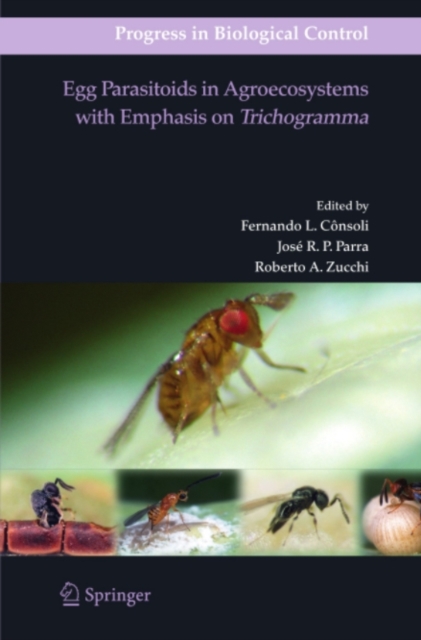
Egg Parasitoids in Agroecosystems with emphasis on Trichogramma was conceived to help in the promotion of biological control through egg parasitoids by providing both basic and applied information.
Fitness and adaptation are fundamental characteristics of plant and animal species, enabling them to survive in their environment and to adapt to the inevitable changes in this environment.
The book 'Silent Spring' written by Rachel Carson in 1962, is considered the la- mark in changing the attitude of the scientists and the general public regarding the complete reliance on the synthetic pesticides for controlling the ravages caused by the pests in agriculture crops.
This book contains fuller versions of the papers and posters presented in the Knowledge and Technology Transfer and Teaching Plant Pathology sessions at the 9th International Congress of Plant Pathology held in Turin, Italy in 2008.
This collection of papers represents some of those given at the International Congress for Plant Pathology held in Turin in 2008 in the session with the title "e;The Role of Plant Pathology in Food Safety and Food Security"e;.
As a collection of papers that includes material presented at the 2008 International Congress for Plant Pathology, this text features research right at the leading edge of the field.
Plant disease management remains an important component of plant pathology and is more complex today than ever before including new innovation in diagnostic kits, the discovery of new modes of action of chemicals with low environmental impact, biological control agents with reliable and persistent activity, as well as the development of new plant varieties with durable disease resistance.