Presenting an overview of agroecology within the framework of climate change, this book looks at the impact of our changing climate on crop production and agroecosystems, reporting on how plants will cope with these changes, and how we can mitigate these negative impacts to ensure food production for the growing population.
Presenting an overview of agroecology within the framework of climate change, this book looks at the impact of our changing climate on crop production and agroecosystems, reporting on how plants will cope with these changes, and how we can mitigate these negative impacts to ensure food production for the growing population.
Since the publication of the previous editions of the Handbook of Photosynthesis, many new ideas on photosynthesis have emerged in the past decade that have drawn the attention of experts and researchers on the subject as well as interest from individuals in other disciplines.
Winner of the 2018 TWS Wildlife Publication Awards in the authored book categoryUrban development is one of the leading worldwide threats to conserving biodiversity.
Applied Mathematics and Omics to Assess Crop Genetic Resources for Climate Change Adaptive Traits focuses on practical means and approaches to further the use of genetic resources for mitigating the effects of climate change and improving crop production.
This book demonstrates the social, historical, and environmental framework within which humans have developed a relationship with the forest and its resources.
Since the publication of the previous editions of the Handbook of Photosynthesis, many new ideas on photosynthesis have emerged in the past decade that have drawn the attention of experts and researchers on the subject as well as interest from individuals in other disciplines.
Key features:Reviews the development of agroecology in China, including research, practice, management, and education regarding challenges for rural and agricultural progressPresents information from sources not readily available in the West about agricultural development in China during the last several decadesProvides models and indicates starting points for future research and practiceAddresses how to meet future challenges of agroecosystems from the field to the table in China from scientific, technological, and management perspectivesDuring the past 30 years, industrialization has fundamentally changed traditional rural life and agricultural practices in China.
Applied Mathematics and Omics to Assess Crop Genetic Resources for Climate Change Adaptive Traits focuses on practical means and approaches to further the use of genetic resources for mitigating the effects of climate change and improving crop production.
This book demonstrates the social, historical, and environmental framework within which humans have developed a relationship with the forest and its resources.
This book provides a global perspective on the various issues that the industry has to face as well as to provide some key global strategies that can help coping with those global challenges, such as collaboration, strategic value chain planning, and interdependency analyses.
Key features:Presents a brief history of past classifications, a summary of present classification, and speculation on how the classification may evolve in the futureIncludes keys for the identification of families and subfamilies of the Pentatomoidea and for the tribes in the PentatomidaeExplains transmission of plant pathogens and concepts of pathology and heteropteran feeding for the non-specialist Provides an extensive literature review of transmission by stink bugs of viral, bacterial, fungal, and protozoan organisms that cause diseases of plantsDiscusses the diversity of microbial symbionts in the Pentatomidae and related species, showing how microorganisms underpin the evolution of this insect groupReviews semiochemicals (pheromones, kairomones, allomones) of the Pentatomoidea and their vital role in the life histories of pest and beneficial species and their exploitation by natural enemies of true bugs Covers past, current, and future control options for insects, with a focus on stink bugs and related heteropteransThe Superfamily Pentatomoidea (stink bugs and their relatives) is comprised of 18 families with over 8,000 species, the largest of which is the family Pentatomidae (about 5,000 species).
This book explores the challenges of presenting sustainability as a more actionable or practical concept and identifying approaches that might offer useful assistance in addressing the temporal and spatial representation of sustainability.
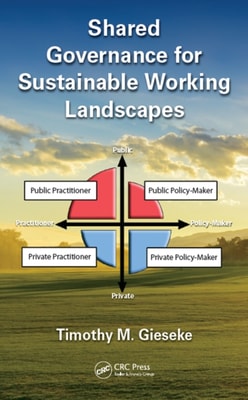
Sustaining our agricultural landscapes is no longer just a technical, scientific or even political problem, but it has evolved into a socially complex, so-called wicked problem of conflicting social governance and economics.
Because they meet the needs of today's consumers, fresh-cut plant products are currently one of the hottest commodities in the food market of industrialized countries.
Horticultural therapy has evolved from its use only by volunteer gardeners to become a recognized and respected therapeutic modality conducted by trained, registered professionals.
Crisis Management of Chronic Pollution: Contaminated Soil and Human Health deals with a long term pollution problem, generated by the former use of organochlorine pesticides.
In the present era, rapid industrialization and urbanization has resulted in unwanted physiological, chemical, and biological changes in the environment that have harmful effects on crop quality and productivity.
Many of our current agricultural crops are natural or agricultural hybrids (between two or more species), or polyploids (containing more than one genome or set of chromosomes).
Energy in Agroecosystems: A Tool for Assessing Sustainability is the first book on energy analysis that is up-to-date and specifically dedicated to agriculture.
The Chair on Ecodesign for buildings and infrastructures was created by ParisTech in partnership with VINCI with the aim of developing evaluation and simulation tools that integrate all ecodesign aspects (e.
Engineering Challenges for Sustainable Future contains the papers presented at the 3rd International Conference on Civil, Offshore & Environmental Engineering (ICCOEE2016, Kuala Lumpur, Malaysia, 15-17 August 2016), under the banner of World Engineering, Science & Technology Congress (ESTCON2016).
This book covers a wide range of topics within enviromental engineering and technologies including:* General environmental engineering* Clean energy and sustainability* Water and wastewater management* Public health and environment.
Terrestrial Ecosystem Research Infrastructures: Challenges and Opportunities reveals how environmental research infrastructures (RIs) provide new valuable insights on ecological processes that cannot be realized by more traditional short-term funding cycles and are integral to understand our changing world.
Micro Irrigation Management: Technological Advances and Their Applications, the fifth book in the Innovations and Challenges in Micro Irrigation book series, is a valuable reference volume on micro irrigation and water management for professional training institutes, technical agricultural centers, irrigation centers, agricultural extension service, and other agencies who work with micro irrigation programs.
So often new phytopathogens emerge and appear primarily in acute form and then take a chronic form; such populations, however, in general have a limited appearance because of the lack of suitable environmental conditions.
This important volume, Soil Salinity Management in Agriculture, addresses the crucial issue of soil salinity of potential farmland and provides a comprehensive picture of the saline environment and plant interactions, along with management and reclamation methods and policies.
This informative new book takes an interdisciplinary look at agricultural and food production and how new engineering practices can be used to enhance production.
In agricultural education and research, the study of agricultural microbiology has undergone tremendous changes in the past few decades, leading to today's scientific farming that is a backbone of economy all over the globe.
Stored products of agriculture and animal origin are attacked by more than 600 species of beetles, 70 species of moths, and about 355 species of mites, causing huge quantitative and qualitative losses and insect contamination in food commodities.
Insects, diseases, and weeds cause an almost 30% yield loss per annum in agricultural production, resulting in an increased consumption of pesticides by 20% per annum throughout the world.