Wood is formed in an essentially water-saturated environment in the living tree, and the cell wall remains in this state until the water flow from the roots is interrupted, such as by felling the tree.
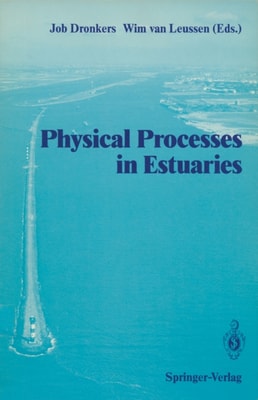
In Physical Processes in Estuaries the present day knowledge of the physics of transport phenomena in estuaries and their mathematical treatment is summarized: It is divided into following parts: - Water movements in estuaries - Estuarine fronts and river plumes - Internal waves and interface stability - Fine sediment transport, aggregation of particles, settling velocity of mud flocs - Sedimentation and erosion of fine sediments.
It is widely recognized that spiral grain in trees severely reduces the value of sawn timber through warping and loss of strength, and that it also causes problems for other wood uses as diverse as transmission poles or plywood.
The structural complexity of lignin has continually challenged the in- genuity of researchers to develop suitable methods for its charac- terization prior to and following a wide variety of chemical, biologi- cal, and physical treatments.
Von der Arbeits gruppe Systemforschung an der Universität Osnabrück wird im Auftrag der International Union of Biologica1 Sciences (IUBS) ein Projekt zur Erstellung von sogenannten Element-Konzentrations Katastern in Ökosystemen (ECCE) entwickelt, das alle großen Ökosysteme der Erde einschließen soll.
This book contains the contributions to an European symposium on "e;Trace Elements in Environmental History"e;, held from June 24th to 26th at GCittingen, FRG.
It is apparent that wilt diseases continue to be a major problem in crop production because of the number of crops affected, the number and genetic variability of pathogens involved, and their widespread occurrence throughout tropical and temperate regions under a variety of cropping systems.
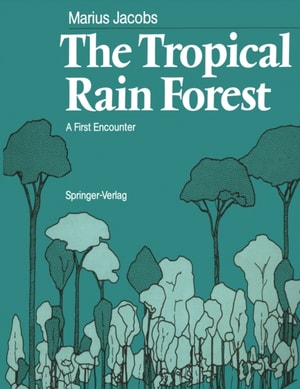
In recent years, tropical forests have received more attention and have been the subject of greater environmental concern than any other kind of vegetation.
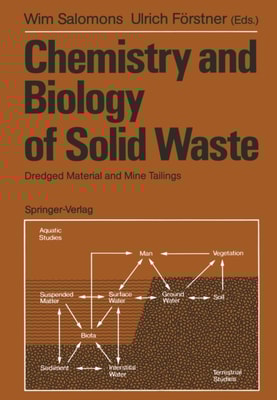
Dredged Material and Mine Tailings are two of the same thing once they are deposited on land: they must be safe-guarded, wash-out must be prevented, and they must be protected by a plantcover.
This monograph has been written in the hope that it will prove of value to medical students and clinicians, to Honours undergradu- ates in appropriate branches of the natural sciences, and to repro- ductive biologists in general.
th th On June 17 and 18 1987 the fourth workshop on "e;Azospi- rillum: Genetics, Physiology, Ecology"e; took place at the Uni ver- sity of Bayreuth, West Germany, organized by the Genetics depart- ment.
At last geochemists are offered one comprehensive reference book which gives the Eh-pH diagrams for 75 elements found in the earth's surface environment, including transuranic and other radioactive species.
Low temperature represents, together with drought and salt stress, one of the most important environmental constraints limiting the pro- ductivity and the distribution of plants on the Earth.
This volume comprises the lectures of the speakers at the NATO Advanced Research Workshop held at the Congress Centre The Flevohof at Biddinghuizen, The Netherlands, May 11-16, 1986.
"e;Instead of dirt and poison we have rather chosen to fill our hives with honey and wax; thus furnisning mankind with the two noblest of things, which are sweetness and light"e;.
As a result of the green revolution, the use of yield-increasing inputs such as fer- tilizer and pesticides became a matter of course in irrigated rice farming in Southeast Asia.
The Plant Root and the Rhizosphere was a major topical feature of the first International Symposium on Factors Determining the Behavior of Plant Pathogens in Soil held at the University of California, Berkeley in 1963.
Biotechnology has come to a stage where, by replacing some of the age- old practices of breeding, it can produce novel and improved plants and animals that can better serve human beings and their purposes.
Exposure to polychlorinated dibenzodioxins and -furanes at very low concentrations is of particular interest with respect to possible human health risks.
On May 25,1978, the Commission on Toxicology ofthe Division of Clinical Chemistry of the International Union of Pure and Applied Chemistry (IUPAC) established its Subcommittee on Environmental and Occupational Toxicology of Cadmium following aseries of Commission meetings in Kristiansand, Norway.
These are the proceedings of an Advanced Research Workshop (ARW), sponsored by the NATO Science Panel, entitled "e;Pest Control: Operations and Systems Analysis in Fruit Fly Management"e;.