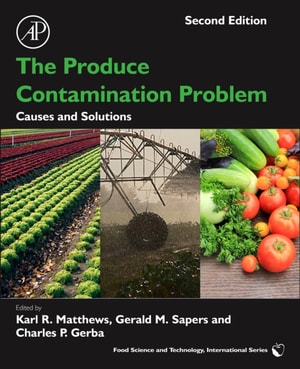
Understanding the causes and contributing factors leading to outbreaks of food-borne illness associated with contamination of fresh produce is a worldwide challenge for everyone from the growers of fresh-cut produce through the entire production and delivery process.
Postharvest Handling, Third Edition takes a global perspective in offering a system of measuring, monitoring, and managing produce processing to improve food quality, minimize food waste, reduce risks and uncertainties, and maximize time and resources.
A CHOICE Recommended title 2025This textbook provides a comprehensive overview of the principles, methods and applications of chemical ecology, covering such topics as chemical signalling, predator-prey interactions, host plant selection and chemical defence.
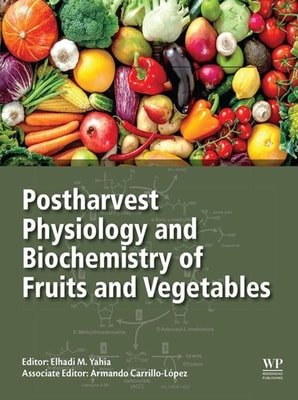
Postharvest Physiology and Biochemistry of Fruits and Vegetables presents an updated, interrelated and sequenced view of the contribution of fruits and vegetables on human health, their aspects of plant metabolism, physical and chemical/compositional changes during the entire fruit development lifecycle, the physiological disorders and biochemical effects of modified/controlled atmospheres, and the biotechnology of horticultural crops.
Planning and Evaluation of Irrigation Projects: Methods and Implementation presents the considerations, options and factors necessary for effective implementation of irrigation strategies, going further to provide methods for evaluating the efficiency of systems-in-place for remedial correction as needed.
Functional Diversity of Mycorrhiza and Sustainable Agriculture is the first book to present the core concepts of working with Arbuscular mycorrhizal fungi to improve agricultural crop productivity.
Buckwheat Germplasm in the World offers an overview of this globally important crop, including its general characterization and genetic diversity-particularly in Russia, China, India and Eastern Europe.
By examining historical applications of the compounds found in plants, this five-volume series serves as a reference for quality assurance, research, product development, and regulatory guidance of the compounds found in plant-based medicines.
Irregular Shape Anchors in Cohesionless Soils presents a new type of soil anchor that can significantly lower cost and preparation time for application in low cohesion soils.
Soil Mechanics: Calculations, Principles, and Methods provides expert insights into the nature of soil mechanics through the use of calculation and problem-solving techniques.
Maximize productivity while minimizing environmental impactDevelop sustainable products, energy sources, and processes using the concepts and methods contained in this interdisciplinary resource.
Plant Transporters, Volume 87, the latest release in the Advances in Botanical Research series, brings together the experiences and critical information teachers, researchers and managers must consider from scientific and legal points-of-view as they relate to biotechnology.
Storage of Grains and Their Products, Fifth Edition, presents the most authoritative reference on the principles and practices of storing and handling grains and their products.
This book captures the proceedings of the International Conference on Green Transformation in the Context of Global Change (GREEN 2024), organized by the School of Interdisciplinary Sciences and Arts, Vietnam National University, Hanoi.
This book covers the fundamentals and methods of biologically producing nanoparticles using microorganisms such as bacteria, fungi, and algae, along with optimization strategies for microbe-mediated nanoparticle production.
Although originally published in 1928, many of the issues discussed in this book remain pertinent today: in unstable markets grappling with labour shortages, how to pay the producers of food a fair price, at a price the consumer can afford, whilst maximising efficiency and minimising waste.
Soilless Culture: Theory and Practice, Second Edition, is the first authoritative reference book on both the theoretical and practical aspects of growing plants without the use of soil.
This book proposes measures to promote regional industrial development in East Asia from the perspective of three industries: agriculture, food, and tourism.
Originally published in 1981, at a time when the EEC's Common Agricultural Policy had remained largely unchanged, this book examines the criticisms of the CAP and analyses the pressures emanating from the budget and the various options which were available for tackling them.
This edited book systematically discusses the advances in biotechnology, agrotechnology, and food technology in shaping sesame production, cultivation and uses to meet the future needs.
The volumes that comprise Chemical Sensitivity are the first major scientific books to be published on chemical sensitivity, a growing world-wide health problem.
The field of horticultural biotechnology has witnessed remarkable growth in recent years, offering profound insights and innovations that are reshaping agriculture's future.
Although originally published in 1928, many of the issues discussed in this book remain pertinent today: in unstable markets grappling with labour shortages, how to pay the producers of food a fair price, at a price the consumer can afford, whilst maximising efficiency and minimising waste.