This Special Issue of Water, Air and Soil Pollution offers contributions from the th 18 IUFRO workshop on Air Pollution Stress, Forest Responses to the Pollution st Climate of the 21 Century held in Edinburgh, Scotland, from September 21 to 23,1998.
This Fertilizer Manual was prepared by the International Fertilizer Development Center (IFDC) as a joint project with the United Nations Industrial Development Organi- zation (UNIDO).
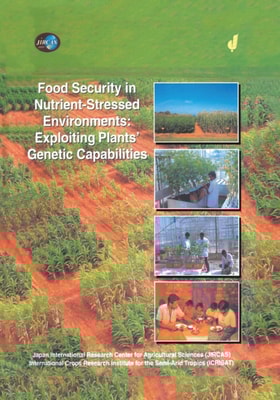
Ultimate success in exploiting the genetic capabilities of plants to grow in nutrient-stressed environments of the semi-arid tropics (SAT) requires a holistic view of food systems to ensure that genetic selections for improved yields on nutrient-poor soils will actually be adopted by farmers.
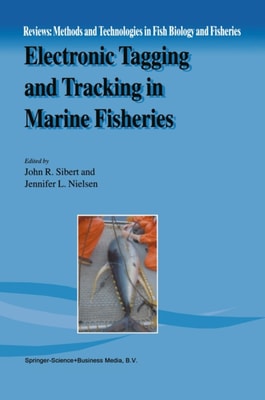
Reviews: Methods and Technology in Fish Biology and Fisheries published by Kluwer Academic Publishers is a book series dedicated to the publication of information on advanced, forward-looking methodologies, technologies, or perspectives in fish and is especially dedicated to relevant topics addressing global, fisheries.
In large parts of the developed and developing worlds soil tillage by plough or hoe is the main cause of land degradation leading to stagnating or even declining production levels and increasing production cost.
This Special Issue of Water, Air, and Soil Pollution offers original contributions from BIOGEOMON, The Third International Symposium on Ecosystem Behavior, which was held on the campus ofVillanova University from June 21-25, 1997.
Recent years have brought an upsurge of interest in the study of arbuscular mycorrhizal (AM) fungi, partly due to the realization that the effective utilization of these symbiotic soil fungi is likely to be essential in sustainable agriculture.
Agroforestry research is central to developing methods for the sustainable use of natural renewable resources, evolving to address the needs of the coming century.
Weeds hold an enigmatic and sometimes-controversial place in agriculture, where they are generally reviled, grudgingly tolerated, and occasionally admired.
The interaction between environmental change and human activities is com- plex, requiring the concepts and tools of a number of disciplines for its effective analysis.
Sulphur (S) plays a pivotal role in various plant growth and development processes being a constituent of sulphur-containing amino acids, cysteine and methionine, and other metabolites viz.
This book deals with voluntary approaches between farmers and water suppliers as an instrument to meet environmental standards, impacted by agricultural activities, more economically efficient and environmentally effective than by exclusive application of alternative instruments including command-and-control approaches.
During the last thirty years, most increases in agricultural production were achieved through high input agrieulture in areas with fertile soils and sufficient water.
Storage reservoirs represent one of the most effective tools for eliminating, or at least for minimizing, discrepancies in the time and space variations of water resources distribution and requirements.
In the last two decades technological advances in isotope ratio mass spectrometry have been very rapid, opening up new possibilities for analysis of biological and environmental materials.
During ten years serving with the USDA Soil Conservation Service (SCS), now known as the Natural Resources Conservation Service (NRCS), I became amazed at how millions of dollars in contract monies were spent based on simplistic hydrologic models.
The main subject of this book is the interaction between diggings created by porcupines when consuming geophytes, and their influences on annual and perennial vegetation in a desert biome.
We are facing global issues concerning environmental pollution and shortages of food, feed, phytomass (plant biomass) and natural resources, which will become more serious in the forthcoming decades.
Response to Marine Oil Pollution - Review and Assessment is the essential source book, now updated, for all involved in marine oil pollution consequences and response.
In the continuing fight against organic environmental xenobiotics, the initial success attributed to bioremediation has paled, in part due to the low availability of xenobiotics entrapped within a soil or sediment matrix.
All important aspects of thermophilic moulds such as systematics, ecology, physiology and biochemistry, production of extracellular and intracellular enzymes, their role in spoilage of stores products and solid and liquid waste management, and general and molecular genetics have been dealt with comprehensively by experts in this book which covers progress in the field over the last 30 years since the seminal book Thermophilic Fungi published by Cooney and Emerson in 1964.
This volume summarises the result of an interdisciplinary research programme entitled `Rehabilitation of the Atmosphere of the New States of Germany - Effects on Terrestrial Ecosystems'.
SCOPE, the Scientific Committee on Problems of the Environment, was established by the International Council of Scientific Unions (ICSU) in 1969 as an international, non- to governmental, non-profit organisation with the mandate - advance knowledge of the influence of humans on their environment, as well as the effects of these environmental changes upon people, their health and their welfare- with particular attention to those influences and effects which are either global or shared by several nations; - to serve as a non-governmental, interdisciplinary and international council of scien- tists and as a source of advice for the benefit of governments and intergovernmental and non-governmental bodies with respect to environmental problems.
The purpose of this book is to develop a general economic model which integrates the quantity and quality issues of water resource management and to provide, along with a detailed criticism of the policy instruments now in use, alternative proposals concerning the efficient allocation and distribution of water.