This book integrates the different prospective, scientific and practical experience of researchers as well as beneficiaries and stakeholders in the field of forest conservation in Southeast Europe.
Losses of forests and their insect inhabitants are a major global conservation concern, spanning tropical and temperate forest regions throughout the world.
Forest Management and Planning, Second Edition, addresses contemporary forest management planning issues, providing a concise, focused resource for those in forest management.
Mobilisation of Forest Bioenergy in the Boreal and Temperate Biomes: Challenges, Opportunities, and Case Studies features input from key international experts who identify and analyze the main opportunities and roadblocks for the implementation of sustainable forest biomass supply chains in the boreal and temperate regions.
Forest Plans of North America presents case studies of contemporary forest management plans developed for forests owned by federal, state, county, and municipal governments, communities, families, individuals, industry, investment organizations, conservation organizations, and others in the United States, Canada, and Mexico.
Forest ecosystems include a great variety of communities of organisms interacting with their physical environment: multi-aged natural forests, even-aged monocultures, and secondary forests invaded by foreign species.
This book builds on existing work exploring succession, disturbance ecology, and the interface between geophysical and biological systems in the aftermath of the 1980 eruptions of Mount St.
Proceedings of a conference on Tropical Forests: Botanical Dynamics, Speciation and Diversity held at the University of Aarhus, Denmark, August 8*ba10, 1988.
Wood Chemistry, Fundamentals and Applications, Second Edition, examines the basic principles of wood chemistry and its potential applications to pulping and papermaking, wood and wood waste utilization, pulping by-products for production of chemicals and energy, and biomass conversion.
Process-based models open the way to useful predictions of the future growth rate of forests and provide a means of assessing the probable effects of variations in climate and management on forest productivity.
Forest Management and Planning provides a focused understanding of contemporary forest management issues through real life examples to engage students.
Thermobacteriology in Food Processing, Second Edition focuses on the principles involved in sterilization processes for canned goods and pasteurization of foods.
This book will address the major subsoil physical and chemical constraints and their implications to crop production; Plant growth is often restricted by adverse physical and chemical properties of subsoils yet these limitations are not revealed by testing surface soils and hence their significance in crop management is often overlooked.
This book explains forest and woody biomass harvest, harvesting machines, systems, logistics, supply chain management, best management practices, harvest scheduling and carbon sequestration.
This book sheds light on the roots of sustainability in the Iberian Peninsula that lie in the interrelations between shipbuilding and forestry from the 14th to the 19th centuries, combining various geographical scales (local, regional and national) and different timespans (short-term and long-term studies).
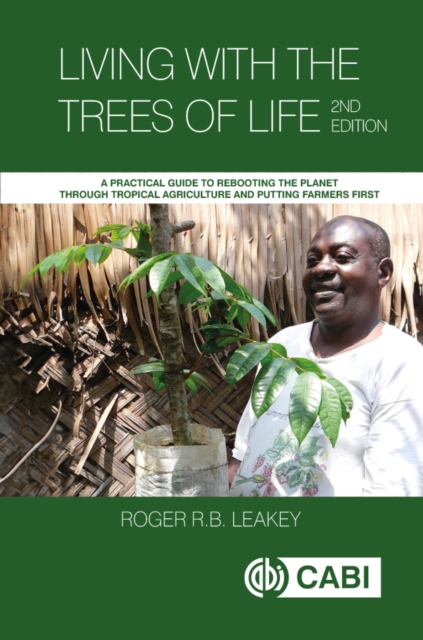
With our world torn by climate change, deforestation, land degradation, hunger, malnutrition, poverty, loss of wildlife habitat, zoonotic pandemics, illegal migration and social injustice, this book seeks to find a practical and pragmatic way forwards.
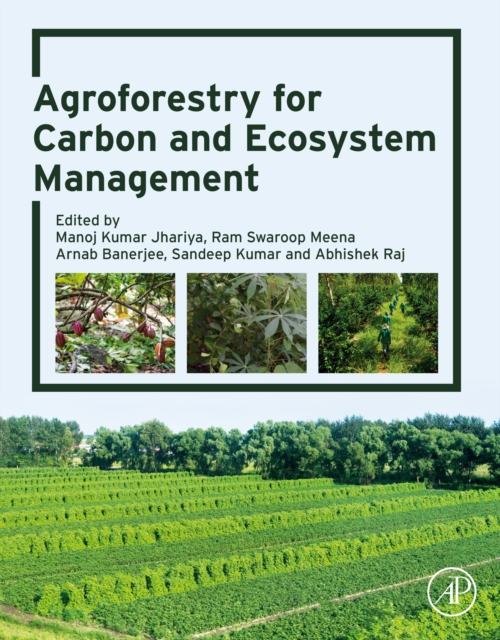
Agroforestry for Carbon and Ecosystem Management is a comprehensive overview of current research, issues, challenges, and case studies in the area of agroforestry.
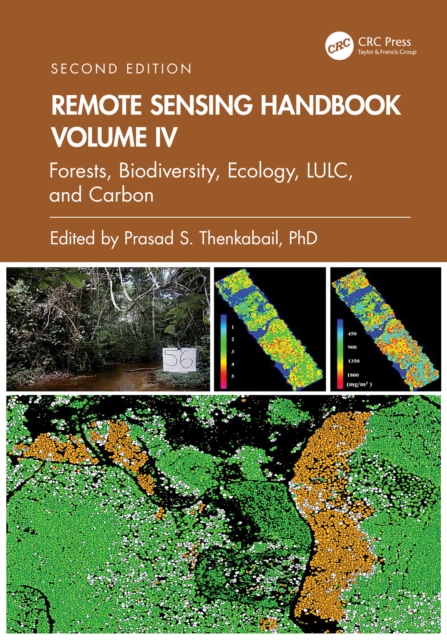
Volume IV of the Six Volume Remote Sensing Handbook, Second Edition, is focused on the use of remote sensing in forestry, biodiversity, ecology, land use and land cover, and global terrestrial carbon mapping and monitoring.
This dictionary will present all currently accepted generic, specific, sub-specific and variety names of trees, excluding fossil and more recently extinct taxa, hybrids and cultivars.