This book provides discussion on the importance of hydroponics with particular focus on the nutrient film technique for the production of premium, fresh vegetables in a highly economically feasible method.
This book presents advanced knowledge on the relationships between climate change and agriculture, and various adaptation techniques such as low tillage, salt-adapted beneficial microbes and closed systems.
This Palgrave Handbook offers the first international comparative study into the efficiency of the industrial organization of the global wine industry.
This book argues that development strategies have thus far failed in Western Africa because the many challenges afflicting the area have yet to be explored and understood from the perspective of institutional resources.
This book is the first comprehensive compilation of deliberations on whole genome sequencing of sesame including genome assembly, annotation, structure and synteny analysis, and sequencing of its chloroplast genome and also its wild species.
This book discusses the ability of nanomaterials to protect crop-plant and animal health, increase production, and enhance the quality of food and other agricultural products.
This book covers the sustainable tropical agriculture, sustainable tropical animal production and health, sustainable tropical forestry, socio-economic dimension in tropical agriculture and innovative and emerging food technology and management as chapters in this book.
This book discusses advances in our understanding of the structure and function of the maize genome since publication of the original B73 reference genome in 2009, and the progress in translating this knowledge into basic biology and trait improvement.
This book addresses various aspects of the current castor bean research, including genetics, biotechnology, comparative genomics, and more specific topics such as oil metabolism and the ricin toxin.
This book contains complete information on Capsicum genetic resources, diversity, evolution, history and advances in capsicum improvement from classical breeding to whole genome sequencing, genomics, databases and its impact on next generation pepper breeding.
The plant species that humans rely upon have an extended family of wild counterparts that are an important source of genetic diversity used to breed productive crops.
This book contributes to the on-going debates on climate change by focusing on the SDGs and exploring linkages between environmental change and food security as well as the relevance and need to consider the management of natural resources, especially water, soil and forest.
This book describes the concepts, strategies and techniques for pulse-crop improvement in the era of climate change, highlighting the latest advances in plant molecular mapping and genome sequencing.
This volume collects the best scientific contribution presented in the 3rd World Conference on Terraced Landscapes held in Italy from 6th to 15th October 2016, offering a deep and multifaceted insight into the remarkable heritage of terraced landscapes in Italy, in Europe and in the World (America, Asia, Australia).
Nanobiotechnology in agriculture is a new knowledge area that offers novel possibilities to achieve high productivity levels at manageable costs during the production and merchandising of crops.
This book uniquely presents accurate and up-to-date information related to crops in small and fragmented agricultural lands with mixed cropping patterns.
This book in the series "e;Sustainable Development and Biodiversity"e; contains peer-reviewed chapters from leading academicians and researchers around the world in the field of horticulture, plant taxonomy, plant biotechnology, genetics and related areas of biodiversity science centered on genetic diversity.
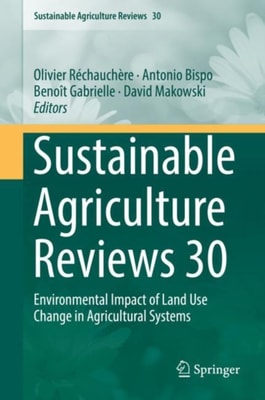
The originality of this book is to review and characterize the current body of scientific publications that describe the complete causal sequence from reorganization of agricultural production to land use changes (LUC) and the resulting environmental impacts.
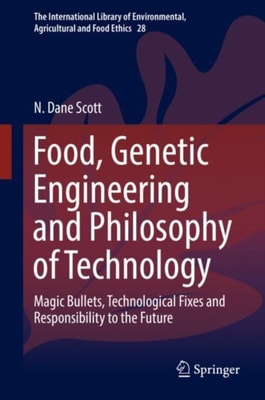
This book describes specific, well-know controversies in the genetic modification debate and connects them to deeper philosophical issues in philosophy of technology.
The problems related to the process of industrialisation such as biodiversity depletion, climate change and a worsening of health and living conditions, especially but not only in developing countries, intensify.
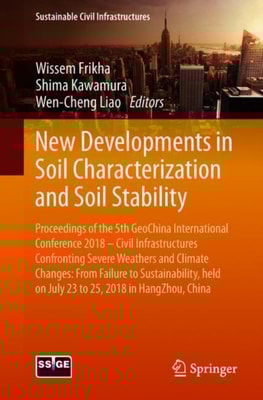
This book presents new studies dealing with the attempts made by the scientists and practitioners to address contemporary issues in geotechnical engineering such as characterization of soil, geomaterials, soil stability and some other geomechanics issues that are becoming quite relevant in today's world.
The problems related to the process of industrialisation such as biodiversity depletion, climate change and a worsening of health and living conditions, especially but not only in developing countries, intensify.
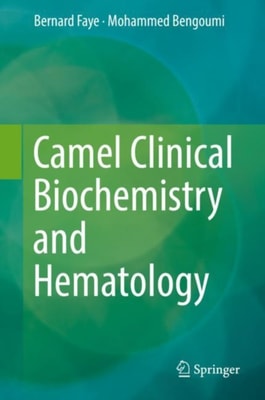
This work brings together a wealth of data regarding the reference values and factors of variation in biochemical parameters used by camel veterinarians and scientists to determine these animals' nutritional and clinical status.
This book presents a detailed overview and critical evaluation of recent advances and remaining challenges in improving nutritional quality and/or avoiding the accumulation of undesirable substances in plants using a variety of strategies based on modern biological tools and techniques.
This book integrates the different prospective, scientific and practical experience of researchers as well as beneficiaries and stakeholders in the field of forest conservation in Southeast Europe.
The plant species that humans rely upon have an extended family of wild counterparts that are an important source of genetic diversity used to breed productive crops.
This unique volume presents up-to-date information and the latest research findings on unconventional water resources in Egypt and their connections to agriculture.
This contributed volume provides 11 illustrative case studies of technological transformation in the global pulp and paper industry from the inception of mechanical papermaking in early nineteenth century Europe until its recent developments in today's business environment with rapidly changing market dynamics and consumer behaviour.
During the past 15 years, cellular and molecular approaches have emerged as valuable adjuncts to supplement and complement conventional breeding methods for a wide variety of crop plants.
This book presents advanced ecological techniques for crop cultivation and the chapters are arranged into four sections, namely general aspects, weeds, fungi, worms and microbes.
This book highlights modern strategies and methods to improve oilseed crops in the era of climate change, presenting the latest advances in plant molecular breeding and genomics-driven breeding.
This book highlights modern methods and strategies to improve cereal crops in the era of climate change, presenting the latest advances in plant molecular mapping and genome sequencing.
Climate resilience, or the capacity of socio-ecological systems to adapt and upkeep their functions when facing physical-chemical stress, is a key feature of ecosystems and communities.
This handbook covers the most commonly used techniques for measuring plant response to biotic and abiotic stressing factors, including: in vitro and in vivo bioassays; the study of root morphology, photosynthesis (pigment content, net photosynthesis, respiration, fluorescence and thermoluminiscence) and water status; thermal imaging; the measurement of oxidative stress markers; flow cytometry for measuring cell cycle and other physiological parameters; the use of microscope techniques for studying plant microtubules; programmed-cell-death; last-generation techniques (metabolomics, proteomics, SAR/QSAR); hybridization methods; isotope techniques for plant and soil studies; and the measurement of detoxification pathways, volatiles, soil microorganisms, and computational biology.