Find out how you can help save the bees in lots of practical ways and discover the incredible science behind honey bees, beekeeping, and bees in the wild - from the carpenter solitary bee to the stingless sugarbag.
Considered a classic at the time of its publication in 1910, A Shepherd's Life is a rare account of the lives of those who lived on and worked the land in nineteenth-century rural Britain.
The Sunday Times bestseller *Shortlisted for the Wainwright Prize*A New Statesman and Spectator Book of the Year'This book calls for nothing less than a revolution in the future of food' Kate RaworthFrom the bestselling author of Feral, a breathtaking first glimpse of a new future for food and for humanityFarming is the world's greatest cause of environmental destruction - and the one we are least prepared to talk about.
Collaboratively written by top international experts and established scientists in various fields of agricultural research, this book focuses on the state of food production and sustainability; the problems with degradation of valuable sources of land, water, and air and their effects on food crops; the increasing demand of food resources; and the challenges of food security worldwide.
OMICs-based Techniques for Global Food Security Forward-thinking resource discussing how to integrate OMICs and novel genome editing technologies for sustainable crop production OMICS-based Techniques for Global Food Security provides an in-depth understanding of the mechanisms of OMICs techniques for crop improvement, details how OMICs techniques can contribute to identifying genes and traits with economic benefits, and explains how to develop crop plants with improved yield, quality, and resistance to stresses through genome editing technologies, providing evidence on the developments of climate resilient crops via applications of genome editing techniques throughout.
OMICs-based Techniques for Global Food Security Forward-thinking resource discussing how to integrate OMICs and novel genome editing technologies for sustainable crop production OMICS-based Techniques for Global Food Security provides an in-depth understanding of the mechanisms of OMICs techniques for crop improvement, details how OMICs techniques can contribute to identifying genes and traits with economic benefits, and explains how to develop crop plants with improved yield, quality, and resistance to stresses through genome editing technologies, providing evidence on the developments of climate resilient crops via applications of genome editing techniques throughout.
The complexity of carbon reduction and economic sustainability is significantly complicated by competing aspects of socioeconomic practices as well as legislative, regulatory, and scientific requirements and protocols.
Digital Terrain Analysis in Soil Science and Geology provides soil scientists and geologists with an integrated view of the principles and methods of digital terrain analysis.
A vivid and moving portrait of America's farm familiesFarming is essential to the American economy and our daily lives, yet few of us have much contact with farmers except through the food we eat.
Today's wine industry is characterized by regional differences not only in the wines themselves but also in the business models by which these wines are produced, marketed, and distributed.
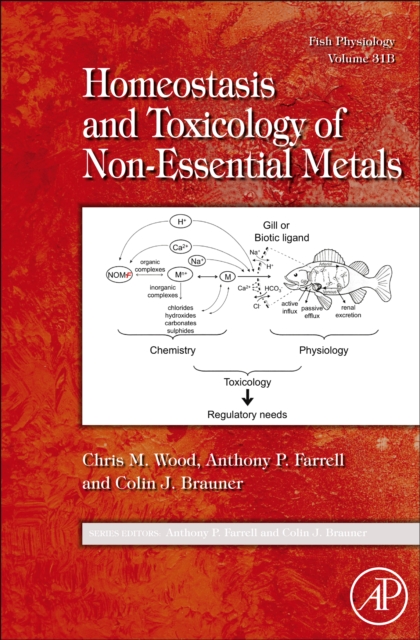
Homeostasis and Toxicology of Non-Essential Metals synthesizes the explosion of new information on the molecular, cellular, and organismal handling of metals in fish in the past 15 years.
Due to its prolific reproduction and the external development of the transparent embryo, the zebrafish is the prime model for genetic and developmental studies, as well as research in genomics.
Forms part of the three-volume set, Pathogenesis & Host Specificity in Plant Diseases, and deals with pathogenesis and host specificity in plant pathogenic prokaryotes.
Proceedings of a conference on Tropical Forests: Botanical Dynamics, Speciation and Diversity held at the University of Aarhus, Denmark, August 8*ba10, 1988.
Organic wastes are traditionally applied to land to recover their fertilizer value, but the microbial turnover of such organic matter in soil is often out of phase with the requirements of growing plants.
Insect trapping is a basic field research tool for many biologists, whether they are studying insect pests, disease vectors or insect ecology for its own sake.
The role of the agricultural scientist is to manipulate crop and livestock response phenomena so that they serve society's needs better, enabling countries to obtain full benefit from their agricultural resources.
Las Buenas Prácticas Agrícolas, BPA, son un conjunto de procedimientos que se realizan en sistemas de producción de forma amigable con los recursos naturales las cuales contribuyen a generar un producto limpio, sano y seguro para el consumidor.
This book offers comprehensive coverage of the design, analysis, and operational aspects of biomass gasification, the key technology enabling the production of biofuels from all viable sources--some examples being sugar cane and switchgrass.
This new series on The Biochemistry and Molecular Biology of Fishes grew out of the demand for state-of-the-art review articles in a rapidly expanding field of research.
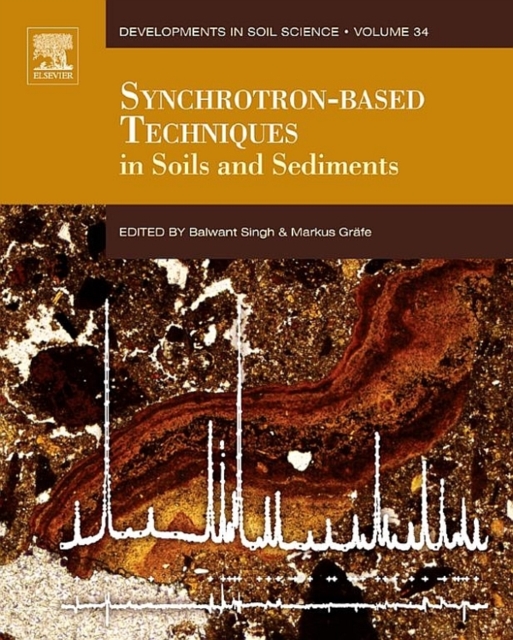
Over the past 20 years, synchrotron-based research applications have provided important insight into the geochemical cycling of ions and the chemical and crystallographic properties of minerals in soils and sediments.
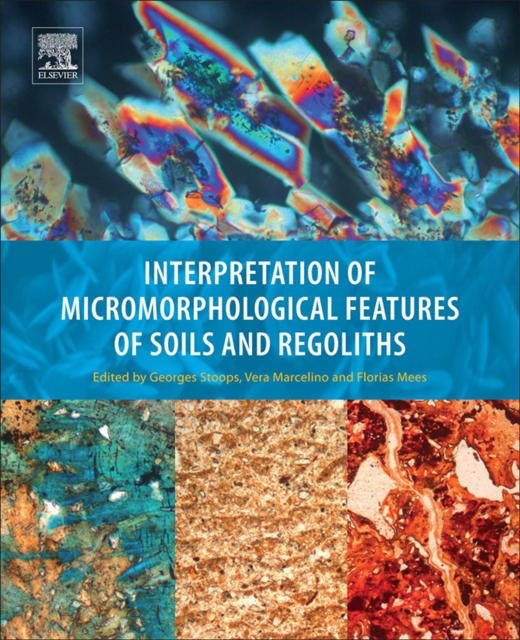
Interpretation of Micromorphological Features of Soils and Regolith, 2nd edition, provides researchers and students with a global tool for interpretation of micromorphological features of regoliths and soils.
This comprehensive handbook provides information on history, breeds and genetics, statistics, animal health, production, product utilization, and future projections.
With the substantial advances in the miniaturization of electronic components, wildlife biologists now routinely monitor the movements of free-ranging animals with radio-tracking devices.