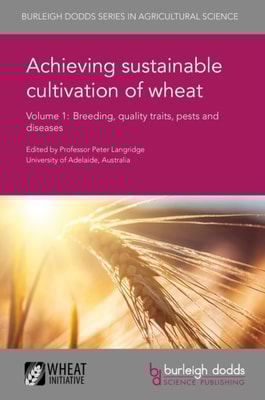
Discusses ways of ensuring genetic diversity, advances in wheat breeding and their use to improve properties such as drought resistance and cold tolerance; Summarises research on factors affecting nutritional and other aspects of wheat quality; Reviews advances in understanding wheat pests and diseases together with ways of controlling them such as disease-resistant varieties, integrated pest and weed management
Originally published in 1991, the focus of the contributions in this book is the relationships between rurality and small-scale production, particularly in Europe.
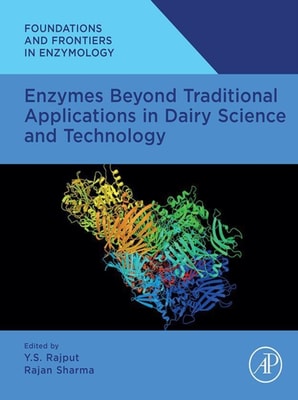
A volume in the series on Foundations and Frontiers of Enzymology, Enzymes Beyond Traditional Applications in Dairy Science and Technology presents the applications of enzymes in dairy science and technology.
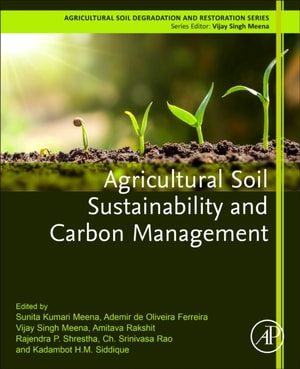
Agricultural Soil Sustainability and Carbon Management presents long-term research in the field of sustainable soil use and management to guide in the prioritizing the multifunctional value of soil health and addressing interdisciplinary links between major issues such as biodiversity and climate change.
This edited volume covers all aspects of microbes in consortia; their roles in the ecological balance of soil by mineralize soil nutrients, plant growth promotion, protecting plants from disease by acting as biocontrol agents etc.
Originally published in 1994, this volume brings together a set of essays reflecting the complex political, social and institutional problems encountered by modern states in seeking to manage their agricultural sectors.
Advances in Agronomy, Volume 179, the latest release in this leading reference on agronomy, contains a variety of updates and highlights new advances in the field.
While focusing on various interactions between trait genes/QTL and dynamic expressions of conditional QTL genes, this book also discusses aspects of molecular marker-assisted breeding, and applications of molecular markers associated with yield, quality, physiology and disease resistance in wheat.
Originally published in 1994, this volume brings together a set of essays reflecting the complex political, social and institutional problems encountered by modern states in seeking to manage their agricultural sectors.
Advances in Agronomy, Volume 179, the latest release in this leading reference on agronomy, contains a variety of updates and highlights new advances in the field.
Progress in Sustainable Development: Sustainable Engineering Practices provides readers with the latest research and best practices in sustainable engineering in the fields of urban, environmental, energy and sustainability sciences, reflecting a focus on state-of-the art insights and the latest developments.
Originally published in 1990, this volume addresses issues surrounding global ecological changes and sustainability of present patterns of urbanisation and industrialisation.
Originally published in 1991, the focus of the contributions in this book is the relationships between rurality and small-scale production, particularly in Europe.
Agricultural Soil Sustainability and Carbon Management presents long-term research in the field of sustainable soil use and management to guide in the prioritizing the multifunctional value of soil health and addressing interdisciplinary links between major issues such as biodiversity and climate change.
Originally published in 1994, this book brings together papers developing feminist analyses of the rural condition from a wide range of industrialised countries, informed by the national and local cultural constructions of gender and rurality which they interpret.
Primitive fishes are a relatively untapped resource in the scientific search for insights into the evolution of physiological systems in fishes and higher vertebrates.
Nematode Diseases of Crops and their Sustainable Management focuses on methods to recognize and identify nematode attackers in agriculturally important crops, offering ecologically sustainable and economically viable strategies and measures for the management of nematode infestations and diseases.
The Nile River Basin supports the livelihoods of millions of people in Egypt, Ethiopia, Sudan and Uganda, principally as water for agriculture and hydropower.
Summarises current research on pathogenic risks affecting milk and ways they can be controlled on the farm; Reviews ways of measuring and reducing the environmental impact of dairy farming such as better grassland management; Assesses the wider role of dairy farming and how it can be improved in the developing world
This is the first English book to address the current development of closed recirculating aquaculture systems (cRASs) in Japan, and its implications for industry in the near future.
This book introduces the reader to the Great Lakes and considers their soil-forming factors and processes, taxonomic structure of the soils, soil geography and pedodiversity, while also addressing the importance and protection of soils in the Great Lakes Coastal Zone.
Sea Urchins: Biology and Ecology, Fourth Edition, Volume 43 expands its coverage to include the entire class of Echinoidea, making this new edition an authoritative reference of the entire class of species.
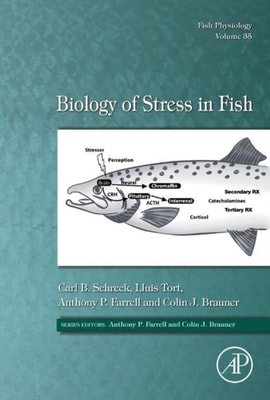
Biology of Stress in Fish: Fish Physiology provides a general understanding on the topic of stress biology, including most of the recent advances in the field.
Chitosan in the Preservation of Agricultural Commodities presents a cohesive overview of research topics regarding the production and characterization of chitosan, the development of coatings and fi lms, its functional properties, and antimicrobial potential of this compound on economically important agricultural commodities.
This report looks into the many challenges that agriculture in the People's Republic of China (PRC) faces and how stakeholders are meeting the challenges head-on with the establishment of farmer-enterprise partnerships.
Over-exploitation of natural resources resulting in their severe degradation, diminishing water resources, declining forest cover, depleting energy sources, loss of biodiversity and generation of various kinds of wastes are the issues to be addressed on priority in India.
The book examines the pattern of non-farm development at the national level and identifies the correlates and determinants of occupational diversification for the major states.
Best Synthetic Methods: Organophosphorus (V) Chemistry provides systematic coverage of the most common classes of pentavalent organophosphorus compounds and reagents (including phosphonyl, phosphoryl, and organophosphates), and allows researchers an easy point of entry into this complex and economically important field.
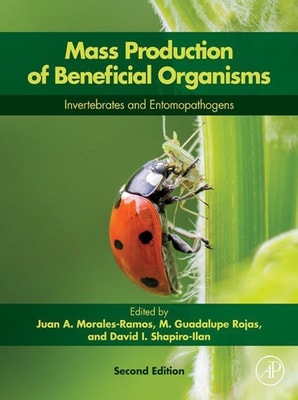
Mass Production of Beneficial Organisms: Invertebrates and Entomopathogens, Second Edition explores the latest advancements and technologies for large-scale rearing and manipulation of natural enemies while presenting ways of improving success rate, predictability of biological control procedures, and demonstrating their safe and effective use.
Advanced mathematics used in engineering is studied here in this text which examines the relationship between the principles in natural processes and those employed in engineered processes.