The book covers fundamental aspects, explores the synthesis, composition, and various properties of this next-generation 2D material, and provides an account of the processing and development of MXenes and MXene-based composites.
The book covers fundamental aspects, explores the synthesis, composition, and various properties of this next-generation 2D material, and provides an account of the processing and development of MXenes and MXene-based composites.
Comprising two volumes, RNA: Computational Methods for Structure, Kinetics, and Rational Design is a comprehensive treatment of computational methods concerning the secondary structure, folding kinetics and rational design of RNA.
What role will biofuels play in the scientific portfolio that might bring energy independence and security, revitalize rural infrastructures, and wean us off of our addiction to oil?
Gleaning information from more than 100 experts in the field of cancer diagnosis, prognosis, and therapy worldwide, Cancer Biomarkers: Non-Invasive Early Diagnosis and Prognosis determines the significance of clinical validation approaches for several markers.
Designed for students at the senior undergraduate and first-year graduate level, Introductory Nanoscience takes a quantitative approach to describing the physical and chemical principles behind what makes nanostructures so fascinating.
Because enzyme-catalyzed reactions exhibit higher enantioselectivity, regioselectivity, substrate specificity, and stability, they require mild conditions to react while prompting higher reaction efficiency and product yields.
The biopharmaceutical industry has become an increasingly important player in the global economy, and the success of these products depends on the development and implementation of cost-effective, robust and scaleable production processes.
Because of their simple preparation and low expense, carbon pastes and carbon paste electrodes are widely used in a myriad of instrumental measurements.
Carbon Nanotubes in Agriculture: Specifications and Applications presents a comprehensive overview of the beneficial roles of carbon nano-tubes (CNT) in regulation of seed germination, plant metabolism and their applications in plant stress management with particular focus on agricultural crop plants.
Presenting state-of-the-art research advancements, Porous Media: Applications in Biological Systems and Biotechnology explores innovative approaches to effectively apply existing porous media technologies to biomedical applications.
All manufacturing companies face the daunting task of designing an employee training matrix that meets the gamut of national and international regulatory standards.
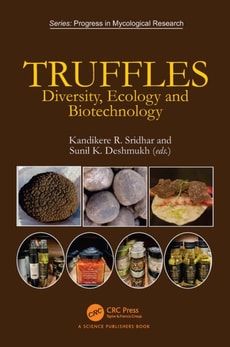
Truffles are hypogeous ectomycorrhizal ascomycetous edible mushrooms distributed worldwide in terrestrial ecosystems, including deserts, as non-timber forest products.
Chemicals from Biomass: Integrating Bioprocesses into Chemical Production Complexes for Sustainable Development helps engineers optimize the development of new chemical and polymer plants that use renewable resources to replace the output of goods and services from existing plants.
Numerous applications of micro-/nanofluidics are related to particle transport in micro-/nanoscale channels, and electrokinetics has proved to be one of the most promising tools to manipulate particles in micro/nanofluidics.
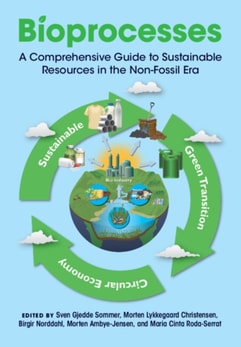
This work provides comprehensive coverage of modern biochemical engineering, detailing the basic concepts underlying the behaviour of bioprocesses as well as advances in bioprocess and biochemical engineering science.
Materials and Components of Biosensors in Healthcare: Volume Two provides comprehensive coverage and a detailed examination of the various materials and components used in the development of biosensors.
Distinct from tissue engineering, which focuses primarily on the repair of tissues, regenerative engineering focuses on the regeneration of tissues: creating living, functional tissue that has the ability to replace organs that are dysfunctional.
Known as the bible of biomedical engineering, The Biomedical Engineering Handbook, Fourth Edition, sets the standard against which all other references of this nature are measured.
Materials and Components of Biosensors in Healthcare: Volume Two provides comprehensive coverage and a detailed examination of the various materials and components used in the development of biosensors.
A ubiquitous tool in mathematical biology and chemical engineering, the chemostat often produces instabilities that pose safety hazards and adversely affect the optimization of bioreactive systems.
Transport phenomena in plasmas are the relatively slow processes of particle momentum and energy transport systems in a state of mechanical equilibrium.
This book covers the processing, properties, and application of rice husk, also widely known as rice hull, which is an available agricultural waste in numerous rice-producing countries.
Applications of Biosensors in Healthcare: Volume 3 details and explores the various ways biosensors are used in healthcare, disease management, and therapeutic delivery.
Since most therapeutic efforts have been predominantly focused on pharmaceuticals that target proteins, there is an unmet need to develop drugs that intercept cellular pathways that critically involve nucleic acids.
This book covers the processing, properties, and application of rice husk, also widely known as rice hull, which is an available agricultural waste in numerous rice-producing countries.
Applications of Biosensors in Healthcare: Volume 3 details and explores the various ways biosensors are used in healthcare, disease management, and therapeutic delivery.
Truffles are hypogeous ectomycorrhizal ascomycetous edible mushrooms distributed worldwide in terrestrial ecosystems, including deserts, as non-timber forest products.
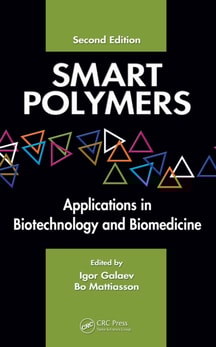
The first book to tackle the application of smart polymers in bioseparation and bioprocessing, Smart Polymers: Applications in Biotechnology and Biomedicine broke new ground in this challenging field.
This book comprehensively reviews the incorporation of different types of carbon-based nanomaterials for application in targeted and controlled drug delivery systems.
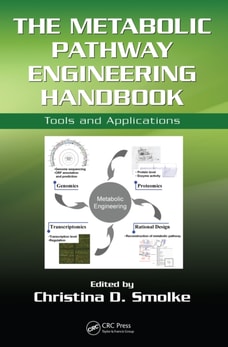
This second volume of the Metabolic Pathway Engineering Handbook delves into evolutionary tools and gene expression tools for metabolic pathway engineering.
This book comprehensively reviews the incorporation of different types of carbon-based nanomaterials for application in targeted and controlled drug delivery systems.
The availability of molecular imaging and measurement systems enables today's biologists to swiftly monitor thousands of genes involved in a host of diseases, a critical factor in specialized drug development.
Preparative Layer Chromatography explains how this method is used for separating large quantities of mixtures containing a wide variety of important compounds.
Merging topical data from recently published review and research articles, as well as the knowledge and insight of industry experts, Omics Applications in Crop Science delves into plant science, and various technologies that use omics in agriculture.
Viral Nanotechnology presents an up-to-date overview of the rapidly developing field of viral nanotechnology in the areas of immunology, virology, microbiology, chemistry, physics, and mathematical modeling.