The recent revolution in the biological sciences and bioengineering, along with the advancements of modern design and manufacturing, biomaterials, biology, and biomedicine, have brought about the new field of computer-aided tissue engineering.
With the rapid proliferation of RNAi applications in basic and clinical sciences, the challenge has now become understanding how components of RNAi machinery function together in a regulated manner.
Since the discovery of DNA structure and throughout the ensuing "e;DNA era"e;, the field of DNA replication has expanded to cover a vast number of experimental systems.
Biolistic transfection represents a direct physical gene transfer approach in which nucleic acids are precipitated on biologically inert high-density microparticles (usually gold or tungsten) and delivered directly through cell walls and/or membranes into the nucleus of target cells by high-velocity acceleration using a ballistic device such as the gene gun.
Part I I wasraised in a redbrick Baltimore row housewhere summer was marked by the ti- honored ritual of firefly-chasing - a backyard tradition that has endured the gene- tions.
Since its first systematic application during the 1970s, bioremediation, or the exploitation of a biological system's degradative potential to combat toxic pollutants such as heavy metals, polyaromatic hydrocarbons (PAH), cyanides, and radioactive material, has proven itself over time, and the many advances in molecular techniques have only amplified its utility.
Central to the synthesis of proteins, the performance of catalysis, and many other physiological processes, the aberrant expression of which can be linked to human diseases including cancers, RNA has proven to be key target for therapeutics as well as a tool for therapy.
Since the discovery of the pharmacological and toxicological importance of inhibiting the cyclooxygenase (COX) enzymes by non-steroidal anti-inflammatory drugs (NSAIDs), much research has gone into the development of methods to study the biological functions of COX-1 and COX-2.
Currently, nanotechnology is exposing the properties of DNA in unprecedented detail leading to new insights on the biological behavior and function of DNA.
This Volume describes methods for simulating natural environments by using reproducible and controllable meso- and microcosm experiments to analyse hydrocarbon-degrading microorganisms and to test hypotheses.
The ADME Encyclopedia covers pharmacokinetic phenomena (Absorption, Distribution, Metabolism and Excretion processes) and their relationship with the design of pharmaceutical carriers and the success of drug therapies.
This Volume covers protocols for in-silico approaches to hydrocarbon microbiology, including the selection and use of appropriate statistical tools for experimental design replication, data analysis, and computer-assisted approaches to data storage, management and utilisation.
This Volume presents key microscopy and imaging methods for revealing the structure and ultrastructure of environmental and experimental samples, of microbial communities and cultures, and of individual cells.
This Volume presents methods for analysing and quantifying petroleum, hydrocarbons and lipids, based on their chemical and physical properties as well as their biological effects.
This Volume presents methods for quantifying microbial populations and characterising microbial communities by extracting and analysing biomarkers such as RNA, DNA and lipids.
This Volume covers protocols for various applications in hydrocarbon microbiology, including those of interest for industrial processes, biocatalysis, lipid and biofuel production, bioproducts, or the human microbiome.
This Volume presents generic protocols for wet experimental and computer-based systems and synthetic biology approaches relevant to the field of hydrocarbon and lipid microbiology.
This Volume provides protocols for the biochemical analysis of hydrocarbon- and lipid-relevant products, cell components and activities of microbes that interact with hydrophobic compounds.
This Volume addresses the pros and cons of oligonucleotide probes, primers and primer combinations, and importantly considers how to design the best tools for the microbial taxa and/or processes being investigated.
This Volume presents applications of hydrocarbon microbiology in the context of environmental pollutant degradation, covering pollutants such as petroleum and related wastes (i.
This book approaches biofuels from a new biotechnological perspective with the aim of equipping researchers with a thorough, up-to-date understanding of biofuel research and related technologies.
Nanotechnology plays a key leading role in developing tools able to identify, measure, and study cellular events at the nanometric level as well as in contributing to the disclosure of unknown biological interactions and mechanisms, which opens the door for advances including nanodevices for diagnostic and therapy, drug delivery systems, and regenerative medicine.
Very Short Introductions: Brilliant, Sharp, Inspiring In this exploration of the concept of the gene, Jonathan Slack looks at the discovery, nature, and role of genes in both evolution and development.
Leveraging Artificial Intelligence in Global Epidemics provides readers with a detailed technical description of the role Artificial Intelligence plays in various stages of a disease outbreak, using COVID-19 as a case study.
Applications of Unsaturated Polyester Resins: Synthesis, Modifications, and Preparation Methods takes a practical approach to unsaturated polyester-based materials and their preparation for implementation in a range of innovative areas.
The ever-increasing number of pollutants discharged into the environment drives the search for new treatment technologies or the modification of the existing ones.
Viruses do not behave as other microbes; their life cycles require infecting healthy cells, commandeering their cellular apparatus, replicating and then killing the host cell.
Viruses do not behave as other microbes; their life cycles require infecting healthy cells, commandeering their cellular apparatus, replicating and then killing the host cell.
The ever-increasing number of pollutants discharged into the environment drives the search for new treatment technologies or the modification of the existing ones.
The main practical breakthrough of this century is nanobiotechnology, an amalgamation of biology and nanotechnology based on the standards and methods of metabolism.
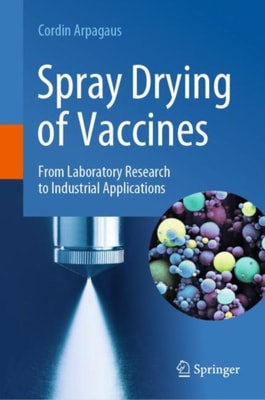
This book addresses the stabilization of vaccine powders by spray drying and provides an overview of the current state of the art on a laboratory and industrial scale.