This edited volume covers all aspects of microbes in consortia; their roles in the ecological balance of soil by mineralize soil nutrients, plant growth promotion, protecting plants from disease by acting as biocontrol agents etc.
This third edition provides new and updated chapters detailing preparation of liposomes, physicochemical characterization of liposomes, lipid analysis, drug encapsulation, surface modification, stimuli response as well as cellular interaction, and biodistribution.
This book is a concise presentation of important aspects involved in dealing with extraction and utilization of bioactive compounds from the food industry waste.
This book is a concise presentation of important aspects involved in dealing with extraction and utilization of bioactive compounds from the food industry waste.
Herbal drugs play a pivotal role in modern medicine and pharmaceutical care; however, only limited biotechnology applications have been seen in medicinal plants.
Herbal drugs play a pivotal role in modern medicine and pharmaceutical care; however, only limited biotechnology applications have been seen in medicinal plants.
This edited book deals with latest comprehensive information on conventional and high throughput techniques and technologies that are recently used to study plant microbial interface for agricultural research and enhancing plant productivity.
This book highlights the best practices regarding nanoscience and nanotechnology for agriculture and environmental sectors to shape sustainable development thought to improve the quality and quantity of the agriculture products and to decrease the collateral effect of nanotechnology in the ecosystems.
Antiviral and Antimicrobial Smart Coatings: Fundamentals and Applications provides a critical analysis of all types of smart antiviral and antimicrobial coatings currently being researched.
Smartphone Apps for Health and Wellness helps readers navigate the world of smartphone apps to direct them to those which have had the best medical evidence in obtaining the users' goal.
Nanotechnology and biosensors show how nanotechnology is used to create affordable, mass-produced, portable, small-sized nanosensors to directly monitor food toxicants and environmental pollutants.
Nanotechnology and biosensors show how nanotechnology is used to create affordable, mass-produced, portable, small-sized nanosensors to directly monitor food toxicants and environmental pollutants.
This book includes recent articles with new findings in Mathematics and Computer Science, Microbiology and Biotechnology, Environmental Science and Oceanography, Physics and Physical Chemistry, Chemistry, and Biochemistry.
Encyclopaedia of Biotechnology covers an enormous range of technical terms from both pure and applied Biotechnology; this superb reference goes beyond basic definitions to provide helpful explanations and examples.
Nano-enabled Sustainable and Precision Agriculture is the first single-volume resource to cover this important field using a whole systems approach that considers both opportunities and challenges.
Biodilution is also a process that occurs to all trophic levels in an aquatic environment; it is the opposite of biomagnification, thus a pollutant gets smaller in concentration as it progresses up a food web.
Next Generation Nanochitosan: Applications in Animal Husbandry, Aquaculture and Food Conservation provides comprehensive and state-of-the-art-information on the application of nanochitosan for improving products, especially for the evaluation of biological active molecules, disease therapeutics, transport vehicle for DNA, targeted drug delivery, gene therapy, development of smart and high performance of fish, preservation of foods, tissue engineering, and improving the taste of aquatic and animal feeds as fish growth promoter.
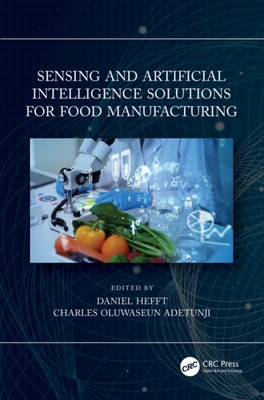
This book gives readers a practical introduction into machine learning and sensing techniques, their design and ultimately specific applications that could improve food production.
This book gives readers a practical introduction into machine learning and sensing techniques, their design and ultimately specific applications that could improve food production.
Biotechnology involves an interdisciplinary science that provides an interface between biological, molecular and cellular aspects of living organisms with broad technologies applicable in the fields of health, environment and materials.
Aimed at an international readership, this book offers a representative collection of essays by the German philosopher, Georg Picht (1913-1982), who was a specialist in Greek philosophy, practical philosophy and philosophy of religion.
Bio-refinery approach of microbial fermentation, production of biogas, bioenergy, enzymes, bioactive molecules, agricultural nutrient and many more, which is presently restricted to specific journals, review articles and research papers in conference proceedings.
This detailed volume presents a series of protocols dealing with different aspects of inclusion body (IB) processing, from cloning procedures to purification of refolded product.
In the twenty-first century Pharmacognosy was transformed into a molecular science building on classic botanical and modern chemical knowledge, leading to a better understanding of the complex molecular effect - structure relationships and interactions required for the development of new drugs based on biologically active plant substances.
This volume provides protocols describing the isolation and culture of diverse cell types stemming from the skin and the use of these cells and cell constructs for wound healing, bioengineering applications, and translational medicine purposes.