In this book strategies for using very soft organic clay as a fill material for road embankment constructions are compared, and an optimisation scheme is presented.
The International Mining Forum is a recurring event, hosted by the University of Science and Technology in Cracow, Poland, bringing together an international group of scientists, including those working in rock mechanics and computer engineering as well as mining engineers.
The International Conference on Advanced Materials, Structures and Mechanical Engineering 2015 (ICAMSME 2015) was held on May 29-31, Incheon, South-Korea.
The study of rock dynamics is important because many rock mechanics and rock engineering problems involve dynamic loading ranging from earthquakes to vibrations and explosions.
An innovative concept, smart structural systems have proven to be extremely effective in absorbing damaging energy and/or counteracting potentially devastating force, thus limiting structural collapse and subsequent injury.
This book provides a new, necessary and valuable approach to the consideration of risk in underground engineering projects constructed within rock masses.
One of the principal objections to or problems with the use of nuclear fuel is that a proven method for safe disposal of spent nuclear fuel has yet to be established.
Over the last twenty years we have witnessed a revolution in ground stabilization in both underground and above-ground applications, thanks largely to the widespread adoption of shotcrete as a medium for support.
A multidisciplinary field, encompassing both geophysics and civil engineering, geomechanics deals with the deformation and failure process in geomaterials such as soil and rock.
All civil engineering and construction projects require some sort of solid foundation, but ground conditions bring some degree of uncertainty to every project.
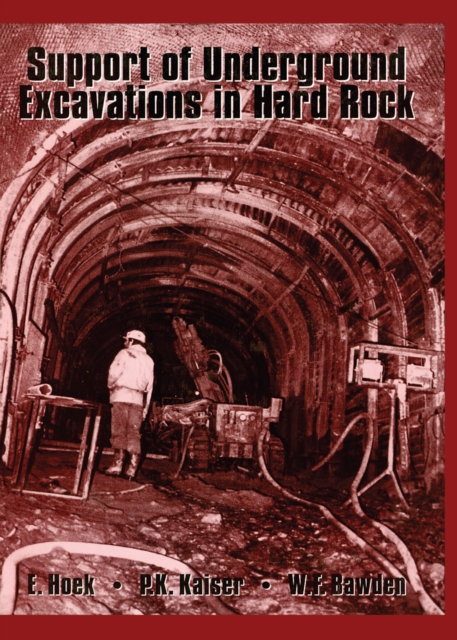
The safe and economical construction of tunnels, mines, and other subterranean works depends on the correct choice of support systems to ensure that the excavations are stable.
Volcanic Rock Mechanics includes papers and special lectures of the 3rd International Workshop on Volcanic Rocks, Rock Mechanics and Geo-Engineering in Volcanic Environments, which was held within the framework of the Congress ,Cities on Volcanoes6-Tenerife 2010, (Puerto de la Cruz, Tenerife, Spain, 31 May , 4 June 2010).
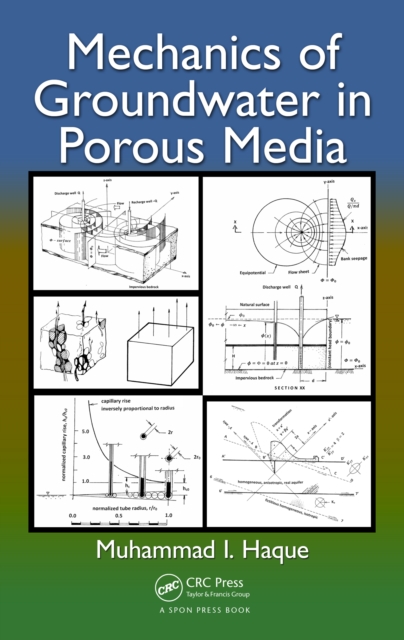
Provides a Balance between the Mathematical and Physical Aspects and the Engineering ApplicationsWritten for engineering and science students, Mechanics of Groundwater in Porous Media explains groundwater from both a mathematical and qualitative standpoint.
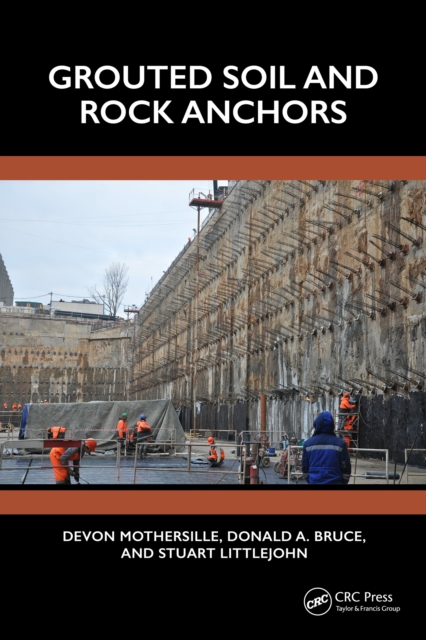
This book delves deep into the crucial aspects of grouted soil and rock anchors, providing a contemporary perspective on the best practices in anchor technology that are directly applicable to the work of consulting engineers, contractors and students in the field.
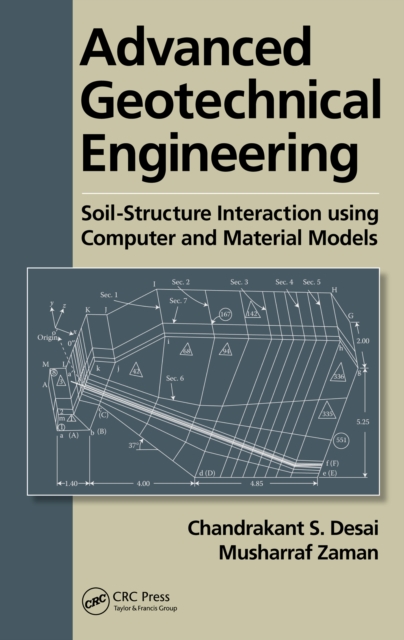
Soil-structure interaction is an area of major importance in geotechnical engineering and geomechanics Advanced Geotechnical Engineering: Soil-Structure Interaction using Computer and Material Models covers computer and analytical methods for a number of geotechnical problems.
This volume deals with economic aspects of mining companies development strategies, various mineral deposits development techniques, imitational modeling of mine workings with rock massif, methane extraction technologies during coal mining, geomechanical processes during plow mining, mining transport importance for mineral extraction, massif
Modern petroleum and petrotechnical engineering is increasingly challenging due to the inherently scarce and decreasing number of global petroleum resources.
This volume comprises three keynote lectures by internationally well-known experts in the field of underground construction, the inaugural Fujita lecture to honor professor Keiichi Fujita, and the regular papers presented at the 8th International Symposium on Geotechnical Aspects of Underground Construction in Soft Ground (IS-Seoul 2014).
Certain wastes such as nuclear wastes, are so hazardous that their disposal creates a major challenge requiring considerable technical skill and understanding.
This book describes how a number of different methods of analysis and modelling, including the boundary element method, the finite element method, and a range of classical methods, are used to answer some of the questions associated with soil-structure interaction.
This book describes the enormous depth of work carried out since the early 1970s on the Messina Strait Bridge, up to the recent award of the detailed design and construction contract.
This second edition of the successful Foundations on Rock presents an up-to-date practical reference book describing current engineering practice in the investigation, design and construction of foundations on rock.
This book comprises the proceedings of the international conference Shaking the Foundations of Geo-engineering Education (NUI Galway, Ireland, 4-6 July 2012), a major initiative of the International Society of Soil Mechanics and Geotechnical Engineering (ISSMGE) Technical Committee (TC306) on Geo-engineering Education.
The Deep Mixing Method (DMM), a deep in-situ soil stabilization technique using cement and/or lime as a stabilizing agent, was developed in Japan and in the Nordic countries independently in the 1970s.
Academic and industry experts describe the use of chemical (permeation) grouting beneath an airport runway to improve ground resistance to liquefaction.
Given the recent advances in site investigation techniques, computing, access to information and monitoring, plus the current emphasis on safety, accountability and sustainability, this book introduces an up-to-date methodology for the design of all types of rock engineering projects, whether surface or underground.
ICOLD Bulletin 194, Tailings Dam Safety, aims to assist the international community to further develop and adopt safe practices for tailings dam planning, design, construction, operation, and closure with a focus on the technical aspects that are mentioned but not fully developed in other recent National and Industry Guidelines and Standards.
To obtain data about the stiffness and bearing capacity of a foundation pile, the Rapid Load Test could be an effective and economic alternative for a static load test.
Applies science and engineering principles to the analysis, design, and implementation of technical schemes to characterize, treat, modify, and reuse/store waste and contaminated media.
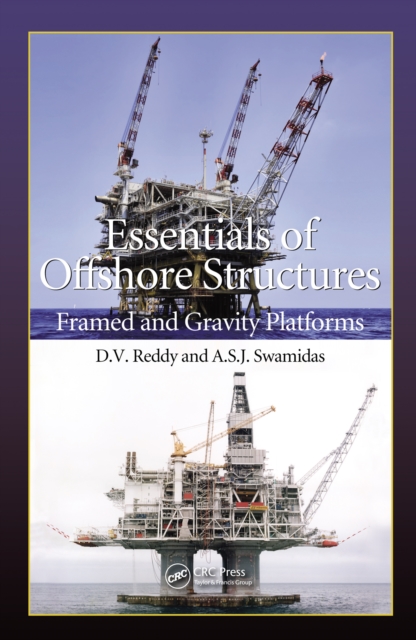
Essentials of Offshore Structures: Framed and Gravity Platforms examines the engineering ideas and offshore drilling platforms for exploration and production.
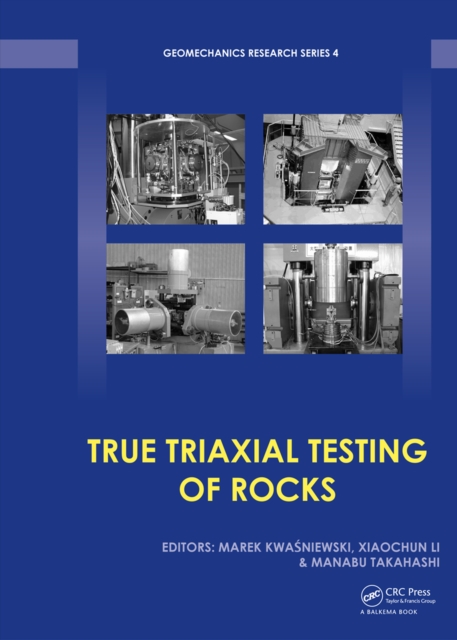
The book provides a guide to rock engineers and engineering geologists as to how to perform laboratory tests and how to use the existing data for solving practical rock engineering design and operating problems.
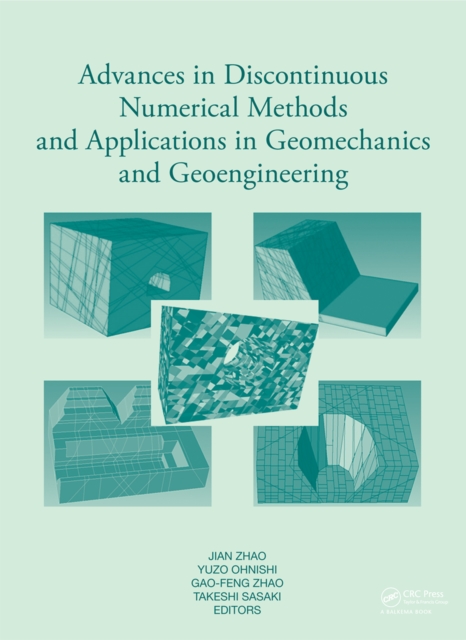
Rocks and soils can behave as discontinuous materials, both physically and mechanically, and for such discontinuous nature and behaviour there remain challenges in numerical modelling methods and techniques.
Underground infrastructure (traffic and railway tunnels, water and sewage ducts, garages, and subways) is essential for urbanized areas, as they fulfill an important role in the transportation of people, energy, communication and water.
ICE Handbook of Ground Investigation is a comprehensive practical guide, presented in two volumes, that covers the range of techniques used in conducting thorough and effective ground investigations.
When finding another location, redesigning a structure, or removing troublesome ground at a project site are not practical options, prevailing ground conditions must be addressed.