Discussing rock breakage by blasting, this text includes: results of complex investigations into the rock breakage mechanism and the patterns of crack formation during a blast; problems of modelling; and principal equations linking the model with prototype and similarity criteria.
Covers development of trenchless technology; pipejacking and microtunnelling methods equipment: shields and tunnel boring machines; pipejacking: line, drive pit, top side; equipment: microtunnelling; design concepts.
Modeling in Geotechnical Engineering is a one stop reference for a range of computational models, the theory explaining how they work, and case studies describing how to apply them.
Advances in Multi-Physics and Multi-Scale Couplings in Geo-Environmental Mechanics reunites some of the most recent work from the French research group MeGe GDR (National Research Group on Multiscale and Multiphysics Couplings in Geo-Environmental Mechanics) on the theme of multi-scale and multi-physics modeling of geomaterials, with a special focus on micromechanical aspects.
Granular Geomechanics provides a comprehensive exploration of soils as granular materials and the manner in which a soil's engineering properties form grain-scale mechanics.
The chapters in this book show that a careful blend of engineering judgement and advanced principles of engineering mechanics may be used to resolve many complex geotechnical engineering problems.
Geotechnical and Geophysical Site Characterization collects the papers presented at the Third International Conference on Site Characterization (ISC 3) that took place in Taipei from April 1-4, 2008.
This third edition focuses on the application of geoenvironmental engineering procedures and practices to mitigate and reduce the adverse impacts on the geoenvironment from anthropogenic sources including emerging contaminants such as micro and nanoplastics, pharmaceuticals, and fire retarding chemicals.
Electrical Spectroscopy of Earth Materials provides detailed coverage of theoretical and experimental methods of electrical spectroscopy of Earth materials, based on first-hand research and extensive data.
Unlike similar titles providing general information on ground improvement, Jet Grouting: Technology, Design and Control is entirely devoted to the role of jet grouting - its methods and equipment, as well as its applications.
These proceedings contain papers by some of the world's leading experts in the analytical and numerical modelling of sediment transport, its measurement on site and in the laboratory, river and coastal morphology, and similar issues.
This proceedings volume contains over 300 papers on rock mechanics and engineering with contributors from all over Asia and many other parts of the world.
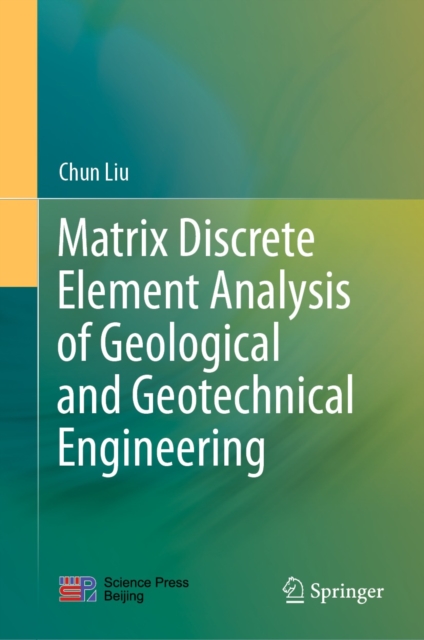
This book introduces the basic structure, modeling methods, numerical calculation processes, post-processing, and system functions of MatDEM, which applies the basic principles and algorithm of the discrete element method.
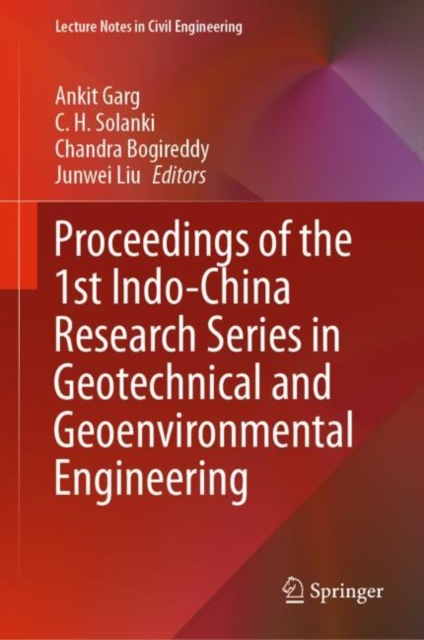
This book is a compilation of selected papers from the 1st Indo-China Research Series in Geotechnical and Geoenvironmental Engineering held in May 2020 online.
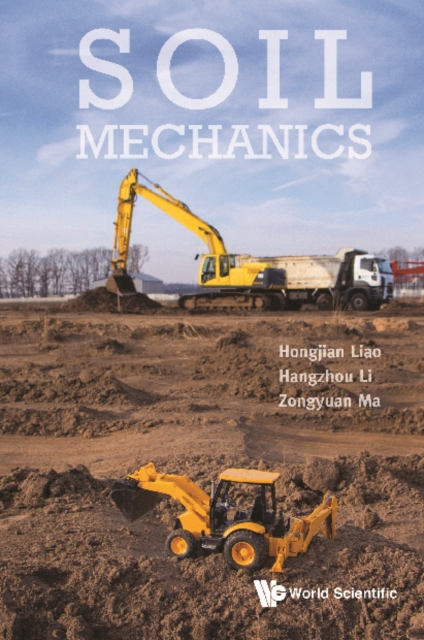
This book also doubles as a textbook with an explanation of basic theory, knowledge, and skills in soil mechanics as well as the most updated codes and standards in China.
This book gives a brief history and a general overview of the state of surface mining technology with topics ranging from the principles to surface mining methods, systems, and pit planning design.
This book is a personal anthology of the author's utmost academic works and accomplishments with his former students and colleagues intended as an enduring record for the engineering community for many years to come.
Academic and industry experts describe the use of chemical (permeation) grouting beneath an airport runway to improve ground resistance to liquefaction.
This book focuses on the fundamentals of rock mechanics as a basis for the safe and economical design and construction of tunnels, dam foundations and slopes in jointed and anisotropic rock.
This book focuses on the fundamentals of rock mechanics as a basis for the safe and economical design and construction of tunnels, dam foundations and slopes in jointed and anisotropic rock.
This book presents the theoretical bases and the application tools for using the 'convergence-confinement' method which is a rational method largely used in design engineering for tunneling.
The environmental field has evolved since its beginnings in 1970 with the creation of the US Environmental Protection Agency (EPA), and further with the 1980 passage of CERCLA legislation (Comprehensive Environmental Response, Compensation, and Liability Act), commonly known as Superfund.
Geotechnical Instrumentation and Applications explains the geotechnical issues encountered in the implementation of construction projects dealing with ground, groundwater, and earth infrastructures, including land reclamations, dams, embankments, landfill construction, excavations, and tunnelling.
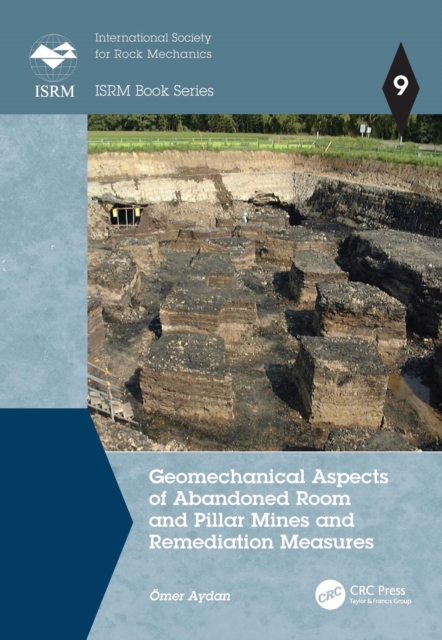
Geomechanical Aspects of Abandoned Room and Pillar Mines and Remediation Measures addresses the occurrence, prediction, and control of subsidence issues encountered in room and pillar mining, including creep, degradation, and seismic aspects.