In this book strategies for using very soft organic clay as a fill material for road embankment constructions are compared, and an optimisation scheme is presented.
Research in smart materials and structures seeks to apply multifunctional capabilities of new and existing materials to develop structures and systems that are capable of self-sensing and monitoring, self-diagnosis and prognosis with intelligence, self-healing and repair, and adaptive response to prevent loss of human life and catastrophe, to minimize maintenance and life-cycle costs, and to prolong service life.
In our world of seemingly unlimited computing, numerous analytical approaches to the estimation of stress, strain, and displacement-including analytical, numerical, physical, and analog techniques-have greatly advanced the practice of engineering.
Originally developed for mechanical and aeronautical engineering, structural optimization is not so easily applied to civil and architectural engineering, as structures in these fields are not mass products, but more often unique structures planned in accordance with specific design requirements.
The recent worldwide boom in industrial construction and the corresponding billions of dollars spent every year in industrial, oil, gas, and petrochemical and power generation project, has created fierce competition for these projects.
Most failure or accident investigations begin at the end of the story: after the explosion, after the fire has been extinguished, or after the collapse.
Put a New Class of Structural Composites to UseReal Solutions for Predicting Load Initially designed as thermal barrier materials for aerospace applications and fusion reactors, functionally graded materials (FGMs) are now widely employed as structural components in extremely high-temperature environments.
Retrofitting of building structures, including maintenance, rehabilitation, and strengthening, is not only an important issue in urban construction and management, but also a frequent problem to structural engineers in property management disciplines.
Explore Historic Bridge Design through the Perspective of Modern EngineeringHistoric Bridges:Evaluation, Preservation, and Management provides both an admiring and a technical account of bridge engineering through an exploration of several remarkable examples.
Although the Trefftz finite element method (FEM) has become a powerful computational tool in the analysis of plane elasticity, thin and thick plate bending, Poisson's equation, heat conduction, and piezoelectric materials, there are few books that offer a comprehensive computer programming treatment of the subject.
A new analytical method that uses the capacity axis of a section to determine its minimum capacity for biaxial bending as well as provide the reference for equilibrium of external and internal forces has been developed.
This book presents both differential equation and integral formulations of boundary value problems for computing the stress and displacement fields of solid bodies at two levels of approximation - isotropic linear theory of elasticity as well as theories of mechanics of materials.
A step-by-step text on the basic tests performed in soil mechanics, Introduction to Soil Mechanics Laboratory Testing provides procedural aids and elucidates industry standards.
Geologic hazards pose the greatest threat to human safety for any geotechnical undertaking, but it is ultimately the engineer's ability to recognize and cope with these hazards that will determine the safety of life and property.
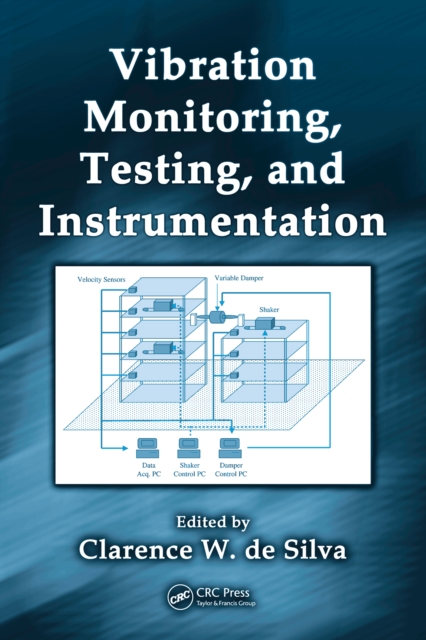
Controlling a system's vibrational behavior, whether for reducing harmful vibrations or for enhancing useful types, is critical to ensure safe and economical operation as well as longer structural and equipment lifetimes.
Expanded to include a broader range of problems than the bestselling first edition, Finite Element Method Using MATLAB: Second Edition presents finite element approximation concepts, formulation, and programming in a format that effectively streamlines the learning process.
Resoundingly popular in its first edition, the second edition of Mechanics of Structures: Variational and Computational Methods promises to be even more so, with broader coverage, expanded discussions, and a streamlined presentation.
Understanding the elastoplastic deformation of metals and geomaterials, including the constitutive description of the materials and analysis of structure undergoing plastic deformation, is an essential part of the background required by mechanical, civil, and geotechnical engineers as well as materials scientists.
Forensic Engineering Investigation is a compendium of the investigative methodologies used by engineers and scientific investigators to evaluate some of the more common types of failures and catastrophic events.
The engineering community generally accepts that there exists only a small set of closed-form solutions for simple cases of bars, beams, columns, and plates.
Although the use of composites has increased in many industrial, commercial, medical, and defense applications, there is a lack of technical literature that examines composites in conjunction with concrete construction.
Models for the mechanical behavior of porous media introduced more than 50 years ago are still relied upon today, but more recent work shows that, in some cases, they may violate the laws of thermodynamics.
Structural health monitoring (SHM) uses one or more in situ sensing systems placed in or around a structure, providing real-time evaluation of its performance and ultimately preventing structural failure.
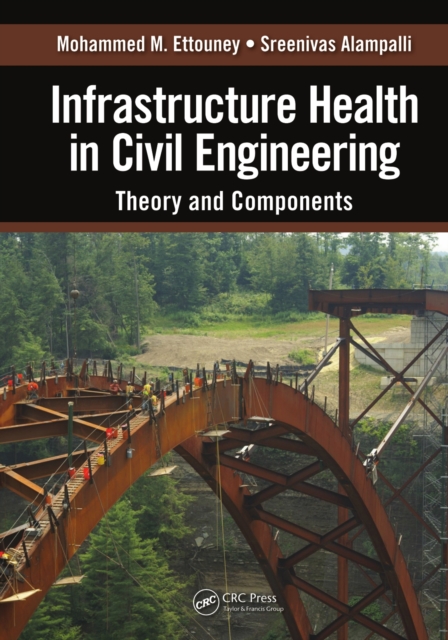
Continually increasing demands on infrastructures mean that maintenance and renewal require timely, appropriate action that maximizes benefits while minimizing cost.
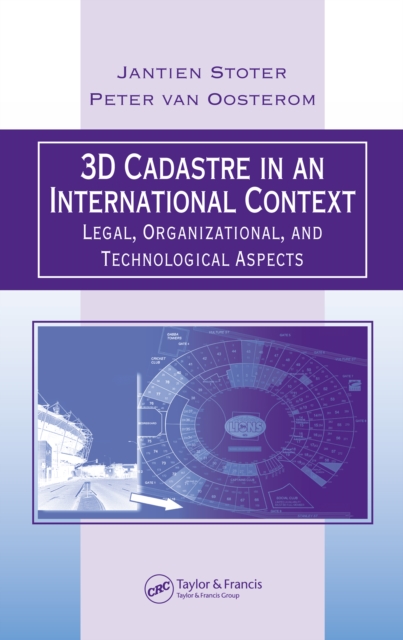
The increase in private property value, growth of underground and multilevel development, and the emergence of 3D technologies in planning and GIS drives the need to record 3D situations in cadastral registration.
Industrial Explosives and their Applications for Rock Excavation focuses on applications of industrial explosives in civil and mining engineering works.
His father conceived of the Brooklyn Bridge, but it was Washington Roebling who built this iconic feat of human engineering after his father's tragic death.
The Estimator's Pocket Book, Third Edition is a concise and practical reference cover-ing the main approaches to pricing, as well as useful information such as how to process sub-contractor quotations, tender settlement and adjudication.
To accommodate the inherent non-linearity and non-stationarity of many natural time series, empirical mode decomposition (EMD) and Hilbert-Huang transform (HHT) provide an adaptive and efficient method.
This Publication is an outgrowth of the Proceedings for the Geotechnical Symposium in Roma, also known as Tatsuoka Symposium, which was held on March 16 and 17, 2006 in th Rome, Italy.
Flood damages are increasing as a result of frequent occurrence of large floods in many parts of the world, existing and continuing encroachment of development onto flood plains and aging flood protection structures.