The book develops a practical understanding of the fundamental scientific principles and logic underlying the art of turf pitch preparation, measuring, analysing, and interpreting pitch surface behaviour.
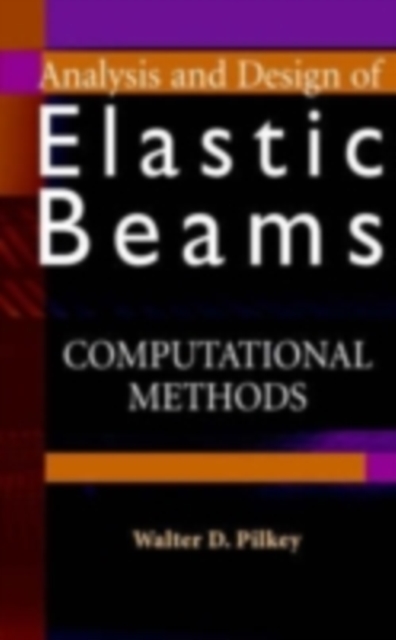
State-of-the-art coverage of modern computational methods for the analysis and design of beams Analysis and Design of Elastic Beams presents computer models and applications related to thin-walled beams such as those used in mechanical and aerospace designs, where thin, lightweight structures with high strength are needed.
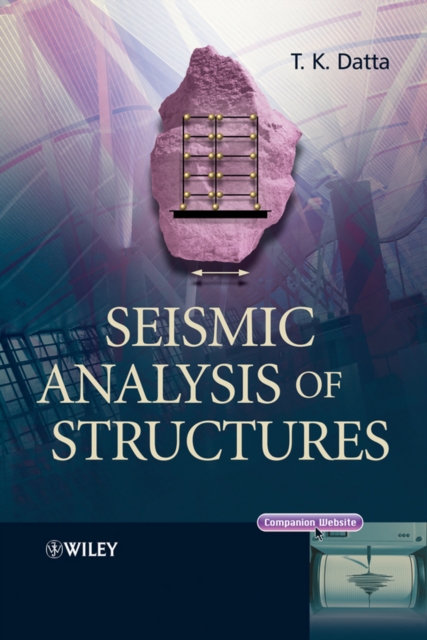
While numerous books have been written on earthquakes, earthquake resistance design, and seismic analysis and design of structures, none have been tailored for advanced students and practitioners, and those who would like to have most of the important aspects of seismic analysis in one place.
Bayesian methods are a powerful tool in many areas of science and engineering, especially statistical physics, medical sciences, electrical engineering, and information sciences.
This manual for civil and structural engineers aims to simplify as much as possible a complex subject which is often treated too theoretically, by explaining in a practical way how to provide uncomplicated, buildable and economical foundations.
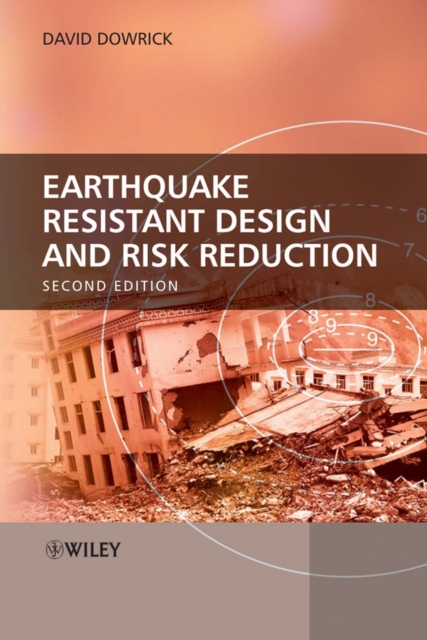
Earthquake Resistant Design and Risk Reduction, 2nd edition is based upon global research and development work over the last 50 years or more, and follows the author s series of three books Earthquake Resistant Design, 1st and 2nd editions (1977 and 1987), and Earthquake Risk Reduction (2003).
This important textbook provides an introduction to the concepts of the newly developed extended finite element method (XFEM) for fracture analysis of structures, as well as for other related engineering applications.
This major structural engineering manual covers overall detail design of structural timber and includes extensive tables and coefficients for speedy reference.
Evolutionary Topology Optimization of Continuum Structures treads new ground with a comprehensive study on the techniques and applications of evolutionary structural optimization (ESO) and its later version bi-directional ESO (BESO) methods.
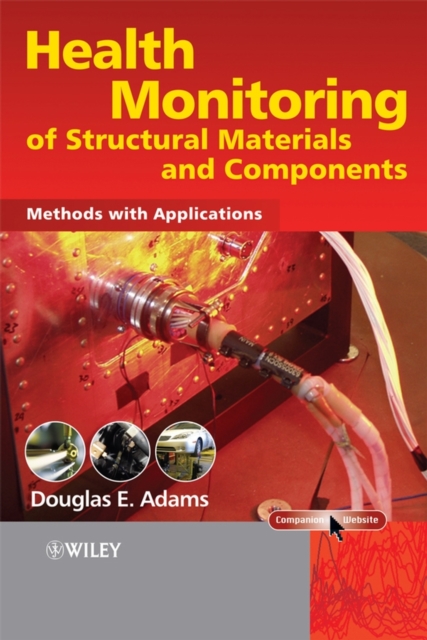
The first complete introduction to health monitoring, encapsulating both technical information and practical case studies spanning the breadth of the subject.
Nondestructive Testing involves the use of methods such as wave propagation, electromagnetism, electrical conductivity, and thermal conductivity to test structural integrity and thereby allow nondestructive assessment of structures and the possibility of structural failures before they occur.
This second edition of the highly acclaimed and successful first edition, deals primarily with the analysis of structural engineering systems, with applicable methods to other types of structures.
Foundations on Expansive Soils provides the practicing engineer with a summary of the state-of-the-art of expansive soils and practical solutions based on the author's experience.
Practical Problems in Soil Mechanics and Foundation Engineering, 1: Physical Characteristics of Soils, Plasticity, Settlement Calculations, Interpretation of In-Situ Tests presents the analysis and calculation procedures for the solution of geotechnical problems.
The Penetrometer and Soil Exploration: Interpretation of Penetration Diagrams-Theory presents the many uses of the penetrometer for investigating soil conditions.
Distributed in the East European countries, China, Northern Korea, Cuba, Vietnam and Mongolia by Academia, Prague, CzechoslovakiaThis book is based on the efficient subsoil model introduced by the authors in 1977 and applied in the last ten years in the design of foundations.
The object of this book is to shed light on the most important design aspects encountered in foundation engineering and to present basic design principles representative of the developed part of the world.
In this book, the authors present a review of the methods used for the solution of problems of stability and support of mine workings, based on the study and analysis of the validity conditions of individual theoretical computing procedures.
Despite advances in the field of geotechnical earthquake engineering, earthquakes continue to cause loss of life and property in one part of the world or another.
This monograph presents the results of the theoretical analyses of stresses and displacements for shallow foundations subjected to various types of loads.
Although theoretical in character, this book provides a useful source of information for those dealing with practical problems relating to rock and soil mechanics - a discipline which, in the view of the authors, attempts to apply the theory of continuum to the mechanical investigation of rock and soil media.
The foundation of structures and the construction of underground railways in urban areas would be impossible without the use of diaphragm walls, grouting, anchors, micropiles, slender retaining walls, etc.
This book provides the concepts and methodologies of probabilistic structural performance assessments and predictions for deteriorating structures, with emphasis on marine structures and special consideration of system reliability, risk, longevity, sustainability, and optimal decision making.