A concise, accessible introduction to robots, what they can do, what they can't, and what their increasing encroachment into our lives might mean for us.
Step into a World Transformed by Artificial IntelligenceImagine a world where artificial intelligence seamlessly integrates into every facet of our lives, from the way we work and learn to how we interact with the world around us.
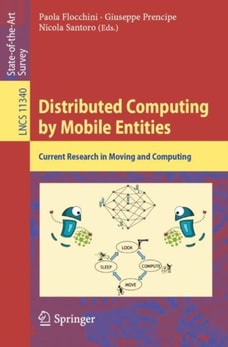
Distributed Computing by Mobile Entities is concerned with the study of the computational and complexity issues arising in systems of decentralized computational entities operating in a spatial universe Encompassing and modeling a large variety of application environments and systems, from robotic swarms to networks of mobile sensors, from software mobile agents in communication networks to crawlers and viruses on the web, the theoretical research in this area intersects distributed computing with the fields of computational geometry (especially for continuous spaces), control theory, graph theory and combinatorics (especially for discrete spaces).
Studies on integer optimization in emergency management have attracted engineers and scientists from various disciplines such as management, mathematics, computer science, and other fields.
Brain-computer interface (BCI) technology provides a means of communication that allows individuals with severely impaired movement to communicate with assistive devices using the electroencephalogram (EEG) or other brain signals.
The idea that some day robots may have emotions has captured the imagination of many and has been dramatized by robots and androids in such famous movies as 2001 Space Odyssey's HAL or Star Trek's Data.
The Most Complete, Current Guide to Troubleshooting and Repairing Electrical and Electronic Devices"e;If it's electronic, and there is troubleshooting to be done, then this is the book to reach for!
Aerial Robotic Workers: Design, Modeling, Control, Vision and Their Applications provides an in-depth look at both theory and practical applications surrounding the Aerial Robotic Worker (ARW).
Artificial Vision is a rapidly growing discipline, aiming to build computational models of the visual functionalities in humans, as well as machines that emulate them.
It is undeniable that the recent revival of artificial intelligence (AI) has significantly changed the landscape of science in many application domains, ranging from health to defense and from conversational interfaces to autonomous cars.
This book presents the achievements of the author's team in the research of a special underactuated system called mobile wheeled inverted pendulum (MWIP) developed over recent years.
Discrete Networked Dynamic Systems: Analysis and Performance provides a high-level treatment of a general class of linear discrete-time dynamic systems interconnected over an information network, exchanging relative state measurements or output measurements.
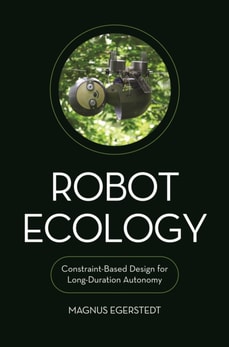
A revolutionary new framework that draws on insights from ecology for the design and analysis of long-duration robotsRobots are increasingly leaving the confines of laboratories, warehouses, and manufacturing facilities, venturing into agriculture and other settings where they must operate in uncertain conditions over long timescales.
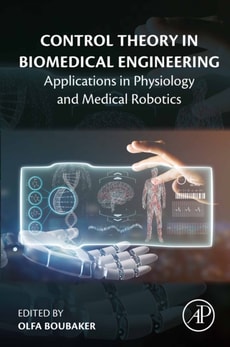
Control Theory in Biomedical Engineering: Applications in Physiology and Medical Robotics highlights the importance of control theory and feedback control in our lives and explains how this theory is central to future medical developments.
This book is a compilation of scientific articles written by recognized researchers, and select students, participating in the Second Conference on the Study of Complex Systems and their Applications (EDIESCA 2021).
Nanorobotics and Nanodiagnostics in Integrative Biology and Biomedicine "e;Nanorobotics and nanodiagnostics"e; can be defined as a new generation of biohybrid and nanorobotics that translate fundamental biological principles into engineering design rules, or integrative living components into synthetic structures to create biorobots and nanodiagnotics that perform like natural systems.
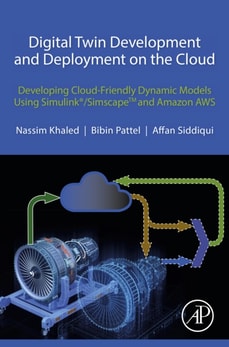
Digital Twin Development and Deployment in the Cloud: Developing Cloud-Friendly Dynamic Models Using Simulink(R)/SimscapeTM and Amazon AWS promotes a physics-based approach to the field of digital twins.
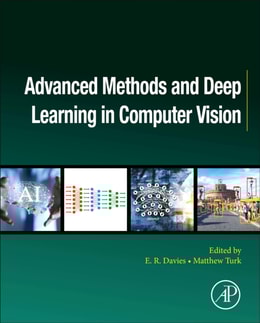
Advanced Methods and Deep Learning in Computer Vision presents advanced computer vision methods, emphasizing machine and deep learning techniques that have emerged during the past 5-10 years.
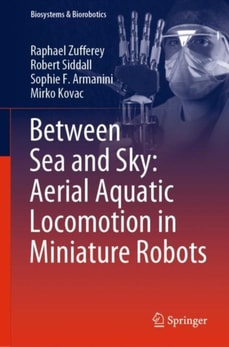
This book reports on the state of the art in the field of aerial-aquatic locomotion, focusing on the main challenges concerning the translation of this important ability from nature to synthetic systems, and describing innovative engineering solutions that have been applied in practice by the authors at the Aerial Robotics Lab of Imperial College London.
Would you like to add the capabilities of the Non-Volatile Memory (NVM) as a storage element in your silicon integrated logic circuits, and as a trimming sector in your high voltage driver and other silicon integrated analog circuits?
Intravascular Ultrasound: From Acquisition to Advanced Quantitative Analysis covers topics of the whole imaging pipeline, ranging from the definition of the clinical problem and image acquisition systems to image processing and analysis, including the assisted clinical-decision making procedures and treatment planning (stent deployment and follow up).
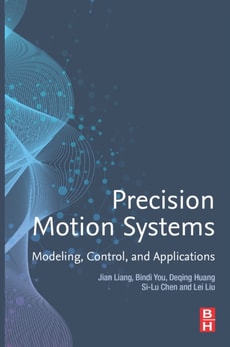
Precision Motion Systems: Modeling, Control, and Applications presents basic dynamics and the control knowledge needed for the daily challenges of researchers and professionals working in the field.
This book is a technical publication for students, scholars and engineers in electrical engineering, focusing on the pulse-width-modulation (PWM) technologies in power electronics area.
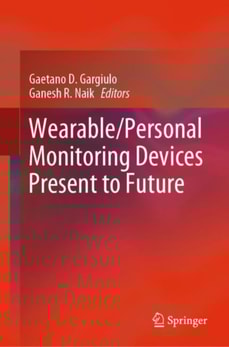
This book discusses recent advances in wearable technologies and personal monitoring devices, covering topics such as skin contact-based wearables (electrodes), non-contact wearables, the Internet of things (IoT), and signal processing for wearable devices.