From aeronautics and manufacturing to healthcare and disaster management, systems engineering (SE) now focuses on designing applications that ensure performance optimization, robustness, and reliability while combining an emerging group of heterogeneous systems to realize a common goal.
In today's digital design environment, engineers must achieve quick turn-around time with ready accesses to circuit synthesis and simulation applications.
With an abundance of insightful examples, problems, and computer experiments, Introduction to Logic Design provides a balanced, easy-to-read treatment of the fundamental theory of logic functions and applications to the design of digital devices and systems.
SiGe HBTs are the most mature of the Si heterostructure devices and not surprisingly the most completely researched and discussed in the technical literature.
Both deregulation in the electrical supply industry and the creation of new electricity markets present electric utility companies with the challenge of becoming more efficient without compromising quality of service.
Is it possible to design and make automatic devices for industrial and power engineering without microcircuits and microprocessors and without complex power supplies?
Featuring hundreds of illustrations and references, this volume in the third edition of the Circuits and Filters Handbook, provides the latest information on analog and VLSI circuits, omitting extensive theory and proofs in favor of numerous examples throughout each chapter.
The classical approach to analog circuit analysis is a daunting prospect to many students, requiring tedious enumeration of contributing factors and lengthy calculations.
Chip Design and Implementation from a Practical ViewpointFocusing on chip implementation, Low-Power NoC for High-Performance SoC Design provides practical knowledge and real examples of how to use network on chip (NoC) in the design of system on chip (SoC).
Emphasizing the detailed design of various Verilog projects, Verilog HDL: Digital Design and Modeling offers students a firm foundation on the subject matter.
Using an accessible yet rigorous approach, Active Filters: Theory and Design highlights the essential role of filters, especially analog active filters, in applications for seismology, brainwave research, speech and hearing studies, and other medical electronics.
A comprehensive source for microwave and wireless circuit design, the Commercial Wireless Circuits and Components Handbook reviews the fundamentals of transmitters and receivers, then presents detailed chapters on individual circuit types.
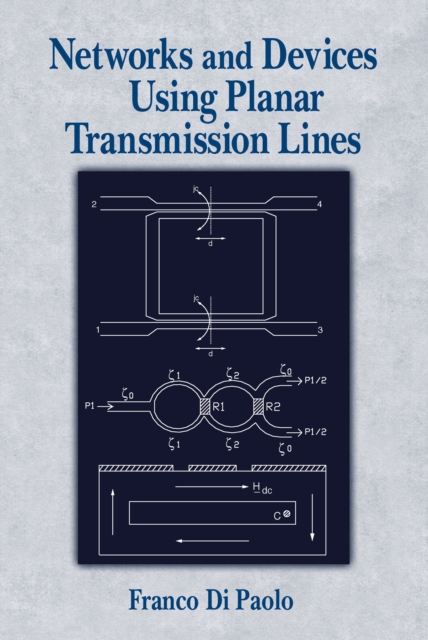
A single text that incorporates all of the theoretical principles and practical aspects of planar transmission line devices - since the early development of striplines, it has been sought by countless microwave engineers, researchers, and students.
Culled from the pages of CRC's highly successful, best-selling The Circuits and Filters Handbook, Second Edition, Circuit Analysis and Feedback Amplifier Theory presents a sharply focused, comprehensive review of the fundamental theory behind professional applications of circuits and feedback amplifiers.
Building upon the extensive resources of Whitaker's The Electronics Handbook, The Resource Handbook of Electronics offers the most complete collection of reference and tabular data available.
Addressing the growing demand for larger capacity in information technology, VLSI Micro- and Nanophotonics: Science, Technology, and Applications explores issues of science and technology of micro/nano-scale photonics and integration for broad-scale and chip-scale Very Large Scale Integration photonics.
Presenting a comprehensive overview of the design automation algorithms, tools, and methodologies used to design integrated circuits, the Electronic Design Automation for Integrated Circuits Handbook is available in two volumes.
Presenting a comprehensive overview of the design automation algorithms, tools, and methodologies used to design integrated circuits, the Electronic Design Automation for Integrated Circuits Handbook is available in two volumes.
With growing consumer demand for portability and miniaturization in electronics, design engineers must concentrate on many additional aspects in their core design.
An integral part of any communications system, high-frequency and microwave design stimulates major progress in the wireless world and continues to serve as a foundation for the commercial wireless products we use every day.
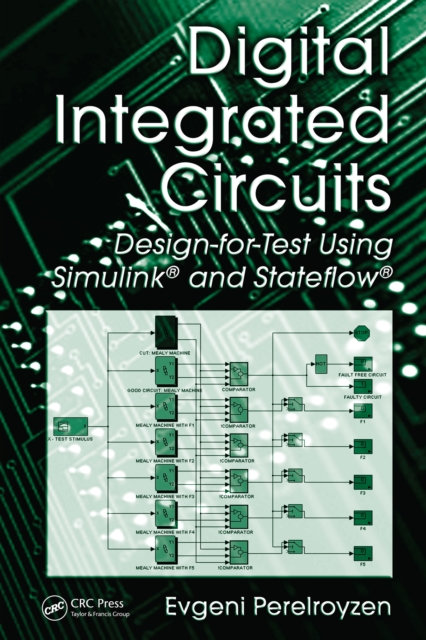
A current trend in digital design-the integration of the MATLAB(R) components Simulink(R) and Stateflow(R) for model building, simulations, system testing, and fault detection-allows for better control over the design flow process and, ultimately, for better system results.
Developing NoC based interconnect tailored to a particular application domain, satisfying the application performance constraints with minimum power-area overhead is a major challenge.
Offset Reduction Techniques in High-Speed Analog-to-Digital Converters analyzes, describes the design, and presents test results of Analog-to-Digital Converters (ADCs) employing the three main high-speed architectures: flash, two-step flash and folding and interpolation.
Hardware Software Co-Design of a Multimedia SOC Platform is one of the first of its kinds to provide a comprehensive overview of the design and implementation of the hardware and software of an SoC platform for multimedia applications.
Tsutomu Sasao - Kyushu Institute of Technology, Japan The material covered in this book is quite unique especially for p- ple who are reading English, since such material is quite hard to ?
Electronic System Level Design: an Open-Source Approach is based on the successful experience acquired with the conception of the ADL ArchC, the development of its underlying tool suite, and the building of its platform modeling infrastructure.
The idea for this book originated from a Special Session on Circuits and Systems for Future Generations of Wireless Communications that was presented at the 2005 InternationalSymposiumon Circuits and Systems, which was then followed by two Special Issues bearing the same title that appeared in the March and April 2008 issues of the IEEE Transactions on Circuits and Systems - Part II: Express Briefs.
Functional Design Errors in Digital Circuits Diagnosis covers a wide spectrum of innovative methods to automate the debugging process throughout the design flow: from Register-Transfer Level (RTL) all the way to the silicon die.
With the rapid advances in technology, the conventional academic and research departments of Electronics engineering, Electrical Engineering, Computer Science, Instrumentation Engineering over the globe are forced to come together and update their curriculum with few common interdisciplinary courses in order to come out with the engineers and researchers with muli-dimensional capabilities.
Until the 1990s, the reduction of the minimum feature sizes used to fabricate in- grated circuits, called "e;scaling"e;, has highlighted serious advantages as integration density, speed, power consumption, functionality and cost.
Biopotential Readout Circuits for Portable Acquisition Systems describes one of the main building blocks of such miniaturized biomedical signal acquisition systems.