Handbook of Biosensors: Nanotechnology for Biomedical Diagnostics provides a comprehensive overview of the transformative role played by nanotechnology in the development of biosensors for biomedical applications.
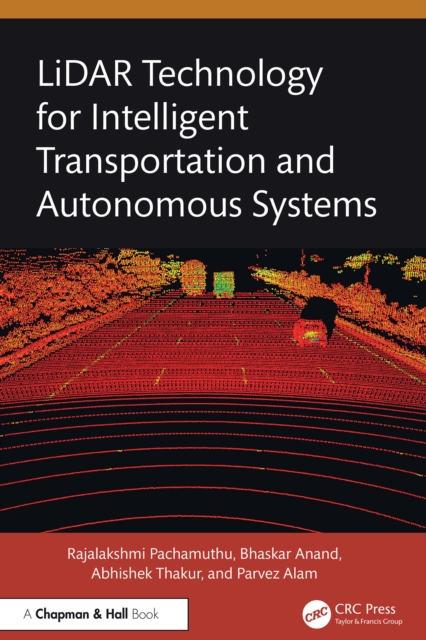
This book aims to provide a comprehensive exploration of the integration of machine learning and deep learning algorithms into the field of autonomous vehicles and advanced driver assistance systems.
This book aims to provide a comprehensive exploration of the integration of machine learning and deep learning algorithms into the field of autonomous vehicles and advanced driver assistance systems.
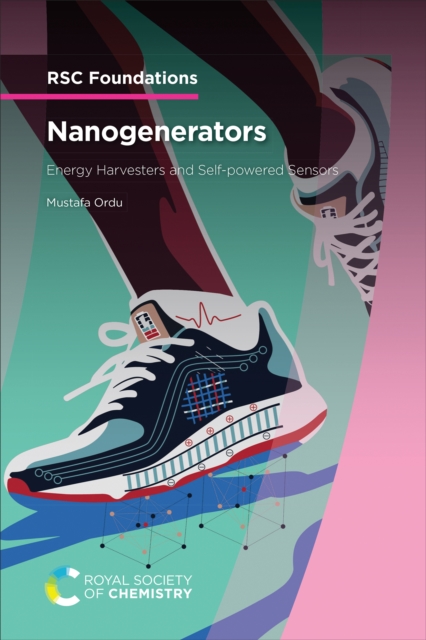
Nanogenerators are an emerging technology, a novel provider of renewable energy in a range of applications, such as energy harvesters and self-powered sensors.
This book is a pioneering reference work designed to address the complex terminology, technical specifications, and diverse applications of valves in industrial systems.
This book details both conventional and advanced geophysical techniques with description of the Electromagnetic (EM) based physics involved in different methodologies of magnetotellurics (MT).
This book details both conventional and advanced geophysical techniques with description of the Electromagnetic (EM) based physics involved in different methodologies of magnetotellurics (MT).
This book provides a well-focused and comprehensive overview of the history and background of MXene-based materials and their structure, synthesis, properties, and modifications for making various advanced materials.
Information technology is arguably the most important scientific topic needed for understanding and participating in our increasingly complex technological world.
As EPA standards for water quality have tightened in recent years, the need to more accurately assess filter performance and improve the overall treatment process has led to increased demand for the high sensitivity provided by particle counters.
Research in smart materials and structures seeks to apply multifunctional capabilities of new and existing materials to develop structures and systems that are capable of self-sensing and monitoring, self-diagnosis and prognosis with intelligence, self-healing and repair, and adaptive response to prevent loss of human life and catastrophe, to minimize maintenance and life-cycle costs, and to prolong service life.
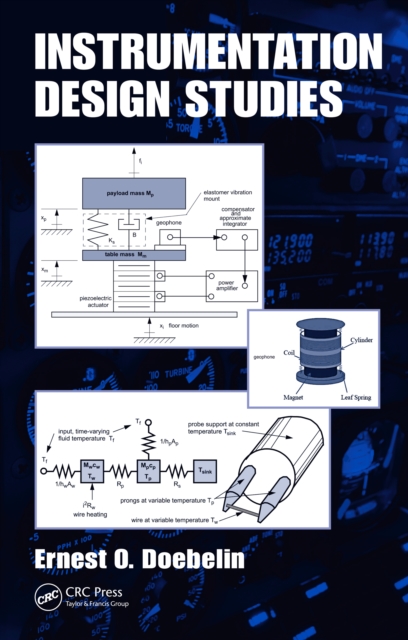
Integrating physical modeling, mathematical analysis, and computer simulation, Instrumentation Design Studies explores a wide variety of specific and practical instrumentation design situations.
The evolution of technological advances in infrared sensor technology, image processing, "e;smart"e; algorithms, knowledge-based databases, and their overall system integration has resulted in new methods of research and use in medical infrared imaging.
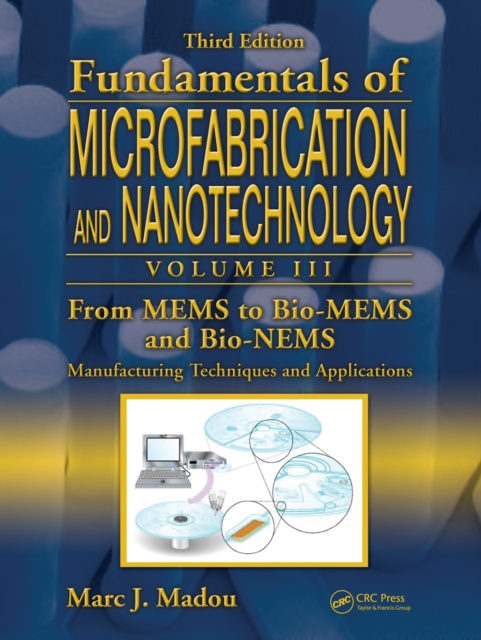
Thoroughly revised and updated, the new edition of the best-selling MEMS Handbook is now presented as a three-volume set that offers state-of-the-art coverage of microelectromechanical systems.
Data Fusion Mathematics: Theory and Practice offers a comprehensive overview of data fusion (DF) and provides a proper and adequate understanding of the basic mathematics directly related to DF.
Addressing the most dynamic areas of the ever-changing telecommunications landscape, the second edition of the bestselling CRC Handbook of Modern Telecommunications once again brings together the top minds and industry pioneers in wireless communication networks, protocols, and devices.
Impedance Spectroscopy is a powerful measurement method used in many application fields such as electrochemistry, material science, biology and medicine, semiconductor industry and sensors.
The ability to see through smoke and mist and the ability to use the variances in temperature to differentiate between targets and their backgrounds are invaluable in military applications and have become major motivators for the further development of thermal imagers.
Rapid evolution of technical advances in infrared sensor technology, image processing, 'smart algorithms, databases, and system integration paves the way for new methods of research and use in medical infrared imaging.
Consider a Viable and Cost-Effective Platform for the Industries of the Future (IOF)Benefit from improved safety, performance, and product deliveries to your customers.
This volume details the theories, mechanisms, technologies and trends for solving qualitative and quantitative problems in diverse areas of analytical research - emphasizing physicochemical principles.
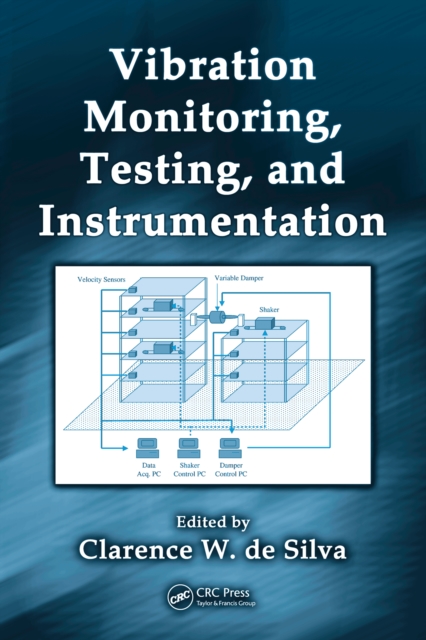
Controlling a system's vibrational behavior, whether for reducing harmful vibrations or for enhancing useful types, is critical to ensure safe and economical operation as well as longer structural and equipment lifetimes.
By exploiting the synergies among available data, information fusion can reduce data traffic, filter noisy measurements, and make predictions and inferences about a monitored entity.
Written by an engineering consultant with over 48 years of experience in the field, this Second Edition provides a reader-friendly and thorough discussion of the fundamental principles and science of cryogenic engineering including the properties of fluids and solids, refrigeration and liquefaction, insulation, instrumentation, natural gas processi
Part of the ISPRS Series, this key volume for remote sensing specialists and photogrammetrists details current calibration procedures, the latest 'best practices', and promotes the development of coherent, high quality Earth observation imagery.
Photon-in-photon-out core level spectroscopy is an emerging approach to characterize the electronic structure of catalysts and enzymes, and it is either installed or planned for intense synchrotron beam lines and X-ray free electron lasers.
Explaining the chromatic methodology for the intelligent monitoring of complex systems, Chromatic Monitoring of Complex Conditions demonstrates that chromatic processing is analogous to human vision yet also extends into a wide range of nonoptical domains.
From the discovery of x-rays in 1895 through the emergence of computed tomography (CT) in the 1970s and magnetic resonance imaging (MRI) in the 1980s, non-invasive imaging has revolutionized the practice of medicine.