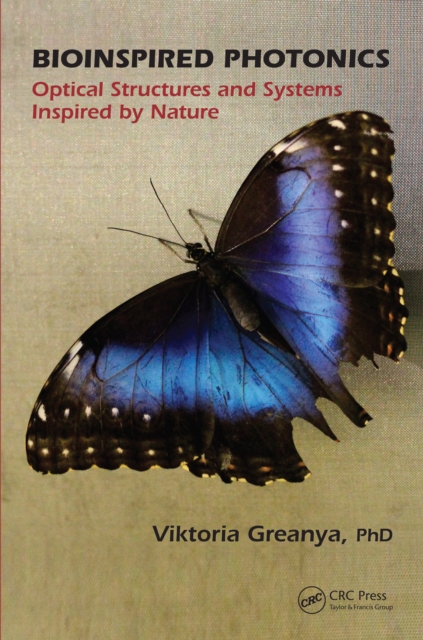
Harness the Wonders of the Natural World As our in-depth knowledge of biological systems increases, the number of devices and applications built from these principles is rapidly growing.
Food materials are processed prior to their consumption using different processing technologies that improve their shelf life and maintain their physicochemical, biological, and sensory qualities.
From the discovery of x-rays in 1895 through the emergence of computed tomography (CT) in the 1970s and magnetic resonance imaging (MRI) in the 1980s, non-invasive imaging has revolutionized the practice of medicine.
For many applications, compound semiconductors are now viable competitors to elemental semiconductors because of their wide range of physical properties.
Offering practical advice on a range of wavelengths, this highly accessible and self-contained book presents a broad overview of astronomical instrumentation, techniques, and tools.
Many books and reviews about scanning probe microscopies (SPM) cover the basics of their performance, novel developments, and state-of-the-art applications.
The author compiles everything a student or experienced developmental engineer needs to know about the supporting technologies associated with the rapidly evolving field of robotics.
Providing a complete foundation to comprehend the physics of the microworld, Advanced Particle Physics, Two-Volume Set develops the models, theoretical framework, and mathematical tools to understand current experiments and make predictions for future experiments.
Going beyond the traditional field of robotics to include other mobile vehicles, this reference and "e;recipe book"e; describes important theoretical concepts, techniques, and applications that can be used to build truly mobile intelligent autonomous systems (MIAS).
The evolution of technological advances in infrared sensor technology, image processing, "e;smart"e; algorithms, knowledge-based databases, and their overall system integration has resulted in new methods of research and use in medical infrared imaging.
Handbook of Optical Sensors provides a comprehensive and integrated view of optical sensors, addressing the fundamentals, structures, technologies, applications, and future perspectives.
Continually increasing demands on infrastructures mean that maintenance and renewal require timely, appropriate action that maximizes benefits while minimizing cost.
Written at an intermediate level in a way that is easy to understand, Fundamentals and Applications of Ultrasonic Waves, Second Edition provides an up-to-date exposition of ultrasonics and some of its main applications.
This book provides an overview of the state of the art in optical and chemical nanosensors for industrial, environmental, diagnostic, security, and medical applications.
Due to their speed, data density, and versatility, optical metrology tools play important roles in today's high-speed industrial manufacturing applications.
The Second Edition of the bestselling Measurement, Instrumentation, and Sensors Handbook brings together all aspects of the design and implementation of measurement, instrumentation, and sensors.
The Second Edition of the bestselling Measurement, Instrumentation, and Sensors Handbook brings together all aspects of the design and implementation of measurement, instrumentation, and sensors.
With the rapid growth of the nanotechnology industry, the need to understand the biological effects of aerosol exposure has become increasingly important.
Maintaining the outstanding features and practical approach that led the bestselling first edition to become a standard textbook in engineering classrooms worldwide, Clarence de Silva's Vibration: Fundamentals and Practice, Second Edition remains a solid instructional tool for modeling, analyzing, simulating, measuring, monitoring, testing, controlling, and designing for vibration in engineering systems.
Research in smart materials and structures seeks to apply multifunctional capabilities of new and existing materials to develop structures and systems that are capable of self-sensing and monitoring, self-diagnosis and prognosis with intelligence, self-healing and repair, and adaptive response to prevent loss of human life and catastrophe, to minimize maintenance and life-cycle costs, and to prolong service life.
This book details the latest developments in sensing technology and its applications in the food industry, profiling the improvements achieved in recent years for better food quality, safety, processing, and control.
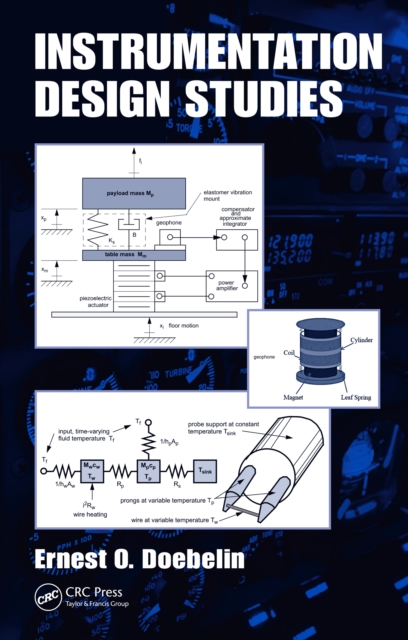
Integrating physical modeling, mathematical analysis, and computer simulation, Instrumentation Design Studies explores a wide variety of specific and practical instrumentation design situations.
Even though the perception of food quality may depend on its hedonic and often subjective attributes, it is essential to quantitatively evaluate its quality and safety.
GPS-embedded clothing for finding children or skiers when they are lost, bio-monitoring smart shirts, and vests that monitor a patient's vital signs are no longer science fiction but science fact.
Frequently a substance found at a port of entry, waste site, laboratory triage facility, or even in a hazardous materials emergency will be labeled and purportedly identified.
Addressing the most dynamic areas of the ever-changing telecommunications landscape, the second edition of the bestselling CRC Handbook of Modern Telecommunications once again brings together the top minds and industry pioneers in wireless communication networks, protocols, and devices.
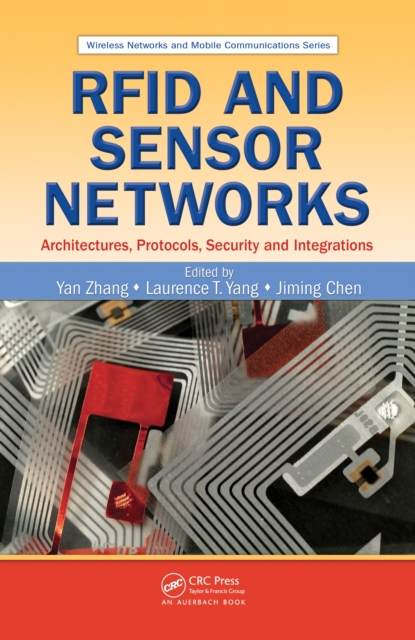
The escalating demand for ubiquitous computing along with the complementary and flexible natures of Radio Frequency Identification (RFID) and Wireless Sensor Networks (WSNs) have sparked an increase in the integration of these two dynamic technologies.
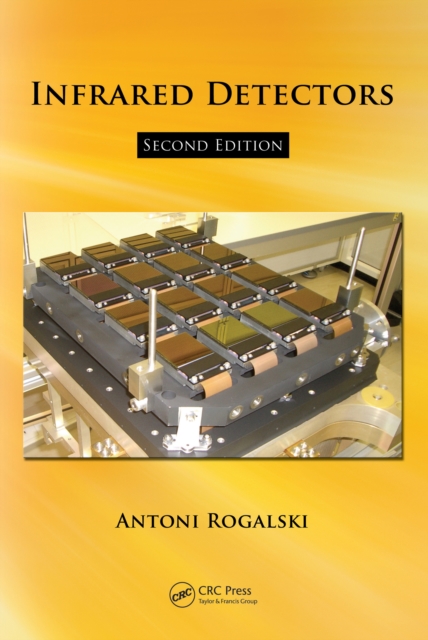
Completely revised and reorganized while retaining the approachable style of the first edition, Infrared Detectors, Second Edition addresses the latest developments in the science and technology of infrared (IR) detection.
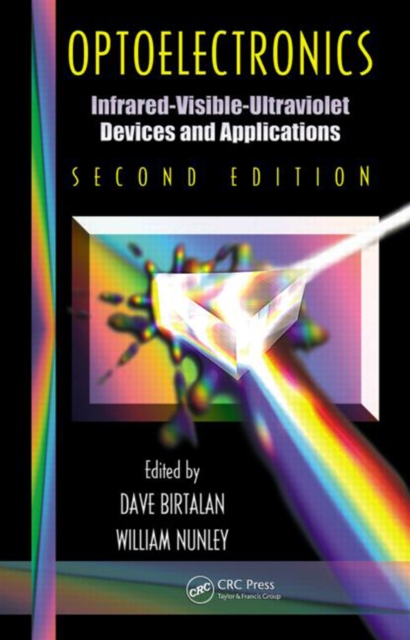
Organized as a mini-encyclopedia of infrared optoelectronic applications, this long awaited new edition of an industry standard updates and expands on the groundbreaking work of its predecessor.
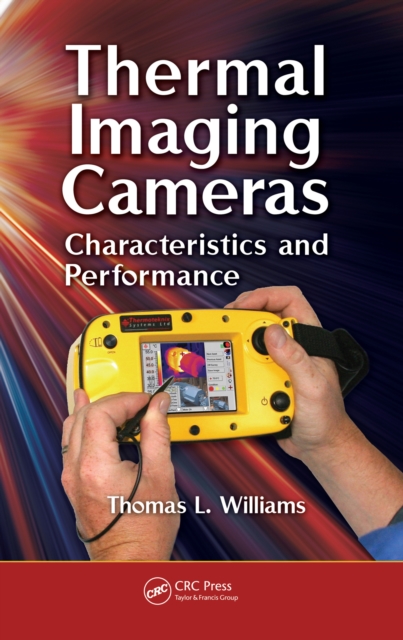
The ability to see through smoke and mist and the ability to use the variances in temperature to differentiate between targets and their backgrounds are invaluable in military applications and have become major motivators for the further development of thermal imagers.
Photoacoustics promises to revolutionize medical imaging and may well make as dramatic a contribution to modern medicine as the discovery of the x-ray itself once did.
The first book to present a detailed analysis of the electrochemistry, development, modeling, optimization, testing, and technology behind modern zirconia-based sensors, Electrochemistry of Zirconia Gas Sensors explores how to tailor these sensors to meet specific industrial needs.
Controlling a system's vibrational behavior, whether for reducing harmful vibrations or for enhancing useful types, is critical to ensure safe and economical operation as well as longer structural and equipment lifetimes.
As manufacturing processes become increasingly complex, industry must rely on advanced sensor technology and process control to improve efficiency and product quality.
Governed by strict regulations and the intricate balance of complex interactions among variables, the application of mechanics to vehicle crashworthiness is not a simple task.
Improvements in process control, such as defined-accuracy instrumentation structures and computationally intelligent process modeling, enable advanced capabilities such as molecular manufacturing.
Thoroughly revised and updated, the new edition of the best-selling MEMS Handbook is now presented as a three-volume set that offers state-of-the-art coverage of microelectromechanical systems.