This book endeavors to break the stereotype that basic electrical machine courses are limited only to transformers, DC brush machines, induction machines, and wound-field synchronous machines.
Analytical Techniques in Electromagnetics is designed for researchers, scientists, and engineers seeking analytical solutions to electromagnetic (EM) problems.
Power Cable Technology provides a precise understanding of the design, manufacture, installation, and testing of a range of electric power cables-from low-voltage, 1,000/1,100V cables to extra-high-voltage, 400kV cables-with reference to future trends in the industry.
Electromagnetics for Electrical Machines offers a comprehensive yet accessible treatment of the linear theory of electromagnetics and its application to the design of electrical machines.
The first-ever complete guide to project management for facilities managers covers: how to write specifications, evaluate bids, and solve problems; all control and automation systems for new and retrofit buildings; cost-effective, energy-efficient solutions for all HVAC systems; and has complete coverage of single-building systems as well as multibuilding complexes.
This book focuses on the mechanisms of how laser light is produced, guided, and focused for materials processing, and these are explained in an easy-to-understand language for practical use.
Wireless sensor Networks: Vehicle and Space Applications describes the practical perspectives in using wireless sensor networks (WSN) to develop real world applications that can be used for space exploration.
"e;Ultra Low Bit-Rate Speech Coding"e; focuses on the specialized topic of speech coding at very low bit-rates of 1 Kbits/sec and less, particularly at the lower ends of this range, down to 100 bps.
This book introduces Software Thermal Management (STM) as a means of reducing power consumption in a computing system in order to manage heat, improve component reliability and increase system safety.
PIXELS & PAINTINGS The discussion is firmly grounded in established art historical practices, such as close visual analysis and an understanding of artists working methods, and real-world examples demonstrate how computer-assisted techniques can complement traditional approaches.
Conquering the Electron offers readers a true and engaging history of the world of electronics, beginning with the discoveries of static electricity and magnetism and ending with the creation of the smartphone and the iPad.
Yearbook of World Electronics Data 1994, Volume 1: West Europe presents a review of the world electronics industries and markets with detailed estimates and forecasts of the size of the production and markets for electronic equipment and components in each country.
"e;Fills the niche between purely technical engineering texts and sophisticated engineering software guides-providing a pragmatic, common sense approach to analyzing and remedying electronic packaging configuration problems.
Intelligent Systems and Robotics focuses on new developments in robotics and intelligent systems and provides insight, guidance and specific techniques vital to those concerned with the design and implementation of robotics and intelligent system applications.
Ferroic materials are important, not only because of the improved understanding of condensed matter, but also because of their present and potential device applications.
For the past several decades, systems engineering has grown rapidly in its scope and application and shown significant benefits for the design of large, complex systems.
Field Programmable Gate Arrays (FPGAs) are currently recognized as the most suitable platform for the implementation of complex digital systems targeting an increasing number of industrial electronics applications.
Reconfigurable Computing Systems Engineering: Virtualization of Computing Architecture describes the organization of reconfigurable computing system (RCS) architecture and discusses the pros and cons of different RCS architecture implementations.
This totally revised and expanded reference/text provides comprehensive, single-source coverage of the design, problem solving, and specifications of electromagnetic compatibility (EMC) into electrical equipment/systems-including new information on basic theories, applications, evaluations, prediction techniques, and practical diagnostic options for preventing EMI through cost-effective solutions.
With quantum leaps in science and technology occurring at breakneck speed, professionals in virtually every field face a daunting task-practicing their discipline while keeping abreast of new advances and applications in their filed.
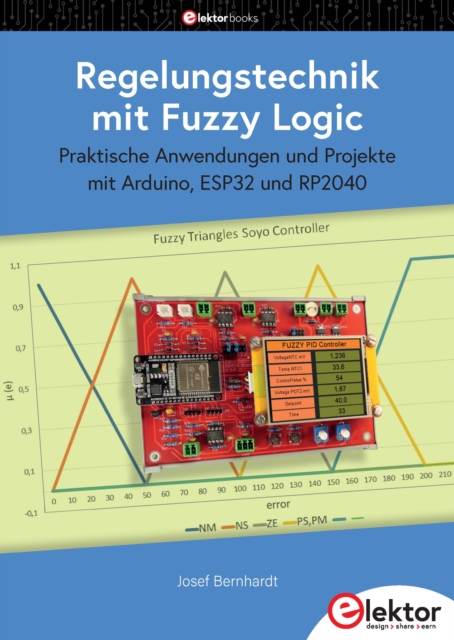
Fuzzy set theory - and its underlying fuzzy logic - represents one of the most significant scientific and cultural paradigms to emerge in the last half-century.
Fuzzy logic has virtually exploded over the landscape of emerging technologies, becoming an integral part of myriad applications and a standard tool for engineers.
Providing an introduction to good engineering practice for electrical and electronic engineers, this book is intended for first- and second-year undergraduate courses.
Mechatronics as a discipline has an ever growing impact on engineering and engineering education as a defining approach to the design, development, and operation of an increasingly wide range of engineering systems.
The first of two volumes in the Electronic Design Automation for Integrated Circuits Handbook, Second Edition, Electronic Design Automation for IC System Design, Verification, and Testing thoroughly examines system-level design, microarchitectural design, logic verification, and testing.
The second of two volumes in the Electronic Design Automation for Integrated Circuits Handbook, Second Edition, Electronic Design Automation for IC Implementation, Circuit Design, and Process Technology thoroughly examines real-time logic (RTL) to GDSII (a file format used to transfer data of semiconductor physical layout) design flow, analog/mixed signal design, physical verification, and technology computer-aided design (TCAD).
General Purpose Simulation System (GPSS) is a special computer programming language primarily used to simulate what can be classified as discrete systems.