The concept of sustainable development was first introduced by the Brundtland Commission almost 20 years ago and has received increased attention during the past decade.
This book covers a significant number of R&D projects, performed mostly after 2000, devoted to the understanding and prevention of performance degradation processes in polymer electrolyte fuel cells (PEFCs).
Frequency control as a major function of automatic generation control is one of the important control problems in electric power system design and operation, and is becoming more signi?
Over the past decade, important advances have been made in the development of nanostructured materials for solid state hydrogen storage used to supply hydrogen to fuel cells in a clean, inexpensive, safe and efficient manner.
Given the backdrop of intense interest and widespread discussion on the prospects of a hydrogen energy economy, this book aims to provide an authoritative and up-to-date scientific account of hydrogen generation using solar energy and renewable sources such as water.
The state organisation responsible for coordinating the hydropower el- tricity system in Norway ("e;Samkjoringen"e;) contacted me in 1990 about the advanced plan for deregulating the electricity system, separating gene- tion, transmission, and distribution and introducing a wholesale market for electricity.
In addition to domestic animals the earliest records of mankind indicate that slavery, until the use of coal became widespread, has always been a significant aspect, or part, of nearly every society.
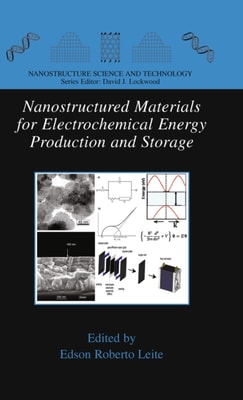
This work presents fundamental and other relevant properties of nanostructured materials that can be the basis of improved performance in a wide range of alternative energy devices.
Energy and Environment is a volume on energy and environmental modeling that describes a broad variety of modeling methodologies, embodied in models of varying scopes and philosophies, ranging from top-down integrated assessment models to bottom-up partial equilibrium models, to hybrid models.
Applied Mathematics for Restructured Electric Power Systems: Optimization, Control, and Computational Intelligence consists of chapters based on work presented at a National Science Foundation workshop organized in November 2003.
This collection is focused on industrial energy sustainability and CO2 management, including processes that improve energy efficiency and reduce or eliminate industrial GHG emissions.
Multifunctional Inorganic Nanomaterials for Energy Applications provides deep insight into the role of multifunctional nanomaterials in the field of energy and power generation applications.
Recent Advances in Renewable Energy Technologies is a comprehensive reference covering critical research, laboratory and industry developments on renewable energy technological, production, conversion, storage, and management, including solar energy systems (thermal and photovoltaic), wind energy, hydropower, geothermal energy, bioenergy and hydrogen production, and large-scale development of renewable energy technologies and their impact on the global economy and power capacity.
Machinery and Energy Systems for the Hydrogen Economy covers all major machinery and heat engine types, designs and requirements for the hydrogen economy, from production through storage, distribution and consumption.
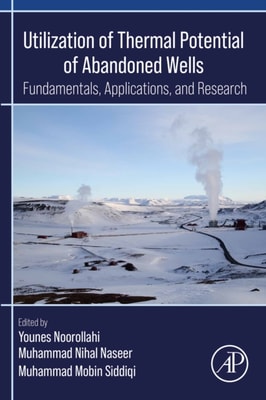
Utilization of Thermal Potential of Abandoned Wells: Fundamentals, Applications and Research is a lucid treatment of the fundamental concepts related to the energy harvesting of abandoned wells.
Biofuels and Biorefining: Volume Two: Intensified Processes and Biorefineries considers intensification and optimization processes for biofuels and biomass-derived products in single and biorefinery schemes.
Biofuels and Biorefining: Volume One: Current Technologies for Biomass Conversion considers the conventional processes for biofuels and biomass-derived products in single and biorefinery schemes.
A Thermo-Economic Approach to Energy From Waste provides readers with the tools to analyze the effectiveness of biomass waste conversion into value-added products and how thermochemical conversion methods can be commercialized with minimum environmental impact.
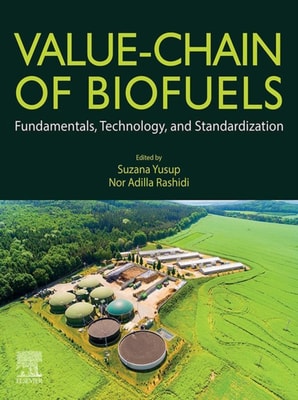
Value-Chain of Biofuels: Fundamentals, Technology, and Standardization presents the fundamental aspects of biofuel production, from biomass conversion technologies and biofuels' end products to related policy regulation and standardization.
Production of Biodiesel from Non-Edible Sources: Technological Updates offers a step-by-step guide to the production of biodiesel, providing comparisons of existing methods, new and state-of-the-art technologies, and real-world examples of implementation.
Integrated Wastewater Management and Valorization using Algal Cultures provides a holistic view on coupled wastewater treatment and biomass production for energy and value-added products using algal cultures.
Comprehensive Guide on Organic and Inorganic Solar Cells: Fundamental Concepts to Fabrication Methods is a one-stop, authoritative resource on all types of inorganic, organic and hybrid solar cells, including their theoretical background and the practical knowledge required for fabrication.
Sustainable Alternatives for Aviation Fuels presents a technical and economic guide on the development of sustainable aviation fuels from renewable sources.
A Thermo-Economic Approach to Energy From Waste provides readers with the tools to analyze the effectiveness of biomass waste conversion into value-added products and how thermochemical conversion methods can be commercialized with minimum environmental impact.
With energy consumption rising and with it our dependence on crude oil from politically uncertain regions, and faced with the threat to the environment from polluting emissions, it is becoming ever more evident that fuels from renewable resources are an increasingly attractive option to fossil fuels.
Authored by world-class scientists and scholars, The Handbook of Natural Resources, Second Edition, is an excellent reference for understanding the consequences of changing natural resources to the degradation of ecological integrity and the sustainability of life.
Authored by world-class scientists and scholars, The Handbook of Natural Resources, Second Edition, is an excellent reference for understanding the consequences of changing natural resources to the degradation of ecological integrity and the sustainability of life.
The current model for electricity generation and distribution is dominated by centralized power plants which are typically associated with combustion (coal, oil, and natural gas) or nuclear generation units.
The current model for electricity generation and distribution is dominated by centralized power plants which are typically associated with combustion (coal, oil, and natural gas) or nuclear generation units.
Bioenergy from Sustainable Forestry synthesizes information needed to design or implement sustainable forest management systems for production of biomass for energy in conjunction with other forest products.
Although there are many publications about energy efficiency policies and renewable energy policies, most of them are specific to some countries or regions.
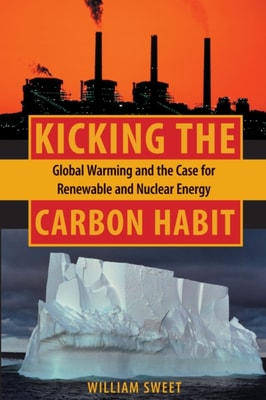
With glaciers melting, oceans growing more acidic, species dying out, and catastrophic events like Hurricane Katrina ever more probable, strong steps must be taken now to slow global warming.