Low-Power CMOS Wireless Communications: A Wideband CDMA System Design focuses on the issues behind the development of a high-bandwidth, silicon complementary metal-oxide silicon (CMOS) low-power transceiver system for mobile RF wireless data communications.
Dynamic power management is a design methodology aiming at controlling performance and power levels of digital circuits and systems, with the goal of extending the autonomous operation time of battery-powered systems, providing graceful performance degradation when supply energy is limited, and adapting power dissipation to satisfy environmental constraints.
Automatic learning is a complex, multidisciplinary field of research and development, involving theoretical and applied methods from statistics, computer science, artificial intelligence, biology and psychology.
Designers of wireless networks face a problem which is multidimensional in nature, where issues of multiaccess, radio propagation, antennas, mobility and teletraffic all need to be understood and simultaneously addressed in order to create a properly functioning system.
High-Level Power Analysis and Optimization presents a comprehensive description of power analysis and optimization techniques at the higher (architecture and behavior) levels of the design hierarchy, which are often the levels that yield the most power savings.
Analysis and Design of MOSFETs: Modeling, Simulation, and Parameter Extraction is the first book devoted entirely to a broad spectrum of analysis and design issues related to the semiconductor device called metal-oxide semiconductor field-effect transistor (MOSFET).
In the search for new functional materials, a clear understanding about the relationship between the physical properties and the atomic-scale structure of materials is needed.
Iterative Learning Control (ILC) differs from most existing control methods in the sense that, it exploits every possibility to incorporate past control informa- tion, such as tracking errors and control input signals, into the construction of the present control action.
This volume presents the proceedings of the Fourth Workshop on Multiaccess, Mobility and Teletraffic for Wireless Communications held in October 1998 in Washington, D.
Standardization of hardware description languages and the availability of synthesis tools has brought about a remarkable increase in the productivity of hardware designers.
CDMA Techniques for Third Generation Mobile Systems presents advanced techniques for analyzing and developing third generation mobile telecommunication systems.
Mobile Computing Environments for Multimedia Systems brings together in one place important contributions and up-to-date research results in this fast moving area.
Intelligent building is the future of our building industry; all commercial, residential, industrial and institutional buildings will be designed towards the goal of `intelligent buildings'.
One of the greatest challenges facing package manufacturers is to develop reliable fine pitch thin packages with high leadcounts, capable of dissipating heat, and deliver them in volume to the market in a very short space of time.
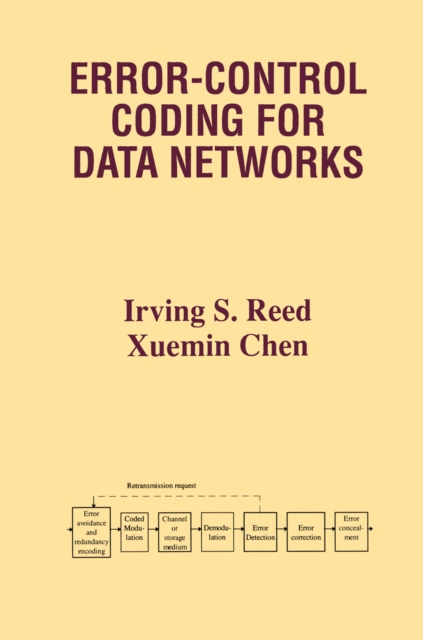
The purpose of Error-Control Coding for Data Networks is to provide an accessible and comprehensive overview of the fundamental techniques and practical applications of the error-control coding needed by students and engineers.
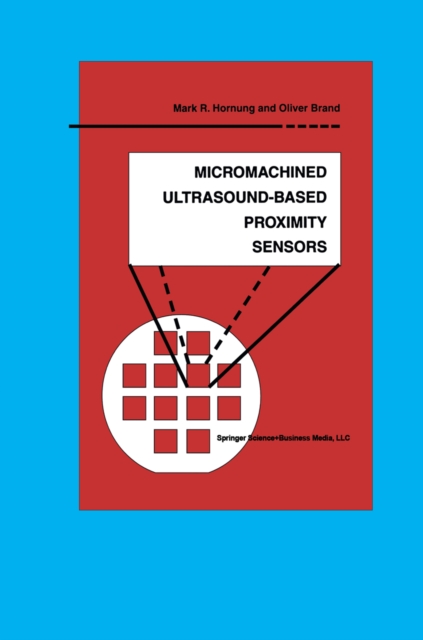
Micromachined Ultrasound-Based Proximity Sensors presents a packaged ultrasound microsystem for object detection and distance metering based on micromachined silicon transducer elements.
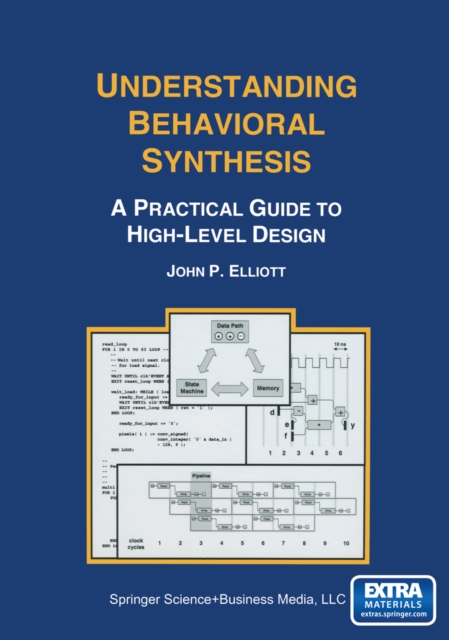
Behavioral Synthesis: A Practical Guide to High-Level Design includes details on new material and new interpretations of old material with an emphasis on practical information.
My curiosity with the economic efficiency and social benefits of provisions used by telecommunications carriers to limit their liability to customers for damages arising from service interruptions and network outages is a longstanding one.
Microcantilevers for Atomic Force Microscope Data Storage describes a research collaboration between IBM Almaden and Stanford University in which a new mass data storage technology was evaluated.
In the centennial year of the birth of Sir John Cockcroft, first master of my Cam- bridge College, Churchill, and the first man to split the atomic nucleus by artificial means, it is indeed relevant to consider the outcome of his efforts at developing atomic power.
Log-domain and translinear filters provide a competitive alternative to the challenges of ever increasing low-voltage, low-power and high frequency demands in the area of continuous-time filters.
The growth in the field of digital signal processing began with the simulation of continuous-time systems in the 1950s, even though the origin of the field can be traced back to 400 years when methods were developed to solve numerically problems such as interpolation and integration.
Direct Digital Control Systems: Application * Commissioning offers an insightful examination of the critical role of the DDC system in the commissioning process.
Failure Analysis of Integrated Circuits: Tools and Techniques provides a basic understanding of how the most commonly used tools and techniques in silicon-based semiconductors are applied to understanding the root cause of electrical failures in integrated circuits.
Electromagnetic Signals deals with the practical applications of nonsinusoidal electromagnetic waves or carrier free radars, ultrawideband technology and large relative bandwidth technology.
Conventional optical science and technology have been restricted by the diffraction limit from reducing the sizes of optical and photoruc devices to nanometric dimensions.