The author believes that a good basic understanding of electronics can be achieved by detailed visual analyses of the actual voltage waveforms present in selected circuits.
It is difficult for me to forget the mild sense of betrayal I felt some ten years ago when I discovered, with considerable dismay, that my two favorite books on linear system theory - Desoer's Notes for a Second Course on Linear Systems and Brockett's Finite Dimensional Linear Systems - were both out of print.
At the conclusion of the Conference on Tribology in the area of Wear Life Pre- diction of Mechanical Components, which was held at the General Motors Research Laboratories and sponsored by the Industrial Research Institute, a very high pri- ority recommendation was modeling of tribological systems.
The contributions of this book represent only a small sample of the work of the many researcher electromagneticians who have had the pleasure of being associated with Professor Papas, either as students or as colleagues.
This is the second volume of a two-volume set presenting a unified approach to the electrodynamics of continua, based on the principles of contemporary continuum of physics.
It is becoming more and more important to manage energy resources effectively: to maximize their benefits while minimizing the negative environmental impacts.
Devices that convert explosive energy into electromagnetic energy are often called Flux Compression Generators (FCGs) in the United States, whereas the term Magnetocumulative Generators (MCGs) is more com- monly used in Russia.
Intended for undergraduate students of electrical engineering, this introduction to electromagnetic fields emphasizes the computation of fields as well as the development of theoretical relations.
This book explains the nature and computation of mathematical wavelets, which provide a framework and methods for the analysis and the synthesis of signals, images, and other arrays of data.
The purpose of this annual series, Applied and Computational Control, Signals, and Circuits, is to keep abreast of the fast-paced developments in computational mathematics and scientific computing and their increasing use by researchers and engineers in control, signals, and circuits.
This book is the result of our teaching over the years an undergraduate course on Linear Optimal Systems to applied mathematicians and a first-year graduate course on Linear Systems to engineers.
A transfinite graph or electrical network of the first rank is obtained conceptually by connecting conventionally infinite graphs and networks together at their infinite extremities.
Dynamics systems (living organisms, electromechanical and industrial systems, chemical and technological processes, market and ecology, and so forth) can be considered and analyzed using information and systems theories.
Overview Historically, the concept of "e;ondelettes"e; or "e;wavelets"e; originated from the study of time-frequency signal analysis, wave propagation, and sampling theory.
This book will provide different strategies and deliberate engineering concepts for the processing and application of advanced nanomaterials with layered structures for optoelectronic devices to enable device production at an industrial scale.
Electricity, like every science, presents two phases to the student, one belonging to a theoretical knowledge, and the other which pertains to the practical application of that knowledge.
This book presents progress in device processing and materials characterization of the wide-bandgap semiconductor gallium nitride (GaN) and related materials for power electronics applications.
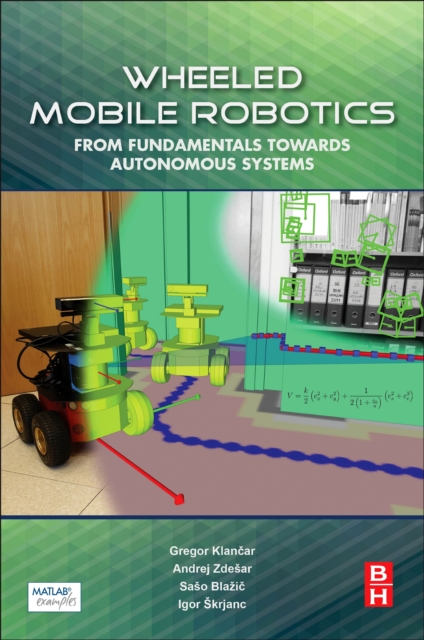
Wheeled Mobile Robotics: From Fundamentals Towards Autonomous Systemscovers the main topics from the wide area of mobile robotics, explaining all applied theory and application.
This book deals with the forefront of solar PV innovation, focusing on the critical role of Maximum Power Point Tracking (MPPT) techniques in enhancing energy efficiency.
Vehicle Electrification in Modern Power Grids: Disruptive Perspectives on Power Electronics Technology and Control Challenges collects the newest advances in technology for electric vehicle integration into one practical volume for professionals and advanced researchers.
Collaborative manufacturing and management are a fundamental requirement in today's digital age, to enable an innovative and sustainable development of companies.
Six years of UNESCO-World Technopolis Association workshops, held at various world cities and attended by government officials and scholars from nearly all the world's countries, have resulted in a uniquely complete collection of reports on science park and science city projects in most of those countries.
Despite the several comprehensive series available in Material Sciences and their related fields, it is a hard task to find grouped properties of metals and alloys, ceramics, polymers, minerals, woods, and building materials in a single volume source book.
Manual calculations are still extensively used and in particular are necessary for checking and verifying various software calculation design packages.
This textbook provides readers with the knowledge and practical skills necessary to understand, design, and construct their own functional DC motors using 3D printing technology.
This book on Renewable Energy Engineering consolidates the most recent research on current technologies, concepts and commercial developments in the field.
A communication system must have adequate electrical protection in order to meet the reliability standards for commercially acceptable service and to keep down maintenance expenses.
A communication system must have adequate electrical protection in order to meet the reliability standards for commercially acceptable service and to keep down maintenance expenses.
Devices built from three-dimensional nanoarchitectures offer a number of advantages over those based on thin-film technology, such as larger surface area to enhance the sensitivity of sensors, to collect more sunlight to improve the efficiency of solar cells, and to supply higher density emitters for increased resolution in flat panel displays.
An aging population, increasing obesity and more people with mobility impairments are bringing new challenges to the management of routine and emergency people movement in many countries.
The Energy Return on Energy Invested (EROI or EROEI) is the amount of energy acquired from a particular energy source divided by the energy expended, or invested, in obtaining that energy.
Low Voltage Power MOSFETs focuses on the design of low voltage power MOSFETs and the relation between the device structure and the performance of a power MOSFET used as a switch in power management applications.