This book highlights the significance of urban agricultural production, the technologies and methods for supplying organic materials to the farmland, recovering plant nutrients and energy in cities, and systems for sustaining farmlands in order to produce agricultural crops and supply safe food to citizens.
The book focuses on a global issue-municipal solid waste management (MSWM) and presents the most effective solutions based on energy recovery processes.
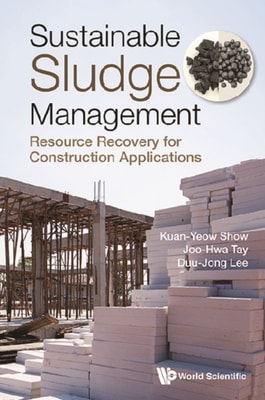
Converting sludge into construction materials is deemed to be a sustainable approach to alleviating sludge disposal problems and conserving natural resources.
Sustainability Matters is a compilation of some of the best research papers submitted by students from the National University of Singapore's multi-disciplinary and inter-disciplinary graduate programme in environmental studies, as their MSc dissertations in Environmental Management [MEM].
This book gives an overview of electronic waste (e-waste) management and the latest technological aspects of recycling and disposal of obsolete electronic components while minimizing the environmental impact of toxic chemicals and heavy metals from e-waste.
The edited book brings out a comprehensive synthesis of latest scientific literature covering various important aspects of anaerobic biodigesters for human waste management that ranges from latest understanding on fundamental concepts/mechanisms of anaerobic biodigestion, modern tools and techniques used in process evaluation, current strategies being recruited for the performance enhancement, and case studies/ success stories across the world on applications of biodigesters used in human waste treatment.
In this first volume, various materials such as chitosan, lignin-based biomaterials, cellulosic based bio materials, carbon materials, Polysaccharide-composites materials, Aromatic-Based Synthetic Macromolecules, Agricultural wastes, etc for treating textile waste water are highlighted.
This interdisciplinary book incorporates various aspects of environment, ecology, and natural disaster management including cognitive informatics and computing.
In this second volume, various materials such as Magnetic-based biocomposites, wheat bran/straw-based biomaterials, peel-based biomaterials, luffa Based Biomaterials, composite polymeric membranes, rice husk, hydroxyapatite etc for treating textile waste water are highlighted.
Among various industries releasing wastewater into the environment, printing, dyeing and textile industries are of great importance as they frequently contain high amounts of colorful compounds having high chemical and biological oxygen demands.
The textile industry is among the most significant polluters of water owing to the existence of various types of pollution streams generated by printing processes and textile dyeing.
Textile industry wastewater contains toxic dyes as well as heavy metals and many other persistent organic compounds which are difficult to biodegrade using conventional biological methods.
This book highlights ways to evaluate circular economy using global standard and footprints the way global firms are using to ensure the measurement of the impact.
This book puts together all aspects of valorization of vegetable and fruit wastes (VFWs) into different biocommodities and platform chemicals using fermentation and non-fermentation processes.
This book deals with the general principles, policy instruments, sustainability of supply chain, and business of health-care waste (HCW) management including inputs on exercise in immune health defense against COVID 19.
This book is a compilation of process, technologies and value added products such as high value biochemicals and biofuels produced from different waste biorefineries.
This book covers the research fields in biodiversity conservation, the Belt and Road eco-environmental cooperation, China's five-year plan for eco-environmental protection, sustainable development goals assessment, and human health loss assessment.
The book is the collection of the latest research results from Chinese Academy of Environmental Planning in environmental policy and reform during the past years, mainly related to ecological compensation, the emission trading, the environment audit, carbon tax, environment friendly city, environmental health, economic policy in medical waste, scattered coal treatment subsidies, environmental policy efficiency analysis, environmental industry statistics, environmental performance evaluation, green fiscal and taxation policy, etc.
This book systematically presents the technical aspects of supercritical water oxidation and supercritical water gasification for energy and environmental applications, which include reactor design, construction materials, corrosion, salt precipitation, etc.
This second volume on 'Inorganic-Organic Composites for Water and Wastewater Treatment' reviews research findings on advanced materials and methods for purification.
Water is regarded as an important element for sustainable development and many countries are attempting to provide clean water for municipal and industrial sectors.
This book aims to provide comprehensive and systematic introduction and summary of corrosion characteristics, mechanisms, and control methods of candidate alloys in sub- and supercritical water environment.
This book highlights recent findings of membrane - based dye removal methods along with the application of photocatalytic, nanofiltration and ultrafiltration membrane including membrane - based fibers, metal-organic frameworks, polyethersulfone, ceramic, etc.
Biochar prepared from agricultural biomass has received considerable attention because of the huge availability of ago-waste at zero cost, flexibility, high efficiency, renewability, faster contaminant removal rate, ability to treat concentrated effluent and reduction of sludge production after the treatment.