This book aims to provide comprehensive and systematic introduction and summary of corrosion characteristics, mechanisms, and control methods of candidate alloys in sub- and supercritical water environment.
This book gathers high-quality research papers presented at the Seventh International Conference on Solid Waste Management, held at Professor Jayashankar Telangana State Agricultural University, Hyderabad on December 15-17, 2017.
The book gathers high-quality research papers presented at the Seventh International Conference on Solid Waste Management, held at Professor Jayashankar Telangana State Agricultural University, Hyderabad on December 15-17, 2017.
This book presents some of the latest technologies in waste management, and emphasizes the benefits that can be gained from the use of recycled products.
This book presents a comprehensive overview of the use of microorganisms and microbial metabolites as a future sustainable basis of agricultural, environmental and industrial developments.
The book presents chapters from world leaders on water desalination advances with respect to processes, separations materials, and energy and environmental considerations.
The third volume in the Handbook of Environment and Waste Management Series, this book provides a comprehensive compilation of topics at the forefront of many of the technical advances and practices in acid rain and greenhouse gas pollution control.
This book introduces the highly topical issue from many different angles, sensitizing readers to the various challenges to human life posed by climate change, identifying possible intentional and inadvertent anthropogenic factors and consequences, and seeking socially and environmentally viable solutions.
This book provides a comprehensive review of biosynthetic approaches to the production of industrially important chemicals and the environmental challenges involved.
This book focuses on value addition to various waste streams, which include industrial waste, agricultural waste, and municipal solid and liquid waste.
This book discusses the bioremediation of both solid and liquid waste, including regional solutions for India as well as globally relevant applications.
The book contains high-quality research papers presented at Sixth International Conference on Solid Waste Management held at Jadavpur University, Kolkata India during November 23-26, 2016.
The book contains high-quality research papers presented at Sixth International Conference on Solid Waste Management held at Jadavpur University, Kolkata India during November 23-26, 2016.
This volume is a compilation on issues related to sustainable practices in geo-environmental engineering, particularly as applying to developing nations such as India.
The globally escalating population necessitates production of more goods and services to fulfil the expanding demands of human beings which resulted in urbanization and industrialization.
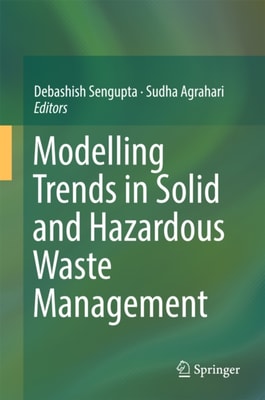
This book explores state-of-art techniques based on methodological and modeling aspects of solid and hazardous waste management, specifically focusing on the recent trends in data acquisition and robust modeling of the results obtained.
This book details three main topics: the screening and characterization of hydrocarbons from air, soil and water; technologies in the biodegradation of hydrocarbons; and the bioconversion of hydrocarbons for biofuel/chemicals, as well as recent developments in the remediation of hydrocarbons and their environmental benefits.
This book presents the latest advances in and current research perspectives on the field of urban/industrial solid waste recycling for bio-energy and bio-fuel recovery.
This book targets to earth scientists and engineers, in particular students, researchers, managers, and practitioners, who are interested in mining engineering, environmental engineering, green coal mining, sustainable water resource management, and effective measures to balance mine safety and ecological conservation.
This book presents a complete state of the art for different types of nanomaterial, their environmental fate, and their use in textile waste remediation.
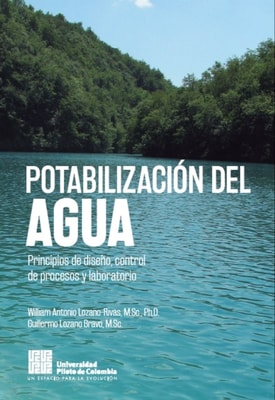
Esta obra ha sido escrita con la ambiciosa intención de corregir los vacíos y errores que se encuentran en los textos de diseño de plantas potabilizadoras, disponibles actualmente en el mercado.
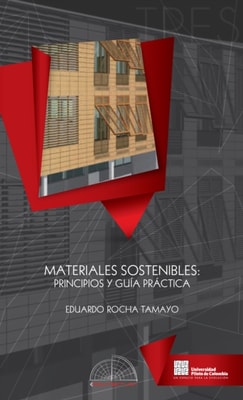
El libro está dirigido a estudiantes de arquitectura y arquitectos como una herramienta para entender los conceptos de sostenibilidad de los materiales para construcción de mayor utilización en Colombia.
Esta obra se estructura en seis lineas y parte de una conceptualizacion en la tematica de los residuos, reconociendo sus definiciones y clasificaciones, enmarcadas en cuatro grandes grupos: residuos solidos, peligrosos, de atencion en salud y otras actividades y de aparatos electricos y electronicos.
Desde la Antigüedad, las redes de alcantarillado han cumplido la función de evacuar las aguas de las ciudades, tanto las provenientes de las precipitaciones atmosféricas como las residuales generadas por actividades humanas.
El objetivo principal de la Guía Básica para la Caracterización Morfométrica de Cuencas Hidrográficas es dar a conocer de forma clara el cálculo de las características morfométricas más importantes en el estudio hidrológico de cuencas, así como la interpretación de los resultados obtenidos.
Los servicios ecosistémicos o ambientales son entendidos como beneficios usados, requeridos y disfrutados por los seres humanos, como sustento básico de la salud y calidad de vida.
"La realización de prácticas, en particular en Plantas Piloto es vital para la formación de ingenieros, ya que les permite aproximarse a los equipos, unidades, sistemas y procesos que encontrarán en el desarrollo de su ejercicio profesional.
Las universidades Central y Nacional de Colombia aunaron esfuerzos para desarrollar investigaciones encaminadas a demostrar la existencia de mercurio en las matrices ambientales agua, sedimentos, aire, biota y suelo de Bogotá y su conurbano (principalmente en Soacha) y advertir sobre los riesgos que esto representa para el ambiente y la salud de sus habitantes.
The population of cities around the world is growing at an alarming rate, and as a result the landscapes of most cities are going through enormous changes.
Due to the rapid increase in world population and improving living standards, the global agriculture sector is confronting with challenges for the sustainability of agricultural production and of the environment.
This book focuses on the ways in which military installations and small cities can implement and integrate triple net planning and energy, water, and waste sustainability strategies into broad installation operational management, arrive at the best decision, create policy and communicate effectively to stakeholders.