Reviews of Environmental Contamination and Toxicology attempts to provide concise, critical reviews of timely advances, philosophy and significant areas of accomplished or needed endeavor in the total field of xenobiotics, in any segment of the environment, as well as toxicological implications.
Reviews of Environmental Contamination and Toxicology attempts to provide concise, critical reviews of timely advances, philosophy and significant areas of accomplished or needed endeavor in the total field of xenobiotics, in any segment of the environment, as well as toxicological implications.
Green Manufacturing: Fundamentals and Applications introduces the basic definitions and issues surrounding green manufacturing at the process,machine and system (including supply chain) levels.
Reviews of Environmental Contamination and Toxicology attempts to provide concise, critical reviews of timely advances, philosophy and significant areas of accomplished or needed endeavor in the total field of xenobiotics, in any segment of the environment, as well as toxicological implications.
This book is intended to give technological background and practical examples, but also to give general insight into the on-going technology development in the area of biodetection.
In The Earth as a Distant Planet, the authors become external observers of our solar system from a distance and try to determine how one can understand how Earth, the third in distance to the central star, is essentially unique and capable of sustaining life.
Reviews of Environmental Contamination and Toxicology attempts to provide concise, critical reviews of timely advances, philosophy and significant areas of accomplished or needed endeavor in the total field of xenobiotics, in any segment of the environment, as well as toxicological implications.
Reviews of Environmental Contamination and Toxicology attempts to provide concise, critical reviews of timely advances, philosophy and significant areas of accomplished or needed endeavor in the total field of xenobiotics, in any segment of the environment, as well as toxicological implications.
The 21st century promises to be an era dominated by international response to c- tain global environmental challenges such as climate change, depleting biodiversity and biocapacity as well as general atmospheric, water and soil pollution problems.
Global Warming: Engineering Solutions goes beyond the discussion of what global warming is, and offers complete concrete solutions that can be used to help prevent global warming.
Ecotoxicology Modeling is a comprehensive and well-documented text providing a collection of computational methods to the ecotoxicologists primarily interested in the study of the adverse effects of chemicals, their mechanisms of action and/or their environmental fate and behavior.
Reviews of Environmental Contamination and Toxicology attempts to provide concise, critical reviews of timely advances, philosophy and significant areas of accomplished or needed endeavor in the total field of xenobiotics, in any segment of the environment, as well as toxicological implications.
Reviews of Environmental Contamination and Toxicology attempts to provide concise, critical reviews of timely advances, philosophy and significant areas of accomplished or needed endeavor in the total field of xenobiotics, in any segment of the environment, as well as toxicological implications.
This book offers a fresh and innovative account of the history of environmentalism in the United States, challenging the dominant narrative in the field.
Shows why plastics, in aggregate, have become a toxin to humans, wildlife, and the planet, and proposes novel solutions that involve neither traditional recycling nor giving up plastic.
Carefully crafted to provide a comprehensive overview of the chemistry of water in the environment, Water Chemistry: Green Science and Technology of Nature's Most Renewable Resource examines water issues within the broad framework of sustainability, an issue of increasing importance as the demands of Earth's human population threaten to overwhelm t
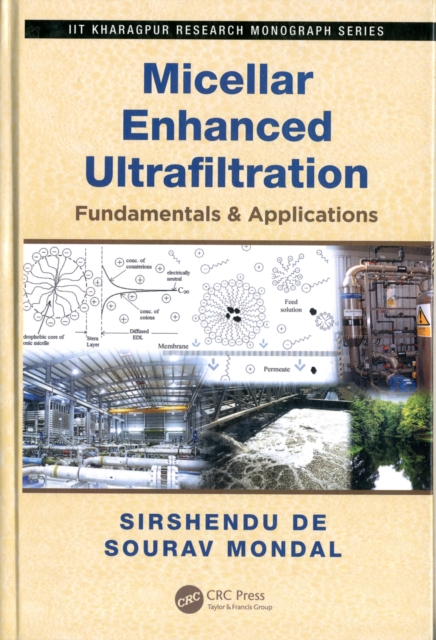
A response to increasingly stringent regulation of pollution and toxicity levels in industrial waste discharge, Micellar Enhanced Ultrafiltration: Fundamentals & Applications offers the most complete book available on the benefits and use of micellar-enhanced ultrafiltration (MEUF) to achieve continuous removal of organic and inorganic pollutan
Bringing together the research of 62 distinguished scientists in one volume, Environmental Contamination: Health Risks and Ecological Restoration offers a comprehensive view of the remediation of contaminated land.
A clear, concise discussion of today's hottest topics in climate change, including adapting to climate change and geo-engineering to mitigate the effects of change, Engineering Response to Climate Change, Second Edition takes on the tough questions of what to do and offers real solutions to the practical problems caused by radical changes in the Earth's climate.
Environmental Fate and Transport Analysis with Compartment Modeling explains how to use the powerful, highly flexible, and intuitive compartment approach to estimate the distribution of chemical contaminants in environmental media in time and space.
Since the first edition was published over a decade ago, advancements have been made in the design, operation, and maintenance of sewer systems, and new problems have emerged.
It is well known that fluorescent light bulbs and consumer appliances such as televisions, computers, and monitors contain mercury, dangerous chemicals, and other harmful components.
Does a change, which affects a few biological macro-molecules, some cells, or a few individuals within a population, have any ecological significance that would allow the prediction of deleterious effects at higher levels of biological organization, namely the population, community, and ultimately the ecosystem?
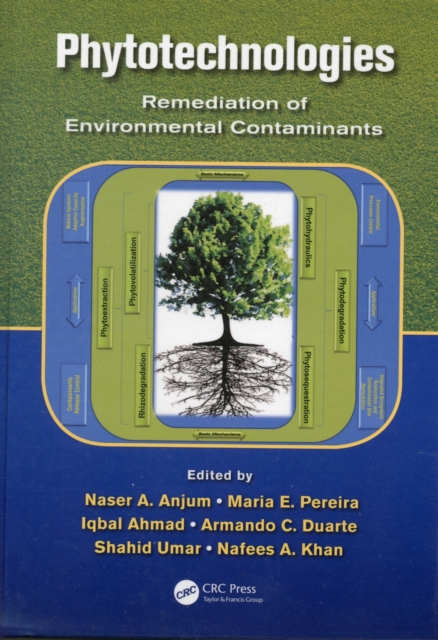
Phytotechnologies: Remediation of Environmental Contaminants highlights the use of natural and inherent traits of plants and associated microbes to exclude, accumulate, or metabolize a variety of contaminants, with the goal of efficiently and sustainably decontaminating the biosphere from unwanted hazardous compounds.
When the first edition of Poultry Meat Processing was published, it provided a complete presentation of the theoretical and practical aspects of poultry meat processing, exploring the complex mix of biology, chemistry, engineering, marketing, and economics involved.
Reflecting the rapid progress in cleanup technology since the previous edition, this revised and expanded third edition of The Basics of Oil Spill Cleanup covers current cleanup techniques, how oil spills are measured and detected, and the properties of the oil and its long-term fate in the environment.
The steady growth in the number of vehicles on the road, heavy reliance on coal, use of dirty fuels for residential combustion, and extensive open burning are some of the major factors leading to the progressive deterioration of air quality in developing countries in Asia.
Edited by Takashi Yamaguchi, Mitsuo Hirate, and Chee Khiang Pang, with contributions from pioneers known for their ground-breaking work, High-Speed Precision Motion Control discusses high-precision and fast servo controls in hard disk drives (HDDs).
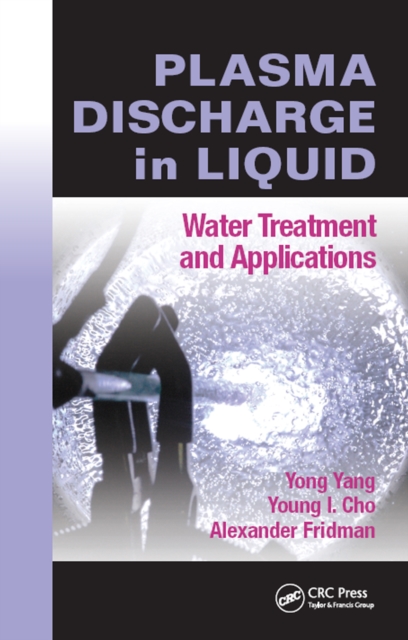
Plasma methods that effectively combine ultraviolet radiation, active chemicals, and high electric fields offer an alternative to conventional water treatment methods.
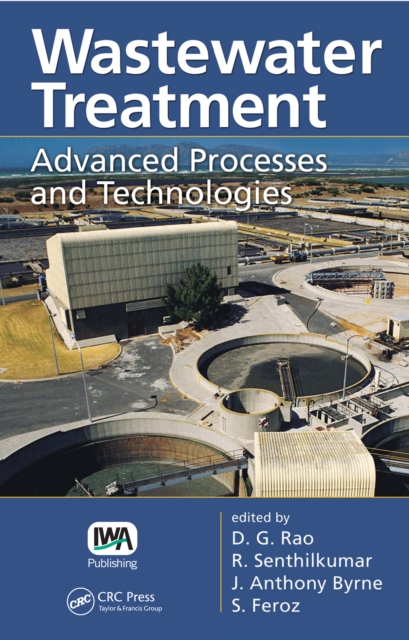
Emphasizing new technologies that produce clean water and energy from the wastewater treatment process, this book presents recent advancements in wastewater treatment by various technologies such as chemical methods, biochemical methods, membrane separation techniques, and nanotechnology.
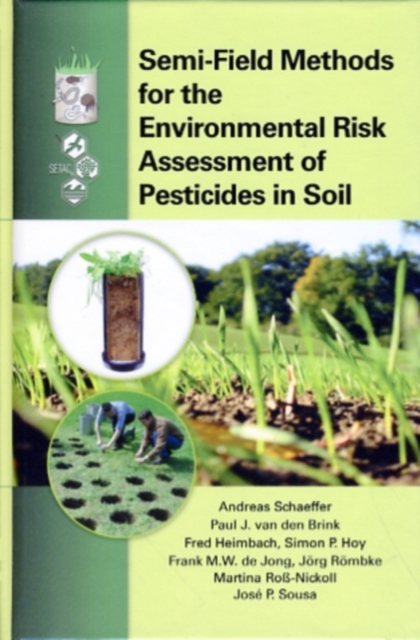
Based on discussions at the 2007 SETAC Europe PERAS Workshop in Coimbra, Semi-Field Methods for the Environmental Risk Assessment of Pesticides in Soil presents a timely summary of state-of-the-art higher-tier terrestrial risk assessment of plant protection products (PPPs).
Given the essential role that primary producers play in aquatic ecosystems, it is imperative that the potential risk of pesticides to the structure and functioning of aquatic plants is adequately assessed.