This book portrays the commonality of tissue micro-structure that dictates physiological function in various organs (microstructure-function relation).
This book provides an in-depth analysis of the hypothesis of chemical evolution that may have led to the origin of life, serving three main purposes: it provides a comprehensive summary of hundreds of chemical experiments and analytical studies from the past 70 years, evaluates their significance in supporting the hypothesis of chemical evolution, and offers a critical review of these experiments and hypotheses.
The process of cryogelation has been vigorously studied over the past two decades, with recent research focussing on applications of these polymer systems in various biomedical and biotechnological fields.
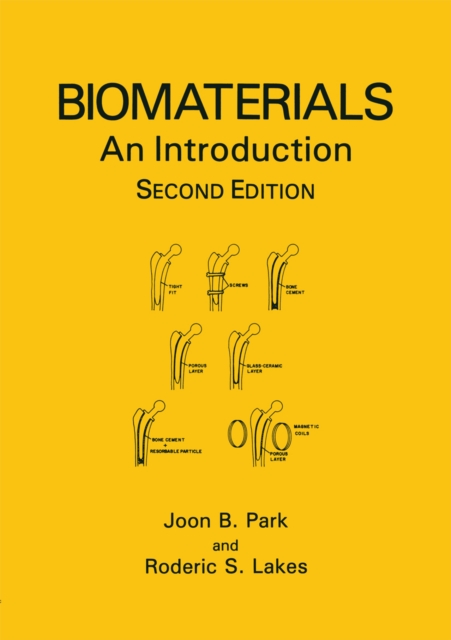
This book is intended as a general introduction to the uses of artificial materials in the human body for the purposes of aiding healing, correcting deformities, and restoring lost function.
This handbook comprehensively explores various facets of stem cells in regenerative medicine, highlighting the interdisciplinary nature of the research.
This book describes the development of three dimensional electroactive fibres using a novel coaxial wet-spinning approach from organic conductors in combination with non-conducting hydrogel polymers.
With the advancement in medicinal chemistry and material science, several highly specific, biocompatible and non-toxic therapeutic agents have been discovered and successfully applied for various clinical applications.
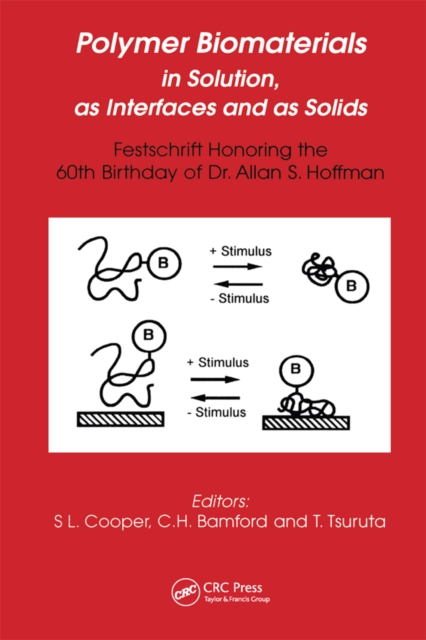
The articles collected in this publication have previously been published in eight special issues of the Journal of Biomaterials Science, Polymer Edition, in honour of Dr.
Following many reports that were published in the last two decades on correlations of multiphase structures of the surface of materials with their antithrombogenicity or biocompatibility a research project 'Design of Multiphase Biomedical Materials' was carried out in Japan between 1982 and 1986.
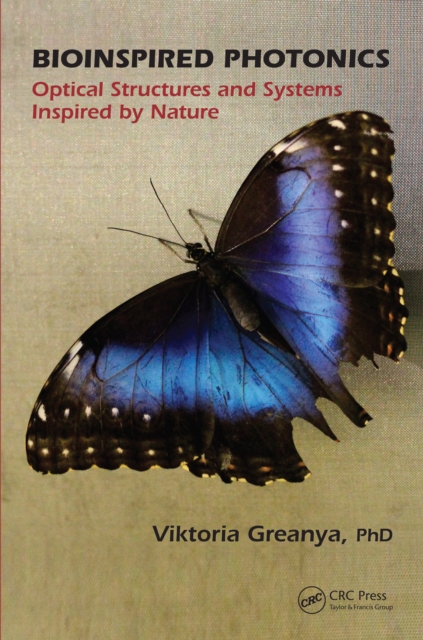
Harness the Wonders of the Natural World As our in-depth knowledge of biological systems increases, the number of devices and applications built from these principles is rapidly growing.
This book addresses the background and significance of the factors potentially influencing the clinical and biological outcomes of metal-on-metal hip implants.
Healthcare and Biotechnology in the 21st Century: Concepts and Case Studies introduces students not pursuing degrees in science or engineering to the remarkable new applications of technology now available to physicians and their patients and discusses how these technologies are evolving to permit new treatments and procedures.
One of the greatest challenges for mechanical engineers is to extend the success of computational mechanics to fields outside traditional engineering, in particular to biology, biomedical sciences, and medicine.
Mechanics of Biological Systems and Materials, Volume 5: Proceedings of the 2012 Annual Conference on Experimental and Applied Mechanics represents one of seven volumes of technical papers presented at the Society for Experimental Mechanics SEM 12th International Congress & Exposition on Experimental and Applied Mechanics, held at Costa Mesa, California, June 11-14, 2012.
This volume, written by experts in the field, discusses the current understanding of the biophysical principles that govern RNA folding, with featured RNAs including the ribosomal RNAs, viral RNAs, and self-splicing introns.
Continuum Mechanics of Anisotropic Materials(CMAM) presents an entirely new and unique development of material anisotropy in the context of an appropriate selection and organization of continuum mechanics topics.
Challenges in Mechanics of Time-Dependent Materials and Processes in Conventional and Multifunctional Materials, Volume 2 represents one of seven volumes of technical papers presented at the Society for Experimental Mechanics SEM 12th International Congress & Exposition on Experimental and Applied Mechanics, held at Costa Mesa, California, June 11-14, 2012.
This book provides a premier resource on understanding the ribosome's essential nature and how it interacts with other proteins and nucleic acids to control protein synthesis.
This book reviews the current understanding of the mechanical, chemical and biological processes that are responsible for the degradation of a variety of implant materials.
One of the greatest challenges for mechanical engineers is to extend the success of computational mechanics to fields outside traditional engineering, in particular to biology, biomedical sciences, and medicine.
Nanorobots can be defined as intelligent systems with overall dimensions at or below the micrometer range that are made of assemblies of nanoscale components with individual dimensions ranging between 1 to 100 nm.
Glass ceramics are a special group of materials in which a base glass can be crystallized under carefully controlled conditions, which in turn determine the properties of the material.
Regeneration of tissues and organs remains one of the great challenges of clinical medicine, and physicians are constantly seeking better methods for tissue repair and replacement.
Biomaterials associated infection (BAI) is one of the most common complications associated with implantation of any biomaterial regardless of form or function.
Dynamics of Soft Matter: Neutron Applications provides an overview of neutron scattering techniques that measure temporal and spatial correlations simultaneously, at the microscopic and/or mesoscopic scale.
Electroactivity in Polymeric Materials provides an in-depth view of the theory of electroactivity and explores exactly how and why various electroactive phenomena occur.
This book is written for those who would like to advance their knowledge beyond an introductory level of biomaterials or materials science and engineering.
This comprehensive and engaging text, now in an expanded second edition, is meant for advanced undergraduate and graduate students and covers the fundamental relationships between the structure and properties of materials and biological tissues.
Following on from the highly successful first edition, published in 2006, the second edition of Basic Orthopaedic Sciences has been fully updated and revised, with every chapter rewritten to reflect the latest research and practice.
One of the greatest challenges for mechanists is to extend the success of computational mechanics to fields outside traditional engineering, in particular to biology, biomedical sciences, and medicine.
Design and Use of Assistive Technology assesses major hurdles in the design and use of assistive technologies, while also providing guidelines and recommendations to improve these technologies.
Biomaterials for Clinical Applications is organized according to the World Health Organization's report of the top 11 causes of death worldwide, and lays out opportunities for both biomaterials scientists and physicians to tackle each of these leading contributors to mortality.
The application of circuits and systems and engineering principles to problems in the medicine has led to the emergence of biomedical circuits and systems as an exciting and rapidly growing area of research.
Recent studies have shown that novel processing and modeling techniques may be used to create patient-specific prostheses, artificial tissues, and other implants using data obtained from magnetic resonance imaging, computed tomography, or other imaging techniques.