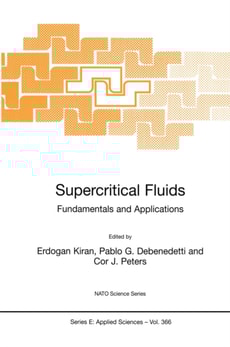
Supercritical fluids are neither gas nor liquid, but can be compressed gradually from low to high density and they are therefore interesting and important as tunable solvents and reaction media in the chemical process industry.
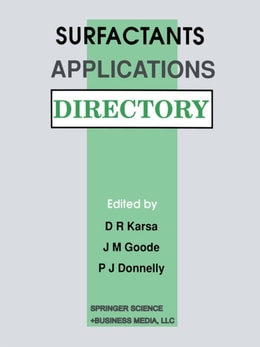
Existing surfactants directories tend to focus on product identification by tradename, producer or chemical type, enabling the user only to identify product equivalents and surfactant suppliers.
The aim of this monograph has been to distil into a single volume, in an easily read and assimilated format, the essentials of this often complex technology such that it is usable by all technical and semi-technical people who wish to become their own polyurethane and polyurethane elastomer expert.
Surface Active Agents (surfactants) are vital components in biological systems, form key ingredients in consumer products and play an important role in many industrial processes.
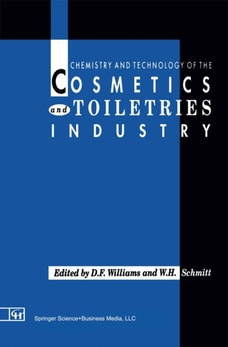
Organized on a product category basis, this volume provides an up-to-date review of the cosmetics and toiletries industry in a readily digestible form.
The present book is devoted to a rapidly developing field of science which studies the behavior of viscoelastic materials under the influence of deformation~the rheology of polymers.
In Uses of Immobilized Biological Compounds the reader will find a comprehensive survey of the field written by acknowledged experts who met in Brixen, Italy, between May 9 and 14, 1993 for a NATO Advanced Research Workshop devoted to the topic.
The subject of liquid crystals and their use in electronic displays and in non-linear optical systems has become of tremendous importance during the last decade; and the incorporation of liquid crystal units into polymeric materials has led to a group of new materials with diverse properties.
Although the research actIvItIes of dyestuff chemists worldwide have been influenced to a great extent, in recent years, by the need to respond to a variety of environmental issues associated with the manufacture and application of synthetic dyes and pigments, a significant level of targeted research continues to be devoted to new chemistry aimed at enhancing the technical properties of dyes in commerce.
The awareness and development of 'biodegradable' surfactants pre-dates current pressures by the environmental movement by nearly three decades, wherein a responsible industry mutually agreed to replace 'hard', non-biodegradable com- ponents of household detergents by 'soft', biodegradable alternatives, without course to legislation.
Approximately half of the world production of the petrochemical industry (more than 100 million tonnes) is in the form of polymers, yet it would probably surprise most people to learn how much their lifestyle depends on polymers ranging, as they do, from detergents, kitchenware and electrical appliances to furnishings and a myriad other domestic goods.
A comprehensive encyclopaedic dictionary on polymer technology with expanded entries - trade name and trade marks, list of abbreviations and property tables.
Since 1971 when useful working concepts for the technique of phase-transfer catalysis (PTC) were introduced, the understanding, development, and applica- tions of this method for conducting organic reactions has expanded exponentially.
The field of "e;Oxygen Activation"e; has attracted considerable interest recently, not only because it presents challenges in those fields of basic research that aim to understand the fundamental aspects of chemical and biological reactions that involve dioxygen, but also because of its wide range of practical implications in such diverse fields as medicine, synthesis of pharmaceuticals and other organic compounds, materials science, and atmospheric science.
Although the title of this book is Paper Chemistry, it should be considered as a text about the chemistry of the formation of paper from aqueous suspensions of fibre and other additives, rather than as a book about the chemistry of the raw material itself.
This book is intended to fill a gap between the theoretical studies and the practical experience of the processor in the extrusion of thermoplastic polymers.
Physical testing of Rubber is an essential reference for anyone concerned with evaluating rubber materials or with using material property data for design.
This publication presents the lectures given at the course on Advanced Separation Technology for Industrial Waste Minimization: Environmental and Analytical Aspects (13-15 October, 1992, Ispra, Italy) organized jointly by the Technical University of Lisbon, University of Calabria and the Environment Institute of the Joint Research Centre of the Commission of the European Communities at Ispra.
This comprehensive book provides guidelines for maximizing plastics proc- essing efficiency in the manufacture of all types of products, using all types of plastics.
Most practitioners and students of polymer chemistry are familiar, in general terms at least, with the established methods of polymer synthesis - radical, anionic, cationic and coordination addition polymerization, and stepwise con- densation and rearrangement polymerization.